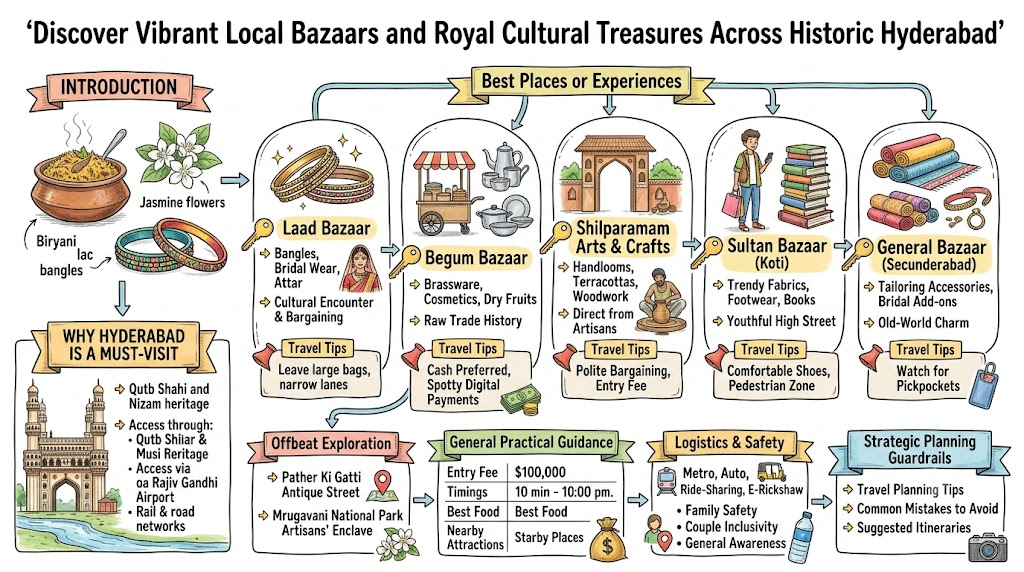
Introduction
Forget the sterile, glass-fronted shopping malls that replicate identical storefronts across the globe. True travel is about stepping into living archives where the air hums with the scent of crushed jasmine, melting lac, and sizzling street-side biryani. Hyderabad offers an antidote to generic tourism, wrapping you in centuries of Nizam-era opulence and bustling, vibrant mercantile streets.
Why Hyderabad is a must-visit city
Perched gracefully on the banks of the Musi River, Hyderabad bridges the ancient Deccan plateau with a high-tech modern metropolis. Its historical weight is anchored by the 16th-century Qutb Shahi dynasty and the grandeur of the Asaf Jahi Nizams, making every bazaar a custodian of priceless heritage. Logistically, the city is seamlessly accessible through Rajiv Gandhi International Airport, a robust rail network, and pristine national highways, welcoming every traveler archetype from solo backpackers to luxury families.
The regional travel circuit flows effortlessly between the labyrinthine alleys of the Old City and the gleaming artistic enclaves of Hitec City.
| Feature | Details |
|---|---|
| Capital Region | Hyderabad, Telangana |
| Primary Languages | Telugu, Dakhini Urdu, English |
| Peak Shopping Season | October to March (Pleasant Weather) |
| Signature Craft | Lac bangles, Bidriware, Pochampally silk |
Best Places or Experiences
Laad Bazaar
Vibrant lac bangles and bridal wares at Laad Bazaar.
Stretching in a glittering crescent right from the shadow of the iconic Charminar, Laad Bazaar is a living sensory overload. For over four centuries, this historic market has specialized in handcrafted lac bangles encrusted with shimmering rhinestones and semi-precious stones. The narrow alleyways echo with the melodious clinking of glass and metal, drawing brides and cultural explorers alike into a mesmerizing retail time capsule.
Beyond the famous bangles, the market overflows with traditional bridal wear, vintage perfumes, and intricate Zari embroidery fabrics. Artisans sit cross-legged in tiny workshops, shaping molten lac over open flames with techniques passed down through generations. It is an immersive cultural encounter where bargaining is less about saving money and more about participating in a timeless social ritual.
- Location: Historic Old City, adjacent to Charminar (approx. 7 km from City Center / Lakdikapool)
- Why it is worth visiting: Unmatched authenticity as Hyderabad’s oldest surviving royal marketplace for bridal ornaments.
- Best things to do: Commission custom-fitted lac bangles, hunt for vintage attar (traditional perfumes), and sample authentic Irani chai nearby.
- Best time to visit: Late afternoon (4:00 PM to 8:00 PM) when the historic lanterns illuminate the bustling storefronts.
- Ideal for whom: Culture enthusiasts, photography buffs, and traditional jewelry collectors.
- Travel tip: Leave large backpacks at your hotel; the narrow lanes get intensely crowded during evening peak hours.
Begum Bazaar
Bustling wholesale activity at historic Begum Bazaar.
Established during the Qutb Shahi era, Begum Bazaar is the commercial heartbeat of Hyderabad and one of the largest wholesale markets in South India. Named after Humayun Begum, wife of Nizam Ali Khan, this sprawling labyrinth handles everything from brassware and cosmetics to dry fruits and household goods. The sheer scale of commerce here is staggering, operating on a high-volume wholesale model that welcomes retail bargain hunters.
Walking through its chaotic arteries reveals distinct specialized zones, including dedicated lanes for tobacco, kitchenware, and traditional pooja items. The architectural backdrop features crumbling colonial-era facades mixed with bustling mercantile godowns. It is raw, unfiltered, and deeply representative of the city’s entrepreneurial spirit.
- Location: Near Afzalgunj, about 3 km west of the Old City core.
- Why it is worth visiting: Offers wholesale pricing on bulk goods and an authentic glimpse into local trade history.
- Best things to do: Shop for copper and brass kitchenware, source high-quality dry fruits, and explore the wholesale textile lanes.
- Best time to visit: Morning hours (10:00 AM to 1:00 PM) before the midday crowds and heavy cart traffic peak.
- Ideal for whom: Budget shoppers, culinary enthusiasts, and wholesale hunters.
- Travel tip: Cash is heavily preferred here; digital payment acceptance can be spotty in the interior wholesale stalls.
Shilparamam Arts and Crafts Village
Traditional craft village entrance at Shilparamam, Hitec City.
Nestled amidst the gleaming glass skyscrapers of Madhapur, Shilparamam serves as a tranquil cultural oasis celebrating Indian arts, crafts, and rural heritage. Spread across 65 lush acres, this crafts village brings together master artisans from every corner of India to showcase handloom fabrics, terracottas, woodwork, and tribal jewelry. It bypasses commercial middlemen, allowing visitors to purchase directly from the creators.
The village is designed like a traditional rural settlement, complete with mud huts, water bodies, and cascading waterfalls. Throughout the year, it hosts national craft festivals where folk dancers and puppet performers animate the grounds. It offers a relaxed, open-air shopping experience that stands in stark contrast to the chaotic old city markets.
- Location: Madhapur, Hitec City (approx. 15 km from Secunderabad Railway Station)
- Why it is worth visiting: Direct access to authentic, GI-tagged handlooms and national handicrafts without market markups.
- Best things to do: Purchase authentic Pochampally and Ikkat sarees, watch live pottery demonstrations, and explore the rural museum.
- Best time to visit: Late afternoon to early evening (3:30 PM to 7:00 PM) during cultural performance hours.
- Ideal for whom: Families, art connoisseurs, and souvenir seekers looking for verified authenticity.
- Travel tip: Entry requires a nominal ticket fee, and bargaining is polite but less aggressive than open street markets.
Sultan Bazaar (Koti)
Sultan Bazaar stands as a historic retail hub that has served generations of Hyderabadi families with unmatched resilience. Originally known as Allgunj during the British Residency era, it evolved into a vibrant high street lined with hundreds of independent apparel shops, bookstores, and cosmetic stores. The street atmosphere is lively, youthful, and driven by college students and local fashion enthusiasts.
The market is famous for its extensive collection of dress materials, unstitched fabrics, fashion jewelry, and affordable footwear. Unlike wholesale-heavy markets, Sultan Bazaar caters directly to retail buyers seeking trendy yet budget-friendly apparel. The adjacent lanes are dotted with legendary snack carts serving local Hyderabadi street food.
- Location: Koti district, central Hyderabad (approx. 4 km from the Musheerabad hub)
- Why it is worth visiting: Unbeatable variety of affordable fashion fabrics, dress materials, and trendy accessories.
- Best things to do: Hunt for designer-inspired unstitched suit sets, browse vintage local bookstores, and eat street-side chaat.
- Best time to visit: Evenings after 4:30 PM when the weather cools and street vendors set up their stalls.
- Ideal for whom: Fashion students, budget trendsetters, and fabric hobbyists.
- Travel tip: Wear comfortable walking shoes as vehicle traffic is restricted in core shopping lanes during peak hours.
General Bazaar (Secunderabad)
Located in the twin city of Secunderabad, General Bazaar is a bustling colonial-era commercial strip known for its incredible concentration of textile shops, imitation jewelry, and bridal accessories. Established during the British cantonment days, it retains a distinct old-world charm blended with frantic modern retail energy. Every square foot is packed with vibrant displays of fabrics, laces, and ribbons.
It is particularly renowned as a one-stop destination for wedding shopping on a budget, offering matching blouse pieces, dupattas, and custom tailoring accessories. The alleys branch out into specialized sections where local designers source raw materials. The vibrant display of colors makes it a visual treat for street photographers and shoppers alike.
- Location: Secunderabad, near the main railway station area (approx. 7 km north of Hussain Sagar)
- Why it is worth visiting: Premier destination for tailoring accessories, unstitched dress materials, and bridal add-ons.
- Best things to do: Source custom laces and borders, buy imitation temple jewelry, and sample classic Irani cafe snacks.
- Best time to visit: Morning hours on weekdays to avoid massive weekend wedding-season rushes.
- Ideal for whom: DIY fashion designers, brides-to-be, and textile enthusiasts.
- Travel tip: Keep a close eye on your belongings; the dense crowds make it a prime spot for pickpockets.
Offbeat Exploration: Hidden Gems Tourists Miss
Pather Ki Gatti Antique Street
Hidden in the shadows of the historic High Court and Old City, this atmospheric street is a treasure trove for antique hunters and history buffs. Artisans and dealers here trade in discarded royal heirlooms, vintage clocks, brass chandeliers, and vintage Nizam-era collectibles. Walking down this stretch feels like wandering through an open-air museum where every tarnished artifact holds a forgotten story.
- Location: Near Puranapool bridge, Old City.
- Why visit: Uncover genuine vintage artifacts and colonial-era relics untouched by mainstream tourism.
- Insider tip: Inspect brass and silver hallmarks carefully, and don’t hesitate to negotiate politely on high-value items.
Mrugavani National Park Artisans’ Enclave
Located on the fringes of the city towards the outer ring road, this enclave supports indigenous craftspeople creating sustainable bamboo and clay artifacts. It blends eco-tourism with traditional tribal craft workshops, allowing travelers to witness rural artisans at work. The tranquil forest backdrop provides a serene break from urban retail chaos.
- Location: Chilkur, outer West Hyderabad.
- Why visit: Support grassroots tribal artisans and purchase eco-friendly, handmade rural crafts.
- Insider tip: Combine your visit with a peaceful morning walk through the adjoining deer park trails.
Detailed Practical Guidance for Travelers
| Destination | Standard Entry Fee | General Timings | Best Local Food Options Nearby | Recommended Nearby Attractions |
|---|---|---|---|---|
| Laad Bazaar | Free | 10:30 AM – 9:30 PM | Nimrah Cafe (Irani Chai & Osmania Biscuit), Shah Ghouse Biryani | Charminar, Chowmahalla Palace |
| Begum Bazaar | Free | 10:00 AM – 9:00 PM | Agarwal Sweet House, Subhan Bakery | Afzalgunj Mosque, State Central Library |
| Shilparamam | INR 60 per adult | 10:30 AM – 8:00 PM | In-house food court, Rayalaseema Ruchulu (Madhapur) | Durgam Cherku (Secret Lake), Hitec City Hubs |
| Sultan Bazaar | Free | 11:00 AM – 9:00 PM | Gokul Chat, Koti Nimbu Pani stalls | Koti Women’s College, British Residency |
| General Bazaar | Free | 10:00 AM – 9:30 PM | Alpha Hotel, Secunderabad Club vicinity cafes | Secunderabad Clock Tower, St. Mary’s Church |
Logistics & On-Ground Navigation
Local Transport Options
- Hyderabad Metro: The Red and Blue lines provide fast, air-conditioned transit across major commercial hubs like Ameerpet, Secunderabad, and Hitec City.
- Auto-Rickshaws: Ubiquitous and ideal for short bazaar hops; ensure drivers run by the meter or negotiate a fixed price before boarding.
- Ride-Sharing Apps: Uber and Ola operate seamlessly across Hyderabad for reliable cab bookings with transparent pricing.
- E-Rickshaws: Perfect for zero-emission, low-speed navigation within narrow heritage zones like the Old City.
Budget Planning
- Budget / Backpacking Tier: Expect to spend INR 1,500 to 2,500 ($18 – $30 USD) per day, covering hostel stays, local bus/metro transit, and street-side meals.
- Mid-Range / Comfort Tier: Budget INR 5,000 to 9,000 ($60 – $110 USD) per day for comfortable 3-star hotels, app-based cabs, restaurant dining, and moderate shopping excursions.
Safety and Inclusivity Tips
- Family Safety: Stick to well-lit main thoroughfares during evening hours and keep children close in crowded wholesale markets like Begum Bazaar.
- Couple Inclusivity: Hyderabad is culturally welcoming, but conservative dress (covering shoulders and knees) is recommended when exploring traditional Old City bazaars.
- General Awareness: Keep valuables secured in front-facing pouches to deter opportunistic pickpockets in high-density shopping districts.
Strategic Travel Planning Guardrails
Travel Planning Tips for Hyderabad
- Plan your retail trips between October and March when pleasant winter weather makes walking outdoors enjoyable.
- Carry a mix of digital UPI apps (or local cash) because smaller street vendors and artisan stalls rarely accept international credit cards.
- Respect local bargaining etiquette by smiling, keeping negotiations lighthearted, and aiming for a reasonable 15-20 percent discount.
- Stay hydrated by carrying a reusable water bottle; the Deccan sun can be intense even during cooler months.
- Book accommodation near a Metro station to cut down travel time between the Old City and modern tech districts.
Common Mistakes to Avoid
- Avoid over-packing your daily itinerary with geographically opposed shopping zones; traffic across the Hussain Sagar lake can be heavy.
- Do not ignore local culinary traditions; skipping street-level snacks means missing half the cultural fabric of the markets.
- Avoid assuming all street vendors speak English; learning a few basic phrases in Hindi or Dakhini Urdu goes a long way.
- Never pay the first quoted price in traditional tourist bazaars without attempting polite counter-offers.
- Do not restrict your retail journey solely to air-conditioned malls; you will miss the soul of traditional Hyderabadi craftsmanship.
Suggested Itinerary Blueprints
- Day Quick Dash (Heritage & Bazaars Dash): Designed for time-crunched transit travelers and business visitors. Spend your morning exploring the Charminar area and Laad Bazaar, enjoy a quick Irani chai break, and transition to Sultan Bazaar by late afternoon for rapid fashion and souvenir shopping.
- Day Deep-Dive (Royal Craft & Old City Souq Odyssey):
- Day 1: Dedicate the entire day to the Old City, exploring Laad Bazaar, Pather Ki Gatti antiques, and Chowmahalla Palace.
- Day 2: Explore the wholesale depths of Begum Bazaar in the morning, followed by an afternoon artisan tour at Shilparamam in Madhapur.
- Complete Weekend Travel Plan (The Ultimate Hyderabad Retail & Culture Loop):
- Friday: Arrival, evening stroll, and street food tasting around Necklace Road and Hussain Sagar.
- Saturday: Full immersion in Old City heritage markets (Charminar, Laad Bazaar, Sultan Bazaar).
- Sunday: Modern artisan exploration at Shilparamam, followed by fine dining and heritage textile shopping in Jubilee Hills.
Common Tourist Mistakes to Avoid
- Geographic Blunders: Trying to visit Secunderabad markets and Hitec City artisan villages on the exact same afternoon during peak traffic hours.
- Commercial Traps: Spending excessive vacation time in modernized suburban shopping malls rather than atmospheric local heritage markets.
- Neglecting Modern/Alternative Zones: Forgetting to explore the quieter, artistic, and upscale boutique outlets tucked into Banjara Hills and Jubilee Hills.
- Transport Overpayment: Failing to cross-reference ride-sharing apps or insist on meter usage when hiring street-side auto-rickshaws.
- Luxury Dining Bias: Restricting meals to upscale hotel restaurants while ignoring the legendary street-level biryani and Irani cafes that define local culinary heritage.
Frequently Asked Questions
1. What are the absolute best items to buy as souvenirs in Hyderabad?
Authentic lac bangles from Laad Bazaar, handloom Pochampally silk sarees, traditional Bidriware metal craft, and local pearl jewelry are the top iconic souvenirs.
2. Is bargaining expected in Hyderabadi markets?
Yes, bargaining is standard practice in traditional markets like Laad Bazaar, Sultan Bazaar, and Begum Bazaar, though fixed prices apply in modern emporiums and malls.
3. Which market is best for bridal and wedding shopping?
Laad Bazaar is unmatched for bridal bangles and ornaments, while General Bazaar and Sultan Bazaar excel in unstitched fabrics and tailoring materials.
4. Do street vendors and small shops accept digital payments?
While digital UPI acceptance is widespread across major stores, carrying physical cash in smaller denominations is essential for traditional wholesale markets.
5. What is the best time of year to visit Hyderabad for shopping?
The winter months between October and March offer comfortable weather, making long walking tours through open-air bazaars much more enjoyable.
6. How safe are the old city markets for solo or female travelers?
Old city markets are generally safe during daylight and early evening hours, but visitors should remain vigilant against pickpockets in dense crowds.
7. Where can I buy authentic pearls in Hyderabad?
The historic hub for pearl merchants is around the Pathar Gatti area near Charminar, home to generations of expert gem traders.
8. Are there fixed closing days for major bazaars in Hyderabad?
Most traditional bazaars operate daily, but individual shops may remain closed on Sundays or specific regional holidays.
9. What local food should I try while shopping in the Old City?
Do not miss authentic Hyderabadi Dum Biryani, Irani Chai paired with Osmania biscuits, and traditional street-side Haleem during festive seasons.
10. Can I find eco-friendly or tribal crafts in Hyderabad?
Yes, Shilparamam Arts and Crafts Village in Madhapur specifically showcases authentic rural, tribal, and eco-friendly handicrafts from across the country.
11. What is the most efficient way to travel between modern and historic shopping districts?
The Hyderabad Metro system is the fastest and most cost-effective way to bypass heavy surface traffic between distant commercial districts.
12. Are English and Hindi widely understood by local merchants?
Yes, Hindi, Dakhini Urdu, and English are widely spoken by merchants across all major retail and wholesale markets in Hyderabad.
Conclusion
Choosing to wander through the storied alleys of Hyderabad rather than drifting through another sterile shopping complex opens a window into living history. Every bangle maker’s hammer, every scent of roasting spices, and every carved wooden doorway connects you to a rich, unbroken cultural legacy. It is an immersive journey that leaves your bags filled with treasures and your soul enriched by timeless human artistry.
