Introduction
Most modern vacation routes steer travelers toward overcrowded coastal resorts or cookie-cutter hill stations where authentic heritage has been paved over for mass commercial tourism. Hyderabad defies this superficial trend by offering an unvarnished encounter with four centuries of sovereign splendor. Here, royal history is not merely staged behind museum ropes; it pulses actively through ancient stone corridors, perfumed attar bazaars, and living neighborhoods.
Stepping into the sovereign estates of the Nizams reveals an empire of peerless wealth, where Persian court decorum intertwined seamlessly with Deccani craftsmanship and European neoclassical ambition. In a world saturated with synthetic travel stops, Hyderabad provides a grounded, soulful communion with genuine regal heritage.
Why Hyderabad is a must-visit city
Hyderabad stands as a monumental crossroads in peninsular Indian history, bridging the high artistic registers of northern Islamic architecture with distinct southern stonecraft. As the capital of the Asaf Jahi dynasty, this metropolis commanded global wealth through the legendary Golconda diamond trade, creating an urban culture unmatched in refined culinary arts, statecraft, and ornamental building.
The city’s palace circuit provides an exceptionally rewarding travel arc that moves smoothly from the tightly woven medieval alleys of Old Hyderabad to the elevated aristocratic ridges of Begumpet and Falaknuma. Excellent transit connectivity—spanning Rajiv Gandhi International Airport, extensive rail junctions, and a modern metro—makes reaching and exploring these royal compounds straightforward for budget solo wanderers and luxury connoisseurs alike.
| Metric / Fact | Details |
| Primary Region | Telangana, Southern Deccan Plateau |
| Historical Dynasty | Asaf Jahi (Nizams) & Qutb Shahi Dynasties |
| Architectural Styles | Indo-Saracenic, Neoclassical, Baroque, Persian |
| Nearest Airport | Rajiv Gandhi International Airport (HYD), Shamshabad |
| Primary Rail Terminals | Secunderabad Junction (SC), Hyderabad Deccan (Nampally) |
| Signature Local Delicacy | Hyderabadi Dum Biryani, Osmania Biscuits, Irani Chai |
| Best Travel Season | October to March (Mild, dry winter days) |
Best Places or Experiences
Chowmahalla Palace
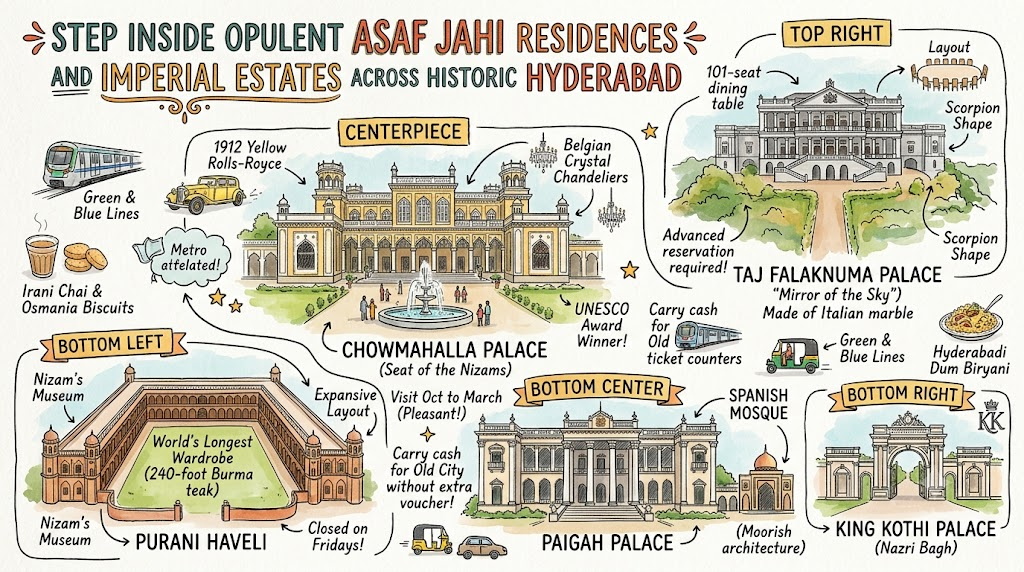
Commissioned in the mid-18th century by Nizam Salabat Jung and completed over several decades, Chowmahalla Palace served as the official seat of the Asaf Jahi dynasty where monarchs entertained British royalty and hosted grand coronation ceremonies. The sprawling palace compound takes its name from the Urdu word Chow (four) and Persian Mahallat (palaces), incorporating four distinct grand pavilions—Afzal Mahal, Mahtab Mahal, Tahniyat Mahal, and Aftab Mahal—arranged neatly around immaculately manicured gardens and quiet courtyards.
The crown jewel of the complex is the Khilwat Mubarak, an imposing ceremonial durbar hall held aloft by soaring Mughal arches and illuminated by 19 colossal Belgian crystal chandeliers. Walking across its polished marble floor feels like crossing directly into an uninterrupted royal audience, surrounded by Persian carpets, regal portraits, and an extraordinary vintage automotive pavilion featuring the pristine 1912 yellow Rolls-Royce Silver Ghost.
- Location: Motigalli, Khilwat, Old City (approx. 1.5 km south of Charminar, 16 km from Secunderabad Junction).
- Why it is worth visiting: It is the only fully restored Nizami seat of power open to the public that won the prestigious UNESCO Asia Pacific Heritage Award for Culture Heritage Conservation.
- Best things to do: Stand beneath the 19 crystal chandeliers in the Khilwat Mubarak Durbar Hall; inspect the mint-condition vintage carriage and car pavilion; admire the royal porcelain and weapon collection in the side galleries.
- Best time to visit: 10:30 AM on weekdays to explore before midday tour groups arrive, or around 3:30 PM when soft afternoon light strikes the central fountain courtyard.
- Ideal for whom: Architectural purists, cultural historians, photographers, and families seeking an accessible heritage walkthrough.
- Travel tip: > Standard mobile phone cameras are permitted freely, but mirrorless and DSLR cameras require a dedicated ticket voucher at the front desk before entering the inner gate.
Taj Falaknuma Palace
Perched 2,000 feet above the southern edge of the Deccan plateau, Taj Falaknuma Palace—poetically translated as the “Mirror of the Sky”—was envisioned by the Paigah nobleman Sir Vicar-ul-Umra before serving as the private retreat of Mahbub Ali Pasha, the sixth Nizam. Designed by British architect William Ward Marret, the palatial structure is laid out in the distinctive anatomical shape of a scorpion, built entirely with imported Italian Carrara marble and finished with rare walnut carvings.
Inside, the palace holds treasures once considered without equal across the British Empire, including a fabled 101-seat dining table flanked by acoustic-engineered acoustic ceilings and the world’s most extensive private collection of Venetian chandeliers. Managed today as a luxury heritage hotel, non-resident visitors can access its gilded halls, stained-glass libraries, and marble terraces through curated heritage tours or afternoon high tea services.
- Location: Engine Bowli, Falaknuma, South Hyderabad (approx. 5 km south of Charminar, 18 km from Rajiv Gandhi International Airport).
- Why it is worth visiting: It represents the highest pinnacle of European neoclassical luxury commissioned by Indian royalty, elevated by exceptional panoramic views over the old city skyline.
- Best things to do: Reserve an afternoon tea reservation to experience the 101-seat rosewood dining hall; stroll through the jade room and library housing rare Quranic manuscripts; watch the palace light up during twilight bagpipe performances.
- Best time to visit: 4:30 PM to 7:00 PM to catch both the sunset over the Deccan plateau and the majestic night illumination of the white marble facade.
- Ideal for whom: Luxury travelers, couples celebrating milestones, and connoisseurs of rare European decorative antiques.
- Travel tip: > Walk-ins are strictly turned away at the fortified main entrance gate; you must hold an advanced dining reservation or a verified heritage tour booking.
Purani Haveli (The Nizam’s Museum)
Originally constructed as the residence for the Prime Minister of the second Nizam, this historic property was acquired and expanded by Nizam Ali Khan to serve as a royal educational haveli and sanctuary for his son. The architectural complex is designed in an expansive U-shape, centered around classic European-styled residential wings, traditional courtyards, and tranquil colonnaded verandas that reflect early 19th-century royal domestic life.
Purani Haveli houses the celebrated Nizam’s Museum, which showcases the jubilee gifts presented to Mir Osman Ali Khan, the seventh Nizam and once the world’s wealthiest individual. The most astonishing fixture within the estate is the world’s longest single-timber wooden wardrobe—a two-tier Burma teak marvel spanning 240 feet, built because the fashion-forward monarch never wore the exact same outfit twice.
- Location: Pathar Gatti, Old City (approx. 2 km northeast of Charminar, 3 km from Hyderabad Deccan Railway Station).
- Why it is worth visiting: It provides an unvarnished, authentic look at the eccentric personal lifestyles, royal gift protocols, and private residential living quarters of the Asaf Jahi line.
- Best things to do: Walk the length of the 240-foot Burma teak wardrobe; inspect the gold tiffin box inlaid with diamonds and rubies; view the hand-cranked wooden elevator built for royal elders.
- Best time to visit: 10:00 AM to 12:00 PM on mornings when ambient light filters through the heritage courtyard trees.
- Ideal for whom: Solo backpackers, vintage fashion enthusiasts, and niche cultural researchers looking to avoid tourist crowds.
- Travel tip: > The museum remains closed every Friday for prayers and maintenance, so schedule your trip around Saturday through Thursday.
King Kothi Palace (Nazri Bagh)
King Kothi Palace served as the primary residence and eventual deathbed retreat of the seventh Nizam, Mir Osman Ali Khan, who deliberately chose its quiet comfort over the intimidating grandeur of Chowmahalla. Originally built by a wealthy nobleman named Kamal Khan, the palace features a restrained, classical European layout dominated by semicircular arches, wide carriage ports, and decorative pediments, marked by the iconic “KK” monogram carved into the stone facades.
While sizable portions of the surrounding outer estate have given way to modern hospital developments, the surviving core residential complex—specifically Nazri Bagh—remains an atmospheric pilgrimage site for understanding the reclusive monarch who shaped modern Hyderabad’s infrastructure. Visiting the area offers a poignant glimpse into the private life of an understated sovereign who controlled diamond vaults while sleeping on a simple cotton cot.
- Location: King Kothi, Hyderguda (approx. 3.5 km north of Charminar, 2 km from Abids commercial hub).
- Why it is worth visiting: It is the direct historical venue where Hyderabad’s accession papers were signed, bridging medieval royal rule with modern democratic India.
- Best things to do: Admire the surviving neoclassical iron gates and decorative stonework; walk the periphery of the Purdah gate where royal guards once stood; explore the nearby legacy bookshops and heritage cafes of Hyderguda.
- Best time to visit: 8:00 AM to 10:00 AM on weekend mornings when street traffic around King Kothi is light and atmospheric.
- Ideal for whom: Modern political history enthusiasts, urban heritage walkers, and architecture students.
- Travel tip: > Because portions of the complex house official state offices and trust properties, internal entry requires special trust permits; plan to photograph the striking facades from designated exterior public areas.
Paigah Palace
Constructed in the late 19th century by Sir Vicar-ul-Umra of the aristocratic Paigah noble family, this majestic mansion highlights the lavish lifestyle of the Nizam’s highest ranking ministers and close kin. The architecture of Paigah Palace is a bold departure from traditional Persian stone structures, featuring sharp classical European columns, high Georgian ceilings, wide semicircular porticos, and expansive landscaped lawns designed for colonial polo players and dignitaries.
The property illustrates the remarkable wealth of the Paigah nobility, whose estates matched sovereign princely states in both income and military retinues. Today, the palace’s grand reception rooms and manicured surrounds house the Hyderabad Metropolitan Development Authority and the US Consulate’s legacy offices, standing as an enduring symbol of Hyderabad’s late-Victorian administrative elegance.
- Location: Police Lines, Begumpet (approx. 10 km north of Charminar, 4 km from Secunderabad Junction).
- Why it is worth visiting: It showcases the secular aristocratic residences of Hyderabad outside the Old City perimeter, demonstrating how European domestic lifestyles transformed the local nobility.
- Best things to do: Examine the grand classical pediments and Corinthian columns; view the deep colonial shaded porticos built for horse carriages; stroll the surrounding heritage tree-lined avenues of Begumpet.
- Best time to visit: Late afternoon (4:00 PM to 5:30 PM) when the golden sun breaks across the white facade columns.
- Ideal for whom: Colonial architecture fans, slow travelers, and heritage enthusiasts touring the Secunderabad circuit.
- Travel tip: > Pair this visit with the nearby Spanish Mosque, a stunning Moorish-styled landmark also built by the Paigah nobles just minutes away.
Offbeat Exploration: Hidden Gems Tourists Miss
Mahbub Mansion (Malakpet)
Tucked away in the lively lanes of Malakpet sits Mahbub Mansion, an evocative 19th-century palace built for Sardar Begum, one of the favorite wives of the sixth Nizam. Designed in a graceful Indo-European style with classical cornices and expansive arched balconies, this palace currently stands as an untamed heritage ruin surrounded by buzzing local markets. Exploring its weathered stone perimeter offers an evocative, atmospheric encounter with forgotten royalty far from manicured tourist queues.
The Spanish Mosque (Begumpet)
Commissioned by Sir Nawab Mohammad Fakhuddin Khan of the Paigah clan following his travels through Spain, this Moorish architectural marvel is one of the most unusual Islamic heritage sites in South India. Eschewing the conventional bulbous domes and minarets of the Deccan, the structure features spired towers, pointed Moorish arches, and striking interiors reminiscent of the Great Mosque of Cordoba. It serves as an active, peaceful house of prayer where visitors can marvel at trans-continental architectural blending.
Khursheed Jah Devdi (Hussaini Alam)
Located deep inside the historic alleys of Hussaini Alam, this once-breathtaking palace belonged to the premier Paigah noble Khursheed Jah. Built with towering Palladian pillars, European statuary, and intricate wooden lintels, this palatial home hosted lavish balls and intellectual salons during the late 19th century. Although parts of the structure need restoration, its grand central hall and grand stone facade reward adventurous heritage seekers with an authentic glimpse into the private life of the city’s nobility.
Detailed Practical Guidance for Travelers
| Destination | Standard Entry Fee | General Timings | Best Local Food Options Nearby | Recommended Nearby Attractions |
| Chowmahalla Palace | ₹100 (Indians), ₹400 (Foreigners) | 10:00 AM – 5:00 PM (Closed Fridays) | Shadab Hotel (Biryani), Nimrah Cafe (Chai) | Charminar, Makkah Masjid, Laad Bazaar |
| Taj Falaknuma Palace | Entry via Dining (₹4,500+ per head) | 4:00 PM – 10:30 PM (Pre-booked slots) | Adaa (Royal Awadhi & Hyderabadi dining) | Paigah Tombs, Sudha Cars Museum |
| Purani Haveli (Nizam’s Museum) | ₹100 (Adults), ₹15 (Children) | 10:00 AM – 5:00 PM (Closed Fridays) | Nayab Hotel (Bheja Fry, Paya, Khichdi) | Salar Jung Museum, High Court |
| King Kothi Palace | Free (Exterior viewing only) | Open 24 Hours (Best in daylight) | Subhan Bakery (Osmania Biscuits), Grand Hotel | Iskcon Temple Abids, Telangana State Museum |
| Paigah Palace | Free (Permit dependent for interiors) | 9:30 AM – 5:30 PM (Weekdays) | Paradise Food Court, Chutneys Begumpet | Spanish Mosque, Hussain Sagar Lake |
Logistics & On-Ground Navigation
Local Transport Options
- Hyderabad Metro: The cleanest and fastest option for cross-city travel. Use the Green Line to reach the MGBS station for Old City access, and the Blue Line to travel through Begumpet and Ameerpet.
- Auto-Rickshaws: Excellent for navigating narrow Old City lanes near Charminar. Always negotiate fares beforehand or insist on digital meter pricing, as meters are rarely turned on for visitors.
- Ride-Hailing Apps (Uber / Ola / Rapido): Highly reliable for traveling to out-of-the-way palaces like Falaknuma and Begumpet, eliminating on-street fare arguments.
- Self-Drive / Chauffeured Rentals: A chauffeured day-cab remains the most practical choice for visiting multiple palaces scattered across old and new districts in comfort.
Budget Planning
- Budget / Backpacking Tier (₹1,500 – ₹2,500 per day): Stays in comfortable heritage hostels or local guesthouses around Abids; travel using metro tokens and shared autos; meals focused on iconic Irani cafes and street-level biryani joints.
- Mid-Range / Comfort Tier (₹5,000 – ₹10,000 per day): Stays in three-star boutique hotels around Banjara Hills or Himayatnagar; travel via private air-conditioned cabs; entry tickets, guided palace walkthroughs, and dinners at established heritage restaurants like Jewel of Nizam.
Safety and Inclusivity Tips
- Families: Most palace grounds (especially Chowmahalla) feature flat stone paths that are relatively stroller-friendly, though older havelis may feature high stone thresholds and uneven steps.
- Couples: Hyderabad is a welcoming, safe metropolis for couples. However, modest attire covering shoulders and knees is recommended when passing through traditional historic residential neighborhoods around Charminar.
- General Safety: Keep wallets and valuables secured in zippered crossbody bags while shopping through the bustling night bazaars adjacent to Old City monuments.
Strategic Travel Planning Guardrails
Travel Planning Tips for Hyderabad
- Prioritize Winter Visits: Schedule your trip between November and February when daytime temperatures hover around a pleasant 26°C, making heritage walks comfortable.
- Carry Cash for the Old City: While digital UPI payments are widespread, mobile network coverage can drop inside thick-walled stone palaces, making physical currency essential for ticket counters and heritage tea stalls.
- Respect Friday Closures: Both Chowmahalla Palace and the Nizam’s Museum close their doors every Friday for weekly maintenance and prayer routines.
- Wear Easy Slip-Off Footwear: Several royal museums and nearby heritage religious structures require travelers to remove shoes before entering inner sanctums.
- Secure Guided Heritage Interpreters: Hiring an accredited Telangana Tourism guide at the entrance of Chowmahalla costs roughly ₹300 to ₹500 and brings the history of the artifacts to life.
Common Mistakes to Avoid
- Rushing an Itinerary in One Day: Trying to visit Golconda Fort, Chowmahalla, and Falaknuma in a single day leads to exhaustion and hours stuck in traffic.
- Overlooking Friday Schedules: Showing up at Old City palace museums on a Friday morning without double-checking opening hours.
- Relying Solely on Card Terminals: Attempting to pay small bazaar merchants and roadside chai stalls with international credit cards.
- Skipping Early Morning Walks: Arriving at monuments at 1:00 PM during the hottest hours of the day rather than exploring during cooler morning slots.
- Ignoring Modest Dress Norms: Wearing revealing clothing into historic settlements that surround active places of worship like Makkah Masjid.
Suggested Itinerary Blueprints
1. Day Quick Dash (The Sovereign Core Circuit)
Targeted at business travelers and short stopover guests who want to experience the essential royal footprint within an efficient 8-hour window.
- Morning: Start at 9:00 AM with freshly baked Osmania biscuits and Irani chai at Nimrah Cafe, followed by a two-hour deep dive into the courtyards and halls of Chowmahalla Palace.
- Afternoon: Savor authentic mutton dum biryani at Hotel Shadab, then spend the early afternoon exploring the royal gifts and towering wooden wardrobe inside Purani Haveli.
- Evening: Conclude with a scenic drive past the historic High Court building and watch the dusk light settle along the banks of the Musi River.
2. Day Deep-Dive (Aristocrats & Architecture)
A relaxed, in-depth two-day plan for dedicated culture lovers and photography enthusiasts.
- Day 1 (The Imperial Core): Devote the entire morning to the grand pavilions of Chowmahalla Palace. Walk through the vibrant stalls of Laad Bazaar, stop for lunch at Nayab Hotel, and spend the afternoon discovering the personal memorabilia of Mir Osman Ali Khan at the Nizam’s Museum in Purani Haveli. Finish with an evening stroll around the Charminar precinct.
- Day 2 (Aristocratic Mansions & Skyline Splendor): Begin the morning exploring the unique Paigah history at the Spanish Mosque and viewing the majestic neoclassical facade of Paigah Palace in Begumpet. Head south in the afternoon for a pre-booked high tea and curated heritage tour across the marble terraces of Taj Falaknuma Palace.
3. Complete Weekend Travel Plan (The Grand Nizam Experience)
A three-day cultural immersion spanning royal seats, medieval fortifications, and authentic Deccani cuisine.
- Friday (The Foundations): Arrive and check into your hotel. Spend your afternoon admiring the rare international collections at the Salar Jung Museum, followed by a heritage dinner at Jewel of Nizam in Masab Tank.
- Saturday (Palaces of Power): Spend the morning touring Chowmahalla Palace, followed by lunch at Grand Hotel in Abids. Continue to King Kothi Palace and the offbeat ruin of Khursheed Jah Devdi. Wrap up the night browsing antique attar perfumeries in the Old City.
- Sunday (Elevated Royalty): Tour the ramparts and acoustic chambers of Golconda Fort in the morning. After lunch, visit the regal Qutb Shahi Tombs, then conclude your weekend trip with an evening sunset dinner overlooking the city lights at Taj Falaknuma Palace.
Common Tourist Mistakes to Avoid
Geographic Blunders
A frequent logistical mistake is pairing the western IT corridor of HITEC City or Gachibowli with Old City heritage spots on the same morning. Commuting across Hyderabad’s urban core during peak hours can swallow two hours of your day in slow traffic. Group your visits by zone: keep Old City palaces together on one day, and preserve Secunderabad or western landmarks for another.
Commercial Traps
Many tourists spend precious afternoon hours inside modern shopping malls in Banjara Hills looking for souvenirs. Instead, take a walk through the historic Laad Bazaar near Chowmahalla Palace for authentic lacquer bangles, or visit government-certified outlets like Lepakshi Handicrafts for genuine Bidri metalwork and hand-loomed Pochampally silks.
Neglecting Modern/Alternative Zones
While the palaces showcase historic grandeur, ignoring Hyderabad’s evolving modern neighborhoods leaves your travel picture incomplete. Make time to explore the artistic cafes, gallery spaces, and leafy residential streets of Jubilee Hills and Sindhi Colony for a taste of the city’s contemporary creative energy.
Transport Overpayment
Hailing an auto-rickshaw directly outside major monument exit gates often leads to high tourist price quotes. To avoid overpaying, cross the main road away from the gates, check prevailing rates on ride-hailing apps as a reference, or book your trip through Ola Auto or Rapido.
Luxury Dining Bias
Limiting your meals to air-conditioned hotel dining rooms means missing the culinary heart of Hyderabad. The city’s finest flavors live in bustling culinary spots: early morning nihari and kulcha at Nayab, double-ka-meetha from street-side halwais, and fresh butter dosas served at midnight food stalls in Mozamjahi Market.
Frequently Asked Questions
1. Is Chowmahalla Palace open every day of the week for tourists?
Chowmahalla Palace is open six days a week from Saturday through Thursday, operating between 10:00 AM and 5:00 PM. It remains strictly closed to the public on Fridays for religious prayers and weekly maintenance. Always plan your Old City heritage itinerary to ensure you do not schedule this landmark on a Friday.
2. Can non-hotel guests visit Taj Falaknuma Palace without staying overnight?
Yes, non-resident visitors can access Taj Falaknuma Palace by reserving an afternoon high tea or a multi-course dinner at its signature restaurants, such as Adaa. Alternatively, you can book an official weekend heritage tour conducted via Telangana Tourism. Walk-in guests without confirmed bookings are turned away at the main gate.
3. What is the dress code for exploring palaces in Old Hyderabad?
While secular palaces like Chowmahalla do not enforce a strict statutory dress code, modest clothing covering your shoulders and knees is strongly recommended. The palaces are located in traditional neighborhoods surrounded by active religious sites, making respectful, culturally sensitive attire comfortable and hassle-free for all travelers.
4. How much time should a traveler budget to explore Chowmahalla Palace properly?
A rewarding visit to Chowmahalla Palace requires approximately two to three hours. This provides ample time to wander through the four southern palaces, admire the vintage car collection, take photos in the lush courtyards, and study the crystal chandeliers and historic artifacts within the central Khilwat Mubarak hall.
5. Are photography and videography allowed inside the palaces of Hyderabad?
Photography using standard mobile smartphones is permitted across most palaces, including Chowmahalla and Purani Haveli. However, carrying professional DSLR cameras, tripods, or external lighting rigs requires purchasing an additional camera ticket at the ticket counter. Commercial videography and drone usage are prohibited without formal government permits.
6. Which royal palace in Hyderabad is best for families traveling with children?
Chowmahalla Palace is the top choice for family trips thanks to its wide, paved garden pathways, open lawns, and clean facilities. Children especially enjoy the vintage car collection, which features royal carriages, historic buggies, and the seventh Nizam’s famous 1912 Rolls-Royce Silver Ghost.
7. Can you explore King Kothi Palace from the inside today?
The interior quarters of King Kothi Palace are closed to general tourism because sections of the estate house government departments, hospital facilities, and private trusts. Travelers can visit the historic location to photograph the striking neoclassical gateways, perimeter architecture, and commemorative monograms from the public street.
8. What makes Purani Haveli uniquely interesting compared to Chowmahalla Palace?
Purani Haveli offers an intimate peek into the personal lifestyle of the seventh Nizam through the Nizam’s Museum. Its most remarkable attraction is the world’s longest single-timber wooden wardrobe—a 240-foot Burma teak structure spanning two levels—alongside personal jubilee gifts, vintage elevators, and private royal carriages.
9. How do I get to Falaknuma Palace using public transit?
You can take the Hyderabad Metro to the MGBS station or the Falaknuma MMTS suburban train directly to Falaknuma Railway Station. From the station, take a short auto-rickshaw ride up toward the hill base. For seamless travel, booking a cab via ride-hailing apps is the most convenient approach.
10. What is the best season to explore Hyderabad’s palace circuit?
The ideal time to tour the palaces is during the cool winter season from October to March. Daytime temperatures range comfortably between 20°C and 28°C, making walking across vast stone courtyards pleasant. Summers from April to June bring intense heat that can make outdoor sightseeing exhausting.
11. Is it worth hiring a local tour guide at the palaces?
Hiring an authorized local guide at Chowmahalla Palace is well worth the modest fee of ₹300 to ₹500. A knowledgeable guide unpacks the court etiquette, historical anecdotes, architectural influences, and palace legends that bring the quiet display cases and majestic durbars vividly to life.
12. What iconic local food should I try right after visiting Old City palaces?
Directly after touring Chowmahalla or Purani Haveli, head to nearby heritage eateries like Hotel Shadab or Nayab. Treat yourself to authentic slow-cooked Hyderabadi mutton dum biryani, flavorful mirchi ka salan, and finish your meal with hot Irani chai paired with crumbly, sweet-and-salty Osmania biscuits.
Conclusion
Traveling through Hyderabad’s royal palaces offers an enriching cultural journey that far surpasses the fleeting entertainment of typical vacation spots. Walking across the marble floors of Chowmahalla, gazing out from the lofty terraces of Falaknuma, and tracing the aged stone facades of forgotten noble havelis connects you directly with a remarkable era of cosmopolitan elegance and sovereign pride. It invites you to slow down, appreciate extraordinary craftsmanship, and carry home a profound respect for one of India’s most fascinating historical chapters.
