Introduction
Navigating legal challenges in India can quickly become overwhelming when you are suddenly forced to deal with complex court procedures, unfamiliar terminology, and strict statutory deadlines without proper guidance. Selecting an experienced legal professional who truly understands your specific situation can significantly alter the eventual outcome of your matter, whether you are dealing with a property disagreement, a family conflict, or a serious business dispute. Many individuals experience intense anxiety and hesitation during initial legal troubles simply because they do not know where to turn or how to evaluate an advocate’s background effectively. Finding an ideal advocate involves matching your exact legal circumstances with a practitioner who possesses the right skills, court experience, and communication style. You can discover qualified legal professionals across various specializations through platforms like WakilSahab, which helps streamline your initial search while keeping your specific requirements in mind. Because every legal matter rests entirely on its unique set of facts, taking time to understand your options ensures you receive tailored representation rather than generic advice.
Understanding the Legal Issue
Before reaching out to legal professionals, you must develop a clear understanding of the precise nature of the legal challenge you are currently facing. Legal disputes in India generally fall under distinct civil, criminal, corporate, or administrative frameworks, and each domain carries its own set of rules, documentation requirements, and procedural steps. For example, contractual disagreements or land record updates require a completely different approach compared to police complaints, bail hearings, or corporate regulatory compliance audits. Misidentifying your primary legal issue often leads to unnecessary delays, wasted financial resources, and consultation with practitioners who do not specialize in that specific area of law. A proper initial assessment helps you determine whether your situation requires urgent courtroom litigation, strategic negotiation, formal documentation drafting, or a simple legal notice. By breaking down your situation into fundamental facts, you enable advocates to evaluate your case accurately and provide actionable guidance right from your very first meeting.
Identifying the Right Type of Lawyer
Once you have identified the core nature of your situation, the next step is connecting with an advocate who specializes in that precise legal area. Legal practice in India is highly specialized, meaning an advocate who excels at corporate mergers may not be suited to represent you in a criminal trial or a complex property partition suit. Choosing a specialized advocate ensures that your representative stays updated on the latest judicial precedents, statutory amendments, and specific procedural nuances of the relevant court or tribunal. Depending on your situation, you may need a criminal practitioner for bail or police matters, a family lawyer for matrimonial disputes, or a property expert for title verifications and land litigation. Similarly, cyber crime specialists handle online fraud and digital safety, while corporate practitioners assist businesses with contracts, regulatory compliance, and commercial agreements. Working with the appropriate specialist saves vital time, reduces procedural errors, and ensures that your legal strategy aligns perfectly with current judicial standards.
Common Situations Requiring Legal Assistance
Criminal Matters
Facing criminal accusations, police investigations, or procedural inquiries demands immediate action from a practitioner who specializes in criminal jurisprudence. Whether you need assistance filing an initial police complaint, securing anticipatory bail, or navigating ongoing trial proceedings, an expert advocate ensures your fundamental rights remain protected throughout the process. Searching for a criminal lawyer near me allows you to connect with advocates who understand local police procedures, jurisdictional nuances, and magistrate court practices. Timely legal intervention in criminal proceedings prevents procedural missteps, helps organize crucial defense evidence, and provides vital representation during police questioning or court appearances.
Matrimonial Matters
Family disputes, legal separations, child custody arrangements, and spousal maintenance proceedings carry immense emotional weight and require balanced legal guidance. Resolving these delicate matters involves navigating specialized family court statutes while attempting to preserve dignity and reach fair financial or custodial agreements. Looking for a divorce lawyer near me helps individuals find compassionate practitioners skilled in mediation, mutual consent agreements, and contested marital proceedings. A qualified family practitioner guides you through statutory cooling-off periods, domestic violence protections, asset division, and long-term welfare planning for minor children.
Property Matters
Real estate transactions, ancestral inheritance disputes, boundary conflicts, and tenant eviction processes involve strict documentation and detailed land record verification. Failing to examine property titles or sale deeds thoroughly before completing a transaction can lead to long-drawn litigation and financial losses. Locating a qualified property lawyer near me ensures that title documents, encumbrance certificates, partition deeds, and local municipal approvals are rigorously vetted. Experienced property practitioners handle dispute resolution, draft watertight sale agreements, manage registration formalities, and represent your interests effectively before civil courts or revenue authorities.
Cyber Matters
The rapid growth of digital transactions has led to an increase in online financial fraud, identity theft, unauthorized data breaches, and social media harassment. Victims of digital offenses require prompt legal support to preserve electronic evidence, file complaints with cyber crime cells, and pursue recovery mechanisms. Reaching out to a cyber crime lawyer near me ensures that technical details, server logs, transaction IDs, and digital correspondence are properly presented to law enforcement authorities. Specialized cyber practitioners understand the Information Technology Act, banking fraud protocols, and digital evidence admissibility standards required to build a strong case.
Corporate Matters
Startups, growing enterprises, and established corporate entities require continuous legal oversight to manage contracts, regulatory compliance, shareholder relations, and commercial transactions. Operating a business without sound legal counsel exposes companies to costly regulatory penalties, partnership conflicts, and breach-of-contract lawsuits. Engaging a corporate lawyer in India provides businesses with expert assistance in drafting employment agreements, managing intellectual property registrations, navigating corporate governance, and resolving commercial disputes. Professional corporate guidance allows entrepreneurs to focus on business growth while ensuring complete compliance with Indian statutory requirements.
How to Find a Suitable Lawyer
Finding the right legal representative requires a structured evaluation of several practical factors rather than picking a name at random. You should begin by assessing an advocate’s specific practice concentration, years of active practice, and track record before the specific courts handling your matter. Evaluating communication skills, language compatibility, and willingness to explain complex legal strategies clearly is equally important for a smooth professional relationship. When looking to find a lawyer in India, consider their proximity to relevant courts, fee transparency, and availability for emergency applications or routine updates. Utilizing local search terms like lawyer near me helps locate practitioners familiar with district-level procedural habits, registry norms, and local judicial administrative processes. Taking time to cross-check credentials, review past case handling experience, and discuss professional expectations ensures you build a strong working partnership with your chosen advocate.
Local Lawyer vs Online Lawyer Consultation
Choosing between meeting an advocate in person at their office and scheduling a digital interaction depends largely on the current stage and urgency of your legal matter. Local practitioners offer direct physical interaction, easy hand-delivery of original documents, and firsthand familiarity with local court staff and registries. On the other hand, opting for an online lawyer consultation India provides convenience, saves travel time, and grants access to domain specialists located outside your immediate city. Digital consultations work exceptionally well for initial document reviews, legal opinion generation, contract drafting, and early-stage strategic advice. The following comparison highlights how these two consultation methods differ across key practical operational parameters:
| Factor | Local Lawyer | Online Consultation |
|---|---|---|
| Physical Meetings | Easy to organize at office or court | Conducted remotely via video or voice calls |
| Geographic Choice | Restricted to immediate city or district | Access to specialists across the entire country |
| Document Exchange | Physical copies handed over directly | Scanned digital files uploaded electronically |
| Convenience | Requires travel and waiting time | High convenience from any remote location |
| Local Court Familiarity | Highly familiar with local district courts | Depends on advocate’s primary place of practice |
| Best Suited For | Active court litigation and trials | Initial legal opinions and document drafting |
Important Questions to Ask a Lawyer
Preparing a list of clear questions before your initial consultation ensures you gather all necessary details to make an informed decision about representation. You should ask the practitioner about their direct experience with cases similar to yours, the legal risks involved, and the probable timelines for procedural milestones. Inquire about the essential documents required to strengthen your position and discuss all potential legal remedies or alternative dispute options available under Indian law. Clarify who will actively handle your matter daily, how case updates will be communicated, and whether junior associates will perform routine filings. Finally, insist on a clear discussion regarding professional fees, court expenses, clerkage fees, and payment schedules to avoid unexpected financial misunderstandings later.
Documents to Prepare
Organizing your records chronologically before meeting an advocate accelerates the evaluation process and helps present a clear factual narrative. Gather all relevant agreements, written notices, police reports, bank statements, email exchanges, text messages, property deeds, and identification certificates connected to your case. For digital or financial disputes, secure certified transaction receipts, account statements, complaint reference numbers, and screenshot logs showing relevant online activity. Clearly label duplicate copies while keeping original documents stored safely, as advocates initially require only copies for case analysis and drafting work. Well-organized documentation enables your advocate to spot key legal issues quickly, assess statutory limitation periods, and prepare accurate pleadings without unnecessary delays.
Understanding Lawyer Fees
Legal fees in India vary significantly based on an advocate’s experience, practice area, case complexity, location, and the specific court involved. Advocates may charge on a per-appearance basis, retain a fixed fee for an entire proceeding, or bill hourly for specialized corporate or advisory services. Additional costs such as court fees, process charges, notary attestations, typing expenses, and translation fees are typically billed separately from professional service fees. It is essential to discuss billing structures openly during your initial meeting and request a clear breakdown of what the quoted fee covers. Transparent financial discussions build mutual trust, prevent fee-related disputes during ongoing litigation, and help you plan your legal expenses effectively.
Free Legal Advice Online India
Navigating the internet for legal guidance can help you understand basic statutory rights, statutory definitions, and general procedural frameworks applicable to your situation. Using resources for free legal advice online India allows users to research relevant legal terminology, understand court hierarchies, and outline key questions before formal consultations. However, general legal information published online is purely educational and cannot account for the specific factual nuances of individual cases. Relying solely on generalized online articles without professional evaluation can lead to missed deadlines or improper legal choices. Users should view free online materials as an initial learning step while relying on direct consultation with a qualified advocate for actual legal action.
Common Mistakes When Choosing a Lawyer
- Choosing Solely Based on Office Proximity: Selecting an advocate simply because their office is nearby often leads to hiring someone who lacks expertise in your specific practice area.
- Selecting the Lowest Fee Option: Choosing legal representation based strictly on cheap rates can compromise the quality of research, drafting thoroughness, and court presentation.
- Relying Uncritically on Unverified Reviews: Depending entirely on anonymous online testimonials without verifying professional credentials or actual track records can be misleading.
- Ignoring Specialization Requirements: Hiring a general practitioner for complex matters like cyber fraud or corporate compliance reduces your chances of a favorable outcome.
- Withholding Critical Facts: Hiding unfavorable details from your advocate prevents them from building an effective strategy and leads to unpleasant surprises in court.
- Failing to Organize Documents: Presenting unsorted, incomplete records wastes valuable consultation time and increases the risk of missing vital legal evidence.
- Overlooking Statutory Limitation Periods: Delaying legal consultation until statutory deadlines pass can permanently bar you from seeking judicial remedies.
- Expecting Guaranteed Outcomes: Believing an advocate who promises guaranteed success is risky, as ethical practitioners never guarantee judicial decisions.
- Neglecting Written Fee Clarifications: Failing to establish fee scope, appearance charges, and billing intervals early leads to financial misunderstandings later.
- Waiting Too Long to Seek Counsel: Postponing legal advice until a crisis occurs limits your strategic options and leaves little time to prepare strong pleadings.
Practical Lawyer Selection Checklist
- Confirm Relevant Specialization: Verify that the practitioner focuses on the specific legal field matching your situation.
- Evaluate Practice History: Review the advocate’s background, court appearance history, and experience handling similar legal matters.
- Verify Geographic Jurisdiction: Ensure the practitioner actively practices before the specific court, tribunal, or authority handling your case.
- Determine Suitable Mode of Consultation: Decide whether an in-person office visit or a remote video/phone meeting best suits your immediate needs.
- Assess Communication Clarity: Choose an advocate who explains legal concepts simply, listens attentively, and responds promptly to queries.
- Review Document Readiness: Organize all original and duplicate records chronologically before finalizing your selection.
- Establish Transparent Fee Terms: Agree upon professional fees, appearance costs, drafting charges, and payment schedules upfront.
- Define Scope of Representation: Confirm whether the advocate will manage the entire case or handle specific stages like drafting or arguments.
- Confirm Daily Work Allocation: Clarify whether the lead practitioner or a designated junior team member will manage daily court filings.
- Check Professional Availability: Ensure the advocate has sufficient time to give your matter proper attention without scheduling conflicts.
- Outline Immediate Action Steps: Identify the urgent legal measures, notices, or filings required right after hiring representation.
How WakilSahab Supports Lawyer Discovery
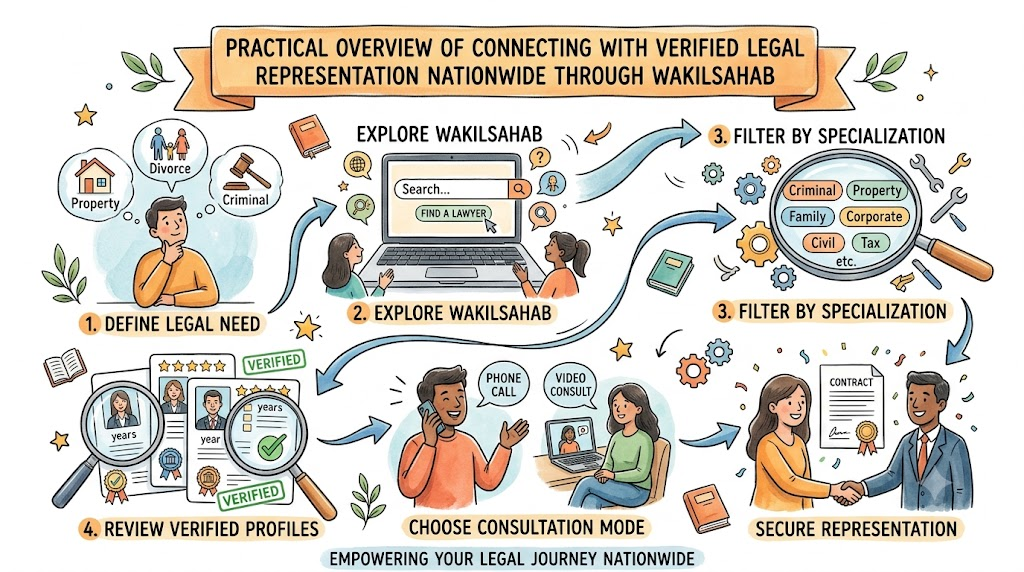
Finding accessible and reliable legal representation requires clear, organized information about practicing advocates across various regions and legal domains. As a nationwide lawyer directory India, WakilSahab helps individuals, families, startups, and commercial enterprises discover legal professionals tailored to their precise requirements. Users can explore advocate profiles based on location, practice areas, court experience, language preferences, and consultation modes without hassle. The platform covers diverse practice categories including criminal, matrimonial, property, cyber, corporate, civil, consumer, tax, intellectual property, and immigration law. By organizing professional details clearly, WakilSahab simplifies lawyer discovery, helping users compare practitioner backgrounds and connect with suitable advocates for their legal needs.
Frequently Asked Questions
### 1. What should I consider first when selecting an advocate in India?
Prioritize practice area specialization, trial experience before relevant courts, fee transparency, and communication style. Matching your specific legal issue with an advocate who regularly handles similar matters ensures accurate guidance and stronger representation throughout proceedings.
### 2. How does an online legal consultation work in practice?
An online consultation involves scheduling a remote call or video session with an advocate to discuss your case details. You upload or email scanned documents beforehand, allowing the advocate to review facts and deliver professional advice conveniently.
### 3. Can an advocate guarantee a positive outcome for my court case?
No advocate can ethically or legally guarantee a specific outcome in court proceedings. Judicial decisions depend on evidence, statutory interpretations, and court arguments, so reliable practitioners focus on offering honest risk assessments rather than making unrealistic promises.
### 4. What is the difference between a civil advocate and a criminal advocate?
Civil advocates manage disputes involving property, contracts, family matters, and financial recovery, focusing primarily on compensation or rights restoration. Criminal advocates handle matters involving police complaints, bail, state prosecutions, and criminal trials, focusing on defense against statutory offenses.
### 5. Why is practice specialization important when hiring a lawyer?
Indian laws are extensive and procedural rules differ significantly across courts and tribunals. A specialized advocate remains updated on statutory amendments, recent judicial precedents, and specific registry procedures, ensuring your matter is managed efficiently without costly errors.
### 6. How should I prepare for my first meeting with a lawyer?
Gather all relevant documents, prepare a chronological summary of events, and compile a list of specific questions regarding timelines, costs, and remedies. Clear organization allows the advocate to analyze your situation accurately and give practical advice during the meeting.
### 7. Are online consultations suitable for all types of legal issues?
Online consultations are ideal for legal opinions, initial advice, contract reviews, and preliminary strategy sessions. However, active litigation, criminal bail applications, and property registrations usually require direct physical presence, local filing, and court appearances by your representative.
### 8. How are legal fees typically structured by advocates in India?
Fees vary based on advocate experience, case complexity, court jurisdiction, and required drafting work. Practitioners may charge per court appearance, quote a fixed retainership for the entire case, or charge hourly rates for advisory and drafting services.
### 9. What should I do if my matter requires urgent court action?
Gather essential emergency documents immediately and contact an advocate specializing in urgent relief, such as stay orders or bail. Inform the practitioner right away about impending deadlines so they can draft urgent petitions and file them before the relevant court.
### 10. How do local search terms help in finding appropriate legal counsel?
Searching locally helps you locate practitioners who actively practice in your district courts or local tribunals. Local advocates understand specific court routines, registry procedures, and administrative habits, which can help streamline routine filings and appearances for your matter.
### 11. Can general legal information online replace direct legal advice?
No, online legal content provides general educational information about laws and procedures. Because every legal case depends heavily on its unique factual background, general articles cannot replace personalized legal counsel tailored to your specific situation by a qualified advocate.
### 12. How does a lawyer directory help in identifying legal professionals?
A structured directory organizes advocates by practice area, office location, court experience, language preferences, and consultation availability. This clear arrangement enables users to research background information, compare available options, and connect with legal professionals suitable for their specific requirements.
Conclusion
Selecting the right advocate requires careful evaluation of legal specializations, practical courtroom experience, communication compatibility, and transparent fee terms. Taking time to research options, organize factual documentation, and ask pertinent questions during initial consultations ensures that your legal rights remain fully protected. While digital guidance offers convenience for early discussions, obtaining personalized advice from a qualified practitioner remains essential for resolving complex legal matters. Platforms like WakilSahab support this discovery process by helping users explore and compare advocates based on location and practice expertise. Prioritizing specialized legal knowledge and clear communication empowers you to navigate the Indian legal system with confidence.
