Introduction
The relentless hum of Hyderabad’s urban core often leaves travelers yearning for open skies, rustling canopies, and unhurried horizons. While popular commercial circuits draw herds of tourists into paved viewpoints and crowded resorts, the real magic of the Deccan plateau lies tucked just beyond the outer ring roads.
Leaving the high-rises behind reveals ancient red-earth corridors, windswept granitic boulders, and sprawling deciduous woodlands that feel worlds apart from modern city life. These wild sanctuaries offer deep authenticity, allowing you to unplug beneath canopy-covered trails and quiet reservoir shorelines steeped in Deccan folklore.
Why Hyderabad is a must-visit city
Hyderabad is much more than a fast-paced technology capital; it is the geographical and historical anchor of south-central India. Framed by ancient basaltic topography, fertile river basins, and dense teak forests, the surrounding landscape showcases millions of years of earth history alongside legendary medieval dynasties. Excellent radial highways like NH 44 and NH 65, dependable suburban rail connections, and high-quality rural homestays make stepping into the wild effortless for solo adventurers, families, and road-trippers alike.
The surrounding travel circuits effortlessly weave rugged nature with raw heritage. In a single weekend, you can transition from misty ridgelines to quiet wetland reserves teeming with migratory birds.
| Travel Dimension | Circuit Specifics |
|---|---|
| Geographic Character | Granitic Deccan terrain, dry deciduous reserves, freshwater river catchments |
| Primary Highway Arteries | Outer Ring Road (ORR), NH 44 (North/South), NH 65 (East/West), Vikarabad Road |
| Peak Season Window | July to February (Monsoon blooms and crisp winter mornings) |
| Ideal Trip Cadence | Single-day escapes to 3-day deep weekend loops |
Best Places or Experiences
Lush forested ridges of Ananthagiri.
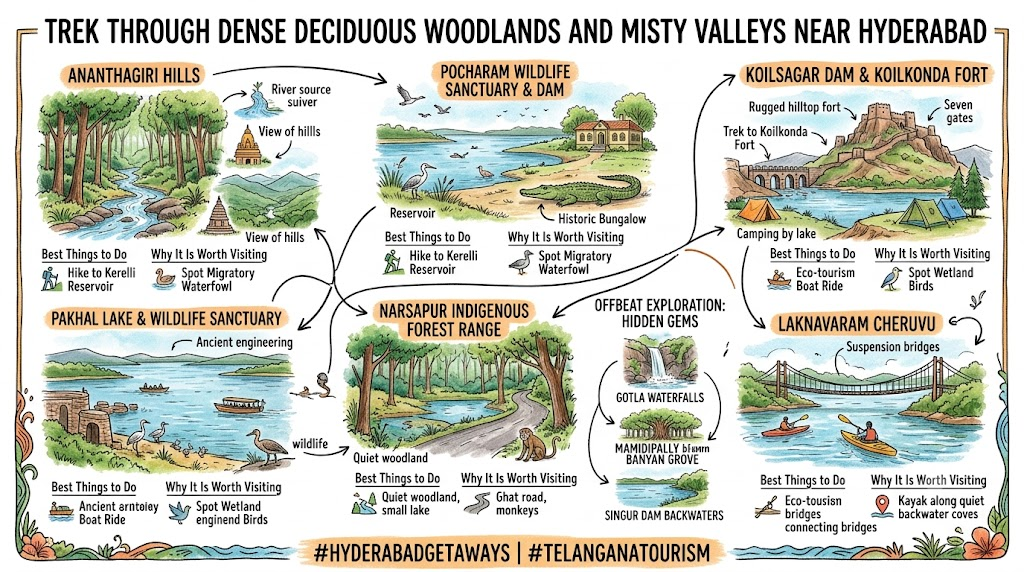
Ananthagiri Hills
Rising gently in the Vikarabad district, Ananthagiri Hills stands as the cherished green lung of the Deccan plateau. Dense deciduous woodlands carpet ancient limestone caves, creating a cool microclimate where the Musi River quietly originates.
The forest paths come alive with the scent of wild herbs and wet soil, while the canopy resonates with regional bird calls. The hills balance spiritual depth around the historic Sri Anantha Padmanabha Swamy Temple with rugged trails that plunge deep into untamed wilderness.
- Location: Vikarabad District, roughly 80 km west of central Hyderabad.
- Why it is worth visiting: It is the closest hill-station atmosphere to the capital, offering dense jungle trails and fresh forest air without extensive travel.
- Best things to do: Hike the untamed trail to Kerelli water reservoir, explore ancient natural limestone caves, and watch the sun dip below the forested horizon from Godamgutta Viewpoint.
- Best time to visit: July to November for mist-draped hilltops and lush vegetation; early mornings between 6:00 AM and 9:00 AM.
- Ideal for whom: Trekkers, nature photographers, weekend road-trippers, and peace seekers.
- Travel tip: The forest floor gets slippery during wet spells, so wear high-traction hiking shoes and pack all water supplies since shops thin out along the inner trails.
Quiet waters of Pocharam Sanctuary.
Pocharam Wildlife Sanctuary and Dam
Pocharam wraps around a scenic reservoir commissioned during the Nizam era, transforming into a vibrant wetland sanctuary. Teak, babool, and thorny scrub dominate the landscape, providing essential tree cover for local wildlife.
Quiet drives along the bund reward visitors with glimpses of blackbucks, chitals, and marsh crocodiles sunning along the banks. The historic Nizam bungalow standing near the water adds an eerie, atmospheric charm to this untamed haven.
- Location: Medak and Kamareddy districts, approximately 115 km north of Hyderabad via NH 44.
- Why it is worth visiting: It pairs rich colonial-era reservoir masonry with a thriving sanctuary free from heavy tourist crowds.
- Best things to do: Spot winter migratory waterfowl across the reservoir reeds, drive slowly through the forested sanctuary tracks, and photograph the iconic dam overflow wall.
- Best time to visit: October to March when thousands of migratory birds settle along the shallow wetlands.
- Ideal for whom: Wildlife enthusiasts, birdwatchers, conservationists, and quiet road-trip duos.
- Travel tip: Avoid lingering after sunset; wild boars and reptiles often move across the reservoir paths as light fades.
Rustic stone ramparts of Koilkonda.
Koilsagar Dam and Koilkonda Fort
Perched high on a granitic hill, the rugged 14th-century Koilkonda Fort served as an impregnable outpost for the historic Qutb Shahi kingdom. Down in the valley, the expansive Koilsagar Dam collects shimmering waters caught between sweeping hills.
Climbing the fort requires navigating seven formidable gates and narrow stone staircases chiseled directly into the bedrock. At the summit, the ramparts offer stunning, unhindered views over the shimmering lake and rural plains.
- Location: Mahabubnagar District, around 135 km southwest of Hyderabad.
- Why it is worth visiting: A dramatic blend of rugged medieval fortifications and expansive lakeside camping plains.
- Best things to do: Trek the ancient step-trail through all seven stone gates, set up a sunset picnic along the lake bund, and stargaze across the low-light waters.
- Best time to visit: October to February; initiate the fort hike by 6:30 AM to finish before the Deccan sun peaks.
- Ideal for whom: Adventure hikers, history enthusiasts, backpackers, and wild campers.
- Travel tip: Bring plenty of drinking water and energy snacks; the summit has no commercial facilities or shaded stalls.
Pristine forest ring around Pakhal.
Pakhal Lake and Wildlife Sanctuary
Dating back to 1213 CE under the Kakatiya ruler Ganapatideva, Pakhal Lake represents an early marvel of rainwater harvesting engineering. Spread across low wooded hills, the expansive body of water feeds a dense, semi-evergreen and dry deciduous bio-reserve.
The air here feels remarkably clean, rich with scents of damp bamboo and blooming wildflowers. Leopards, sloth bears, and four-horned antelopes roam the interior thickets, making every forest bend exciting for wildlife enthusiasts.
- Location: Warangal/Mahabubabad district border, roughly 210 km east of Hyderabad.
- Why it is worth visiting: An authentic Kakatiya-era environmental wonder cradled by pristine forest terrain far from urban sprawl.
- Best things to do: Take an eco-tourism boat ride across the wide water expanse, watch for open-bill storks nesting along the shoreline, and walk the forested nature loops.
- Best time to visit: November to February for pleasant breezes, clear lake waters, and active wildlife.
- Ideal for whom: Offbeat explorers, nature writers, history buffs, and wildlife photographers.
- Travel tip: Forest department permits may be required for specific inner trails; check in early at the entry station.
Narsapur Indigenous Forest Range
The Narsapur forest corridor offers a tranquil woodland retreat within an easy morning’s drive of the Outer Ring Road. Known for its small lakes, natural step-wells, and miniature ghat roads, this reserve is thick with Deccan flora.
Troops of rhesus macaques chatter overhead while endemic raptors circle the thermal updrafts above the canopy. It provides an immediate natural reboot, letting you exchange urban noise for the hum of cicadas in under two hours.
- Location: Medak District, about 45 km northwest of Secunderabad.
- Why it is worth visiting: The quickest accessible dense forest drive for an effortless single-day nature escape.
- Best things to do: Spot wetland birds around the forest lake, trek the quiet mud trails behind the guest house, and practice landscape photography beneath the monkey bread trees.
- Best time to visit: July to December, especially during early morning mist hours.
- Ideal for whom: Cyclists, birdwatchers, casual day-trippers, and young families.
- Travel tip: Secure all personal belongings and snacks carefully around the trailhead parking areas to deter inquisitive wild monkeys.
Laknavaram Cheruvu
Laknavaram Cheruvu is another Kakatiya marvel, formed by damming a natural valley ringed by hills. The sprawling reservoir features thirteen scattered islands blanketed in dense green brush.
A sturdy suspension bridge spans the emerald water, connecting several islands and offering breezy, uninterrupted views of the forested hills. The mist clinging to the water at sunrise creates an ethereal, painterly Deccan landscape.
- Location: Mulugu District, about 220 km northeast of Hyderabad.
- Why it is worth visiting: Famous for its iconic suspension bridges, island-dotted lake, and serene kayak routes.
- Best things to do: Walk across the suspension footbridges, take an eco-tourism boat ride to isolated islands, and kayak along quiet backwater coves.
- Best time to visit: August to January when monsoon waters run high and the islands are lush.
- Ideal for whom: Adventure couples, weekend travelers, landscape photographers, and families.
- Travel tip: Book state-run island cottages well in advance if you plan to stay overnight, as rooms are limited.
Offbeat Exploration: Hidden Gems Tourists Miss
Gotla Waterfalls and Rachakonda Scrub Ridges
Tucked among the rocky ruins of Rachakonda Fort lies a seasonal canyon waterfall known to few outside nearby hamlets. Monsoon runoff carves seasonal channels through the ancient stone, forming emerald plunge pools surrounded by wild scrub. Exploring here feels like stepping back into an untamed, ancient wilderness.
Mamidipally Banyan Grove
Located off the Shamshabad rural corridor, this centuries-old collection of banyan trees has grown into an expansive, single-canopy woodland. Thick aerial roots descend like curtains of timber, casting deep shade that keeps the ground cool even on sunny afternoons. It remains a tranquil sanctuary for meditation, quiet reading, and unhurried nature walks.
Singur Dam Backwaters
While day-trippers head straight to the main barrage gates, the rural western backwaters near Sangareddy remain remarkably peaceful. Herds of sheep graze on the grass flats as marsh crocodiles bask quietly on remote silt islands. Renting a spot with local fishermen allows you to experience stunning, unobstructed sunset reflections across the water.
Detailed Practical Guidance for Travelers
| Destination | Standard Entry Fee | General Timings | Best Local Food Options Nearby | Recommended Nearby Attractions |
|---|---|---|---|---|
| Ananthagiri Hills | Free entry; temple parking ₹30 | Open 24 hours; trails best 6:00 AM – 5:30 PM | Spicy Telangana country chicken curry at Vikarabad dhabas | Kotepally Reservoir, Padmanabha Temple |
| Pocharam Sanctuary | ₹20 per person; camera fee applies | 8:30 AM – 5:30 PM daily | Simple jowar rotis and dal at Medak highway hotels | Medak Cathedral, Medak Fort |
| Koilsagar Dam | Free entry | Sunrise to Sunset (6:00 AM – 6:00 PM) | Village messes serving bagara rice and mutton dalcha | Koilkonda Fort, Pillalamarri Banyan Tree |
| Pakhal Lake | ₹25 adult entry; boating ₹50-100 | 6:00 AM – 6:00 PM | Traditional spicy Warangal pacchadi meals on the highway | Thousand Pillar Temple, Warangal Fort |
| Narsapur Forest | ₹30 per adult | 8:00 AM – 5:00 PM | Hot mirchi bajji and tiffin stalls in Narsapur town | Medak road scenic ghats |
| Laknavaram Cheruvu | ₹50 entry; bridge access included | 8:00 AM – 5:30 PM | Telangana bamboo chicken and fresh lake fish fry | Ramappa Temple (UNESCO), Bogatha Falls |
Logistics & On-Ground Navigation
Local Transport Options
- Self-Drive Cars and Bikes: The best way to explore nature getaways around Hyderabad. Clear access to the Outer Ring Road connects seamlessly to fast-moving four-lane highways.
- Telangana State Road Transport (TSRTC): Budget-friendly buses run regularly from MGBS and Jubilee Bus Station to hub towns like Vikarabad, Medak, and Warangal. Local auto-rickshaws cover the final legs.
- Regional Passenger Trains: South Central Railway links Secunderabad to Vikarabad and Warangal with inexpensive commuter runs. These drop you close to nature hubs without highway traffic.
- Private Outstation Cabs: App-based cabs and local travel desks offer flat-rate outstation hires. They cost more, but eliminate route-finding hassle on winding village roads.
Budget Planning
- Backpacker / Solo Tier: ₹1,000 – ₹1,800 per day. Covers state express buses, rustic homestays or shared guest rooms, local mess meals, and standard forest entry tickets.
- Mid-Range / Comfort Tier: ₹3,500 – ₹6,500 per day. Covers self-drive car fuel or outstation cabs, private eco-resorts, guided water activities, and sit-down dining at highway plazas.
Safety and Inclusivity Tips
- For Families: Stick to well-marked paths at Ananthagiri and Laknavaram; keep small children away from unbarricaded rocky edges and dam waters.
- For Couples: Choose recognized eco-resorts or certified forest department rest houses for overnight stays rather than pitching tents in unmonitored scrublands.
- General Safety: Rocky boulders across the Deccan get blazing hot by midday and deceptively slick in the rain. Carry electrolyte packets and wear sturdy footwear with good grip.
Strategic Travel Planning Guardrails
Travel Planning Tips for Hyderabad Nature Trips
- Start Before Dawn: Leave Hyderabad by 5:00 AM to clear city toll plazas without delays and catch the crisp morning light on the water.
- Keep Emergency Cash: Card machines and mobile payment networks often drop signal near the deep limestone folds of Vikarabad and Pakhal.
- Respect Sacred Groves: Many forest hills cradle local tribal and village shrines; remove footwear when required and avoid littering.
- Pack Monsoon Defense: Carry dry bags for electronics and rain covers for daypacks, especially between July and September.
- Pre-Book Forest Lodges: State-run Haritha and eco-tourism cottages book out weeks ahead for winter weekends; confirm rooms early.
Common Mistakes to Avoid
- Underestimating Driving Fatigue: Village roads branch into single lanes with speed breakers; do not rush through rural stretches.
- Ignoring Reservoir Undercurrents: Never swim in unauthorized areas of Koilsagar or Pocharam; reservoir silt creates dangerous underwater sinkholes.
- Packing Only Light Cotton: Winter dawns in deep forest valleys drop below 14°C; bring a light fleece or windbreaker.
- Skipping Rustic Roadside Dhabas: Bypassing highway dhabas means missing authentic Telangana flavors like fiery country chicken curry and soft jowar rotis.
- Leaving Trace Elements Behind: Forest departments enforce strict zero-plastic rules; carry back all your snack wrappers and bottles.
Suggested Itinerary Blueprints
1. Day Quick Dash (Vikarabad Ridgeline Route)
Designed for time-pressed city dwellers seeking a fast, refreshing reset. Depart Hyderabad via the Shankarpally highway by 5:30 AM. Arrive at Ananthagiri Hills for breakfast, hike the short Kerelli woodland trail, and take in the panoramic views from Godamgutta. Stop for lunch at a rustic dhaba in Vikarabad town before enjoying a leisurely drive past Kotepally Reservoir, returning to the city by evening.
2. Day Deep-Dive (Heritage & Wilderness Medak Circuit)
A relaxed two-day loop balancing peaceful nature with historic Deccan architecture.
- Day 1: Head north via the Medak highway with a breakfast stop at Narsapur Forest for a morning birding walk. Continue to Medak to admire the historic cathedral and rocky fort, then settle into a lakeside eco-resort by Pocharam Dam.
- Day 2: Spend a quiet morning spotting migratory waterbirds across Pocharam Wildlife Sanctuary. Enjoy a rustic lunch of hot jowar rotis before taking a scenic drive through rural Sangareddy on your way back home.
3. Complete Weekend Travel Plan (Kakatiya Forest & Lakes Loop)
A 3-day regional adventure taking in southern Telangana’s most stunning forested water bodies.
- Friday Afternoon: Drive east along NH 163 straight to Warangal. Settle in, grab dinner, and prepare for an early departure into the forest belt next morning.
- Saturday: Drive out to Pakhal Wildlife Sanctuary for morning birding and an eco-boat ride across the historic lake. In the afternoon, head toward Laknavaram Cheruvu to cross the suspension bridges and watch the sunset from the island shore.
- Sunday: Wake up for an early kayak run through the quiet backwaters of Laknavaram. Stop by the UNESCO-listed Ramappa Temple to admire its historic stonework before driving back to Hyderabad by nightfall.
Common Tourist Mistakes to Avoid
- Geographic Blunders: Don’t try to link western spots like Vikarabad with eastern hubs like Warangal on the same day. Crossing city traffic in between burns daylight and leaves you exhausted.
- Commercial Traps: Skip overcrowded highway amusement parks in favor of quiet, scenic forest rest houses that showcase genuine Deccan tranquility.
- Neglecting Alternative Green Corridors: Don’t limit yourself to Ananthagiri alone; nearby spots like Koilsagar and Pakhal offer equally stunning nature with fewer visitors.
- Transport Overpayment: Always negotiate upfront rates with rural auto drivers at rail stops, or pre-book verified rentals to avoid last-minute surges.
- Luxury Dining Bias: Bypassing humble roadside eateries means missing out on signature regional dishes like sarva pindi and spicy country curries made with local ingredients.
Frequently Asked Questions
1. What is the single best nature getaway near Hyderabad for a one-day trip?
Ananthagiri Hills in Vikarabad is your best bet. Located roughly 80 km west of the city, it features dense woods, scenic lookout points, and gentle trekking routes. You can easily make the drive, hike the trails, and return home in time for dinner without feeling rushed.
2. Can travelers safely camp overnight near Koilsagar Dam?
Camping is popular along the flatter banks, but you should only pitch tents through licensed outdoor tour groups. Wild, solo camping is discouraged because water levels fluctuate unexpectedly, night winds pick up fast, and open shores lack dedicated safety patrols or light.
3. Is public transport practical for exploring Pocharam Wildlife Sanctuary?
It works on a budget, but requires patience. TSRTC buses drop you off in Medak town, where you must hire a local auto-rickshaw for the remaining 15 km out to the sanctuary. Having your own car or bike gives you far more freedom.
4. Are there boating facilities available at Laknavaram Cheruvu?
Yes, the Telangana Tourism department runs motorboats, speedboats, and seasonal kayaks. These services let you glide past forested shorelines and step onto isolated islands connected by suspension bridges. Operations run daily from 8:00 AM to 5:30 PM.
5. Which nature locations near Hyderabad offer good birdwatching?
Pocharam Wildlife Sanctuary and Pakhal Lake are prime choices between November and February. The reservoir reeds attract painted storks, bar-headed geese, and herons, while surrounding teak forests shelter kingfishers, flycatchers, and regional birds of prey.
6. Do I need trekking permits for the walking routes in Ananthagiri Hills?
Standard daytime walks on common paths around the temple and Kerelli reservoir require no formal permits. However, deep-forest routes or overnight camping require advance coordination with local forest range offices in Vikarabad to protect conservation zones.
7. Are these natural getaways suitable for visiting during peak summer?
March through May brings high temperatures that dry up local streams and thin the tree canopy. For green views and pleasant weather, schedule your trips between July and February when seasonal rains fill the lakes and cool the plateau.
8. What kind of footwear works best for hiking around Deccan terrain?
Choose sturdy, closed-toe trail shoes with aggressive rubber tread. The Deccan terrain features smooth, weathered granite and loose gravel that easily cause slips, especially near morning dew lines, damp cave entrances, and mossy reservoir edges.
9. Are pet-friendly accommodations available around Vikarabad and Laknavaram?
A few private farm stays and independent eco-camps welcome pets, but government-run Haritha hotels and official wildlife sanctuary cores enforce strict no-pet rules to protect wild animals. Always call ahead to verify pet guidelines before heading out.
10. How difficult is the hike up to Koilkonda Fort?
It is a moderate climb that takes 45 to 75 minutes, depending on your pace. The path winds through seven ancient stone gates and includes rocky steps chiseled into the hillside, making a decent level of basic fitness helpful for the ascent.
11. Can you swim safely in the lakes around these nature reserves?
Swimming is strongly discouraged in these reservoirs. Silt deposits create sudden drop-offs, submerged tree branches can snag swimmers, and local currents run surprisingly strong. Enjoy the water from scenic shoreline viewpoints or licensed boats instead.
12. What regional dishes should travelers try on road trips through Telangana?
Look for sarva pindi (a savory, crisp rice flour pancake studded with lentils and sesame), fiery natu kodi pulusu (country chicken curry) paired with bagara annam, and warm jowar rotis served with fresh ground peanut chutneys at small village messes.
Conclusion
Choosing the raw, windswept nature surrounding Hyderabad over predictable weekend city diversions reconnects you directly with the Deccan’s quiet heart. Standing atop the ancient granite outcrops of Koilkonda or watching early morning mist roll across the calm waters of Laknavaram reminds us that true adventure doesn’t require a cross-country flight. These nearby sanctuaries restore our appreciation for natural silence, slow country roads, and untamed beauty, proving that some of the most memorable escapes are waiting just an hour or two beyond the city lights.
