Introduction
Mainstream holiday circuits often leave travelers trapped in noisy souvenir arcades and artificial theme setups. In contrast, slipping out of the urban sprawl around the Deccan plateau reveals ancient, silent woodlands that have endured for millennia.
The rugged wilderness encircling Hyderabad presents raw biodiversity rooted deep in regional tribal heritage and granite topography. Leaving the neon glow behind offers genuine quietude, earthy aromas of dry deciduous canopies, and thrilling, untamed animal tracks.
Why Hyderabad is a must-visit city
Hyderabad is far more than a sprawling cyber hub; it serves as a geographic springboard into the biodiversity-rich Eastern Ghats and northern Deccan scrublands. Historically safeguarded by former royal hunting traditions and indigenous forest stewards, the wild terrains surrounding the city encompass river basins, ancient teak forests, and dramatic quartzite gorges. Seamless multi-lane expressways like NH 44 and NH 765, paired with extensive South Central Railway networks, allow adventurers, families, and solo explorers to transition smoothly from metropolitan comforts into untamed jungle sanctuaries.
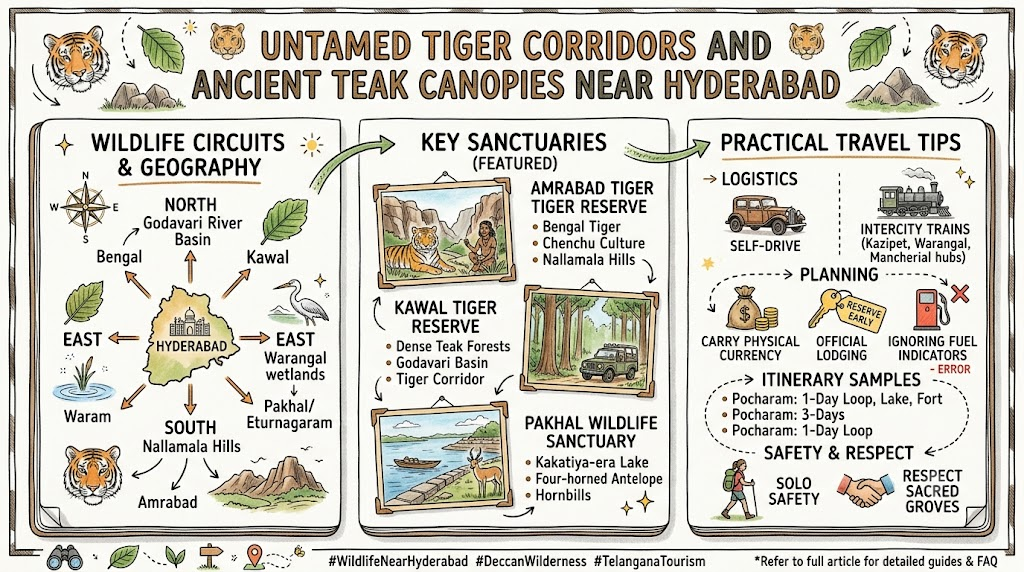
The regional wildlife circuit radiates across three distinct compass points: south toward the deep Nallamala canyons, north toward the Godavari basin, and east toward the Kakatiya-era wetlands. Each geographic axis provides unique encounters ranging from tiger tracking to migratory waterfowl spotting.
| Sanctuary / Reserve | Driving Distance from Hyderabad | Primary Biome | Flagship Wildlife Species |
|---|---|---|---|
| Amrabad Tiger Reserve | 140 km | Dry deciduous forest, quartzite hills | Bengal Tiger, Indian Leopard, Dhole |
| Pocharam Wildlife Sanctuary | 115 km | Mixed scrub, wetland reservoir | Chinkara, Marsh Crocodile, Bar-headed Goose |
| Kawal Tiger Reserve | 260 km | Dense teak forests, Godavari river basin | Tiger, Leopard, Nilgai, Gaur |
| Pakhal Wildlife Sanctuary | 210 km | Tropical dry deciduous, historic lake | Sambar, Four-horned Antelope, Sloth Bear |
| Kinnerasani Wildlife Sanctuary | 285 km | Riverine forest, riparian scrub | Mugger Crocodile, Chital, Jungle Cat |
| Eturnagaram Wildlife Sanctuary | 250 km | Dense teak canopy, undulating hills | Gaur, Golden Jackal, Star Tortoise |
Best Places or Experiences
Amrabad Tiger Reserve
Perched along the northern stretch of the Nallamala hills, Amrabad Tiger Reserve stands as one of India’s largest designated tiger landscapes. This undulating terrain is sliced by sheer gorges, seasonal water streams, and rocky plateaus where the indigenous Chenchu tribe has lived in harmony with predators for generations. The air here smells of dry foliage and wild basil, punctuated by the resonant territorial calls of spotted deer.
The reserve protects vital catchment zones for the Krishna River and provides an authentic, low-impact ecotourism environment. Unlike commercialized parks, Amrabad emphasizes quiet conservation, offering guided forest walks, open safari routes, and unhurried observation of untamed Deccan wildlife.
Wild deer in deciduous Amrabad forest.
- Location: Nagarkurnool and Nalgonda districts; approximately 140 km south of Hyderabad along NH 765.
- Why it is worth visiting: It holds an expansive untouched core tiger habitat characterized by scenic viewpoints like Farhabad and deep Chenchu cultural lore.
- Best things to do: Board the open-topped forest department safari at Mannanur, embark on a Chenchu-guided nature trail, and observe raptors at Farhabad viewpoint.
- Best time to visit: October to March for pleasant daytime temperatures; early morning (6:30 AM) safaris offer superior tracking light.
- Ideal for whom: Wildlife photographers, conservation enthusiasts, and adventurous road-trippers.
- Travel tip: Book official forest department cottages at Mannanur well in advance, as private commercial resorts are prohibited inside the sanctuary boundary.
Pocharam Wildlife Sanctuary
Originally maintained as a private game reserve for the Nizams of Hyderabad, Pocharam wraps around a scenic reservoir created by a stone dam across the Allair River. The surrounding landscape consists of low-lying granite ridges, open scrub, and lush pockets of mixed deciduous foliage. The water body creates a microclimate that invites thousands of winged winter migrants.
The presence of the historic Nizam-era stone masonry dam gives this sanctuary a unique heritage atmosphere. As evening descends, the water catches golden reflections while herds of herbivores emerge cautiously from the thorny scrub to drink at the lake’s fringes.
Pocharam stone reservoir spillway landscape.
- Location: Medak and Kamareddy districts; roughly 115 km north of Hyderabad via NH 44 and Medak road.
- Why it is worth visiting: It delivers an easy single-day escape combining rich aquatic birdwatching with historic water engineering marvels.
- Best things to do: Spot marsh crocodiles sunning along quiet mudbanks, walk the bund near the check-dam, and scan the reeds for Brahminy ducks.
- Best time to visit: November to February when water levels remain high and migratory flocks settle on the reservoir.
- Ideal for whom: Weekend family outings, birders, and novice landscape photographers.
- Travel tip: The stone causeway slippery areas near the dam overflow lack railings, so maintain a safe distance during high water discharges.
Kawal Tiger Reserve
Situated along the northern rim of Telangana, Kawal Tiger Reserve safeguards the Godavari basin catchment with magnificent stands of aged teak, bamboo groves, and lush grassland riverbanks. The forest acts as a critical wildlife corridor linking the central Indian habitats with the Deccan plateau. The deep silence within Kawal is broken only by rustling canopy leaves and the alarms of barking deer.
The reserve represents true deep-country exploration. Because Kawal receives far lower tourist traffic than central Indian commercial reserves, its forest tracks offer intimate, unhurried encounters with native woodland species.
Teak forests of Kawal Reserve.
- Location: Mancherial and Nirmal districts; roughly 260 km north of Hyderabad via NH 44.
- Why it is worth visiting: It features soaring teak canopies and pristine forest corridors that shelter tigers, leopards, and rare dry-zone antelopes.
- Best things to do: Take an early morning gypsy safari from Jannaram base, explore the Kaddam reservoir backwaters, and birdwatch along bamboo patches.
- Best time to visit: November to April; late winter offers clear visibility through thinning deciduous brush.
- Ideal for whom: Serious wildlife photographers, offbeat nature explorers, and road expeditioners.
- Travel tip: Fill your fuel tank completely at Nirmal or Mancherial, as fueling stations are scarce once you enter interior forest ranges.
Pakhal Wildlife Sanctuary
Dating back to the Kakatiya dynasty in the 13th century, Pakhal Lake is an engineered historic reservoir enveloped by dense tropical deciduous forests. Low wooded hills frame the serene water body, creating a striking contrast between ancient stone irrigation history and untamed nature.
The reserve provides safe harbor to shy herbivores like the four-horned antelope (chousingha) and spotted deer. During mist-laden winter dawns, Pakhal feels almost mythical, with waterfowl slicing through water ripples as morning light filters through ancient trees.
Scenic Pakhal Lake at dawn.
- Location: Warangal district; approximately 210 km east of Hyderabad via NH 163.
- Why it is worth visiting: Its Kakatiya-era earthen embankment and lake provide a picturesque backdrop for peaceful wildlife viewing.
- Best things to do: Photograph morning mist lifting off the ancient lake, take a forest walk along the shoreline, and scan the canopy for hornbills.
- Best time to visit: October to February for comfortable trekking conditions and vibrant bird populations.
- Ideal for whom: Landscape artists, history buffs, birdwatchers, and couples seeking tranquil escapes.
- Travel tip: Carry your own drinking water and packed snacks, as commercial stalls around the lake are minimal and close early.
Kinnerasani Wildlife Sanctuary
Carved through by the shimmering Kinnerasani River—a tributary of the Godavari—this sanctuary features forested islands, craggy slopes, and riparian scrub. The construction of the Kinnerasani Dam created picturesque inland islands that serve as peaceful resting sanctuaries for indigenous fauna.
A well-maintained deer park and an active mugger crocodile breeding sanctuary offer immediate, educational encounters with regional reptiles and ungulates. Beyond the captive observation areas, the deeper wilderness provides vital sanctuary for leopards, sloth bears, and Indian gaurs.
- Location: Bhadradri Kothagudem district; about 285 km east of Hyderabad via NH 365.
- Why it is worth visiting: The combination of scenic reservoir islands, a riverine ecosystem, and safe crocodile viewing facilities makes it unique.
- Best things to do: Take a motorboat tour around the lake islands, observe mugger crocodiles at the breeding center, and explore the glass guesthouse grounds.
- Best time to visit: November to March; midday boating offers comfortable breezes across the water.
- Ideal for whom: Family travelers with children, reptile enthusiasts, and road-trippers visiting nearby temple towns.
- Travel tip: Secure an early morning entry permit at the check-post to experience clear views before daytime tourist groups arrive.
Eturnagaram Wildlife Sanctuary
Declared a wildlife sanctuary in the mid-20th century, Eturnagaram is among the oldest preserved forest tracts in the Deccan territory. The dayyu Vagu stream meanders through its core, carving narrow rocky streams through thick stands of teak, ebony, and bamboo.
The undulating terrain climbs into low hillocks that offer broad views over unbroken canopies stretching toward the Godavari River. Eturnagaram feels remote and primal, offering an authentic retreat for travelers who value raw wilderness over manicured resorts.
- Location: Mulugu district; roughly 250 km northeast of Hyderabad via NH 163.
- Why it is worth visiting: It preserves an ancient, dense teak woodland biome with significant floral diversity and indigenous herbal plants.
- Best things to do: Cross the scenic Dayyu Vagu bridge, explore quiet nature trails with forest guards, and camp at Tadvai eco-huts.
- Best time to visit: October to February when seasonal forest streams are flowing and foliage is lush.
- Ideal for whom: Solo backpackers, wilderness campers, and botany enthusiasts.
- Travel tip: Cell phone connectivity drops rapidly past Mulugu; download offline navigation maps before departing the city.
Offbeat Exploration: Hidden Gems Tourists Miss
Farhabad Viewpoint Plateau
Tucked deep inside the northern buffer zone of Amrabad Tiger Reserve lies Farhabad, which translates literally to “Mount Pleasant.” Once chosen by the sixth Nizam as a summer escape, this stone vantage point overlooks a sprawling bowl of virgin jungle below. On a clear morning, you can watch clouds drift through the valley while binoculars reveal wild boars and sambar grazing on forest clearings.
Narsapur Forest Wetland Trails
Located just 45 km north of Hyderabad, the Narsapur forest plateau is frequently bypassed by speeders heading to Medak. This miniature reserve features natural mini-lakes, dramatic granite balance rocks, and rare wetland flora. It serves as an uncrowded haven for macro-photographers tracking praying mantises, dragonflies, and rare butterflies.
Tadvai Forest Canopy Walkways
Surrounding the Eturnagaram sanctuary perimeter, the village of Tadvai hosts an offbeat community-run eco-tourism initiative. High above the forest floor, elevated wooden walkways and watchtowers allow travelers to observe arboreal bird species and flying squirrels without disturbing the undergrowth.
Detailed Practical Guidance for Travelers
| Destination | Standard Entry Fee | General Timings | Best Local Food Options Nearby | Recommended Nearby Attractions |
|---|---|---|---|---|
| Amrabad Tiger Reserve | ₹50 per person; ₹800–₹1,200 for Forest Safari | 6:00 AM – 5:30 PM (Safaris timed) | Doma Pentha local dhabas (Millets, spicy Andhra chicken curry) | Srisailam Dam, Mallela Theertham Waterfalls |
| Pocharam Sanctuary | ₹20 per adult; ₹10 per child | 8:00 AM – 6:00 PM | Medak town eateries (Telangana bagara rice and mutton dalcha) | Medak Fort, Medak Cathedral |
| Kawal Tiger Reserve | ₹40 entry; ₹1,500 per Gypsy safari | 6:00 AM – 10:00 AM & 3:00 PM – 6:00 PM | Jannaram local mess (Simple rice, country chicken, gongura pickle) | Kaddam Reservoir, Kunthala Waterfalls |
| Pakhal Sanctuary | ₹25 per person | 7:00 AM – 5:00 PM | Narsampet roadside canteens (Jowar roti, spicy tomato chutney) | Warangal Thousand Pillar Temple, Laknavaram Lake |
| Kinnerasani Sanctuary | ₹30 entry; ₹100 for boat safari | 9:00 AM – 5:00 PM | Palwancha & Kothagudem hotels (Standard South Indian thalis) | Bhadrachalam Temple, Papi Hills river cruise |
| Eturnagaram Sanctuary | ₹30 entry; cottages vary | 8:00 AM – 5:00 PM | Tadvai community stalls (Ragi sankati, fresh river fish fry) | Ramappa Temple (UNESCO Site), Laknavaram Hanging Bridge |
Logistics & On-Ground Navigation
Local Transport Options
- Self-Drive / Private Car Hire: Renting a vehicle or driving your own car is the most reliable way to explore these wildlife circuits. High-clearance hatchbacks, crossovers, or SUVs handle rutted forest roads far better than low sedans.
- Intercity Trains: South Central Railway links Hyderabad (Secunderabad and Kacheguda hubs) directly to launchpads like Kazipet/Warangal (for Pakhal/Eturnagaram) and Mancherial (for Kawal). From there, local private taxis are necessary to reach the sanctuaries.
- State Road Transport (TSRTC): Express buses run frequently from Jubilee Bus Station (JBS) and Mahatma Gandhi Bus Station (MGBS) to district centers like Medak, Nirmal, and Nagarkurnool. However, reaching inner sanctuary gates requires hiring local auto-rickshaws.
- Auto-Rickshaws & Local Jeeps: Readily available around small towns near sanctuary gates for short hops. Always negotiate and fix the return fare beforehand, as return rides from forest gates are rarely available on demand.
Budget Planning
- Budget / Backpacking Tier: ₹1,200 – ₹1,800 per day. Covers state bus transport, shared local autos, basic forest rest-house dormitory beds or budget town lodges, and hearty local dhaba meals.
- Mid-Range / Comfort Tier: ₹4,500 – ₹7,500 per day. Covers private cab rental or fuel, air-conditioned guesthouse or eco-resort stays (like Haritha properties), organized departmental safaris, and restaurant dining.
Safety and Inclusivity Tips
- Family Travelers: Stick to destinations with structured facilities such as Pocharam or Kinnerasani. Carry child-friendly dry snacks, mosquito repellent patches, and basic medical kits, as pharmacies near forest fringes carry minimal stock.
- Couples: Plan daytime road routes and confirm bookings at recognized government-run properties like Telangana Tourism (Haritha) or State Forest Department lodges. Avoid staying past dusk in isolated lake viewing corners.
- General Wilderness Safety: Never exit your vehicle inside active forest corridors. Wear muted earth tones (olive, khaki, brown) rather than bright fluorescent colors, and maintain low speaking volumes to avoid startling animals.
Strategic Travel Planning Guardrails
Travel Planning Tips for Hyderabad Surrounds
- Reserve Official Lodging Early: Forest department cottages at Mannanur (Amrabad) and Tadvai (Eturnagaram) fill up weeks in advance for winter weekends.
- Carry Physical Currency: Cellular payment scanners routinely fail in forest shadow zones; carry at least ₹3,000–₹5,000 in cash for entry fees, fuel, and tea stalls.
- Time Your Driving Windows: Forest check-posts (particularly on the road to Amrabad and Srisailam) close gates to vehicular transit between 9:00 PM and 6:00 AM to protect nocturnal wildlife.
- Pack Layered Clothing: Deccan winter mornings can drop to 12°C–14°C, especially during open-air safaris, though afternoons quickly heat up to 30°C.
- Respect Sacred Groves: Many forest pockets double as tribal ancestral worship sites; refrain from littering, playing loud music, or touching stone altars.
Common Mistakes to Avoid
- Expecting Theme-Park Animal Densities: Wild animals do not wait by the road on command; viewing requires patience, silence, and knowledgeable local trackers.
- Speeding on Forest Highways: State highways cutting through Amrabad and Kawal have strict 30–40 km/h speed restrictions; speeding carries hefty fines and endangers crossing animals.
- Ignoring Fuel Indicators: Do not venture past major highway forks without checking your fuel; service stations inside sanctuary buffers are virtually nonexistent.
- Discarding Single-Use Plastics: Forest check-posts carry strict anti-plastic mandates; discard all food wrappers in vehicle trash bags rather than roadside bins.
- Skipping Local Culinary Specialties: Settling for stale urban snack packs means missing out on freshly prepared local staples like jowar rotis, bagara rice, and fresh country curries.
Suggested Itinerary Blueprints
1. Day Quick Dash (The Pocharam Heritage & Wetland Loop)
Designed for time-pressed city travelers, photographers, and young families wanting quick nature exposure without an overnight stay.
Depart Hyderabad early at 6:00 AM via the smooth Medak highway. Arrive at Pocharam Sanctuary by 8:30 AM to catch waterbirds along the reservoir bund and spot marsh crocodiles basking in the morning sun. Spend the midday hours exploring the historic stone-cut Medak Fort and the grand Medak Cathedral. Enjoy a relaxed lunch of authentic Telangana-style bagara rice and spicy country chicken in town. Return toward the city with a late-afternoon detour through the quiet trails of Narsapur forest, reaching Hyderabad before the evening rush hour.
2. Day Deep-Dive (The Amrabad & Nallamala Ridge Circuit)
An immersive two-day escape for couples, photographers, and wildlife buffs exploring the wild southern corridor.
- Day 1: Depart Hyderabad at 5:30 AM on the Srisailam Highway (NH 765). Clear the Mannanur forest check-post and check into your pre-booked Forest Department eco-cottage. Embark on the afternoon forest safari through the undulating core tracks toward Farhabad viewpoint. Savor an authentic dinner of millet rotis and local country curry prepared by Chenchu staff, followed by an evening astronomy session under clear skies.
- Day 2: Rise before dawn for an early morning guided walking trail along the buffer zone led by an indigenous tracker. Return for a warm breakfast, pack up, and drive toward the scenic Mallela Theertham waterfall gorge. Spend the afternoon marveling at the sheer water drop before driving back to Hyderabad by late Sunday evening.
3. Complete Weekend Travel Plan (The Eastern Kakatiya Forest Trail)
A comprehensive 3-day loop covering the historic forests of Pakhal and Eturnagaram for road-trippers and avid wilderness campers.
- Friday: Hit the early road via NH 163 through Warangal, driving past paddy fields toward Pakhal Lake. Arrive by early afternoon, check into your accommodation, and spend your golden hour watching migratory ducks along the Kakatiya earthen embankment.
- Saturday: Drive deeper northeast into the tall teak woods of Eturnagaram Wildlife Sanctuary. Cross the rocky Dayyu Vagu riverbed and check into the community eco-huts at Tadvai. Spend your afternoon traversing the elevated canopy bridges and taking a guided jeep safari through the interior forest tracks.
- Sunday: Wake up to morning birdsong, visit the UNESCO-recognized Ramappa Temple at Palampet on your return path to study its ancient sandstone bracket figures, and stop for hot rural snacks before cruising back into Hyderabad by nightfall.
Common Tourist Mistakes to Avoid
Geographic Blunders
Attempting to bundle Kawal (far north) and Amrabad (far south) into a single 48-hour weekend is an exhausting mistake. The driving distance between them exceeds 400 kilometers through mixed traffic. Pick one dedicated compass quadrant—North, South, or East—and explore its backroads thoroughly.
Commercial Traps
Spending your getaway weekend at highway mega-resorts with artificial waterparks strips away the grounding experience of the Deccan woods. Choose state forest department eco-cottages or community-run campsites instead, which put money directly into local tribal welfare and conservation.
Neglecting Modern/Alternative Zones
When transiting back through town fringes, avoid rushing directly onto the outer ring road bypass. Spend an hour browsing local cooperative handloom societies and artisan cottage markets in neighboring satellite hubs like Nirmal or Warangal.
Transport Overpayment
Hiring private cabs directly from airport kiosks for long outstation forest journeys often incurs inflated fees. Instead, arrange vehicles through reputable city car rental agencies with flat outstation daily rates, or take comfortable intercity express trains to district railheads before hiring local transport.
Luxury Dining Bias
Bypassing small village mess facilities in favor of highway chain hotels deprives you of authentic regional food. Small community canteens near forest gates serve unpolished rice, fresh forest honey, smoked country meats, and fresh hand-pressed millet breads that capture the region’s authentic flavor.
Frequently Asked Questions
1. What is the closest wildlife sanctuary to Hyderabad for a quick day trip?
Pocharam Wildlife Sanctuary, situated roughly 115 km north of Hyderabad in Medak district, is the easiest day-trip wildlife destination. A comfortable two-hour drive along NH 44 and the Medak road brings you to its historic stone reservoir, bird habitats, and scenic forest check-dam without requiring an overnight stay.
2. Is an advance safari booking required for Amrabad Tiger Reserve?
Yes, advance booking is highly recommended, especially for weekend visits. While offline entry permits can occasionally be obtained at the Mannanur forest check-post, morning and evening safari vehicle slots are strictly capped to limit ecological disturbance. Securing your booking via the official forest department portal prevents unexpected disappointments.
3. Can regular passenger hatchbacks handle the driving routes to these sanctuaries?
Standard hatchbacks and sedans easily manage the paved national and state highways leading up to the main sanctuary entry gates. However, traversing inner forest buffer tracks, lake perimeters, and rocky detour paths is considerably easier in vehicles with high ground clearance, particularly following seasonal monsoon rains.
4. Are private accommodations and luxury resorts available inside Kawal and Amrabad?
No private commercial hotels are allowed within the core or buffer boundaries of these protected reserves. Accommodations inside the forest zones are strictly managed by the State Forest Department and Telangana Tourism, providing clean, rustic cottages and tents managed in partnership with local indigenous communities.
5. What wildlife species are most commonly spotted across these sanctuaries?
Spotted deer (chital), sambar, nilgai, wild boar, gray langurs, and marsh crocodiles are frequently sighted across these habitats. While apex predators like Bengal tigers, Indian leopards, and sloth bears inhabit reserves like Amrabad and Kawal, sightings require patience, stealth, and a degree of good fortune.
6. Is night driving permitted within the forest sanctuaries around Hyderabad?
No, night transit through forest roads is strictly barred. Forest department check-posts enforce rigid gates closures between 9:00 PM and 6:00 AM on major transit sections, such as the highway cutting through Amrabad toward Srisailam, to prevent vehicle collisions with nocturnal wildlife.
7. Which sanctuary near Hyderabad offers the best birdwatching opportunities?
Pakhal Wildlife Sanctuary and Pocharam Wildlife Sanctuary offer remarkable birdwatching from November through February. Their vast lake surfaces and tranquil marshy shorelines attract thousands of migratory waterfowl, including pintails, bar-headed geese, garganeys, osprey, and openbill storks.
8. Are credit cards and mobile UPI payments accepted at sanctuary gates?
Mobile network connectivity is poor or completely absent inside forest valleys and deep sanctuary checkpoints. While entry offices at main towns may support UPI, digital payment systems frequently fail due to server dropouts. Always carry adequate physical cash for tickets, safaris, and food.
9. Is visiting these wildlife areas safe for solo women and small families?
Yes, visiting these wildlife sanctuaries is safe provided you respect forest guidelines and wrap up wilderness travel before dusk. Staying at official forest department eco-camps or Telangana Tourism Haritha hotels ensures secure premises, on-site staff assistance, and verified local safari guides.
10. What specific clothing should travelers pack for a jungle trip in this region?
Pack breathable cotton clothing in neutral tones like khaki, olive green, light brown, or dull gray to blend into the surrounding vegetation. If visiting between November and January, pack a medium fleece jacket or windbreaker for cool, open-air morning safaris.
11. Can tourists explore the forest areas on foot without a guide?
Walking unaccompanied into core sanctuary zones is strictly prohibited by law for traveler safety and animal welfare. Buffer walks are allowed only along designated paths when accompanied by certified forest department personnel or licensed Chenchu tribal trackers.
12. When is the best season to spot reptiles like marsh crocodiles?
The sunny winter months from November through February provide the best viewing conditions for reptiles. During these cooler mornings, mugger crocodiles regularly emerge from chilly reservoir waters to bask in the sun on exposed rocks and sandy banks at Pocharam and Kinnerasani.
Conclusion
Trading Hyderabad’s bustling avenues for the quiet rhythms of the Deccan wilderness offers a deeply grounding journey. Sitting silently on a granite outcrop in the Nallamala hills as morning fog drifts across the teak canopy connects you to a timeless landscape. By choosing these offbeat sanctuaries, you become an active partner in local conservation, supporting tribal livelihoods and preserving wild habitats that remind us of the ancient natural wonders thriving just beyond the city’s edge.
