Introduction
The endless hum of IT corridors, the packed lanes of Jubilee Hills, and the repetitive weekend trips to mainstream, crowded malls can quickly drain your creative energy. When the urge to escape strikes, most travelers reflexively book a flight to Goa or queue up along the bumper-to-bumper roads heading toward standard hill stations.
But true rejuvenation does not lie in swapping one bustling crowd for another. It lies in stepping off the well-trodden tourist track to uncover destinations rich with deep historic roots, architectural marvels, and authentic cultural connections. By venturing just a few hours outside the capital city, you can trade concrete skylines for ancient monolithic fortresses, dense forest sanctuaries, and temples that tell stories centuries old.
Why Hyderabad is a must visit city
The geographic heart of the Deccan Plateau offers an incredibly dense, underrated concentration of history and natural beauty that remains blissfully free from commercialized mass tourism. This region serves as an open-air museum detailing the rise and fall of great empires like the Kakatiyas and the Nizams.
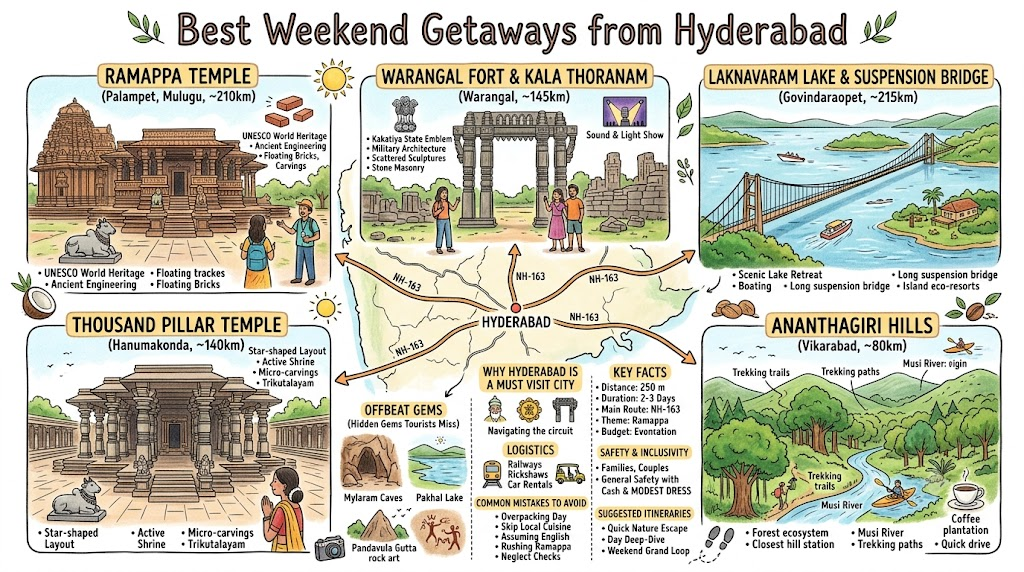
The primary travel circuit moves effortlessly from the suburban lakeside retreats of Ananthagiri Hills to the ancient stone battlements of Warangal and Hanumakonda, extending up into the dense forest canopies of Mulugu.
Navigating this circuit is highly practical for all traveler archetypes. Smooth four-lane national highways make it a haven for road trippers, reliable railway lines connect major heritage towns, and a growing network of eco-resorts ensures comfortable hospitality. Whether you are a solo backpacker looking for a quiet monument to sketch, a couple seeking a serene lakeside sunset, or a family wanting an educational yet relaxing retreat, this circuit delivers an enriching getaway without the stress of long-haul travel.
| Key Fact | Detail |
| Primary Circuit Distance | 140 km to 220 km from Hyderabad |
| Ideal Trip Duration | 2 to 3 Days (Full Weekend) |
| Primary Highway Route | NH-163 (Hyderabad-Warangal Highway) |
| Key Cultural Themes | Kakatiya Architecture, Nizam History, Eco-Tourism |
| Average Budget (Per Day) | ₹2,500 (Budget) to ₹6,500 (Mid-Range) |
Best Places or Experiences
Ramappa Temple
Nestled in the quiet village of Palampet, the Ramappa Temple is an architectural masterpiece that stands as a profound testament to the genius of the Kakatiya Dynasty. Built in 1213 AD during the reign of King Ganapati Deva, this UNESCO World Heritage Site holds a unique distinction: it is the only temple in India named after its chief sculptor, Ramappa, rather than the presiding deity. The temple structure features intricate carvings carved out of basalt rock, displaying sharp, dynamic depictions of mythical beasts, musicians, and dancers that appear completely fluid despite being chiseled into hard stone.
What truly sets this monument apart is the mind-boggling medieval engineering hidden within its walls. The temple spire is constructed using experimental “floating bricks” made of sawdust, clay, and acacia, which are so low in density that they can float on water, drastically reducing the structural weight on the foundations. Furthermore, the entire temple was built using a sophisticated sandbox technique, cushioning the structure against seismic activity and allowing it to survive devastating earthquakes that leveled surrounding towns over the centuries.
- Location: Mulugu District, approximately 210 km northeast of Hyderabad.
- Why it is worth visiting: It is a UNESCO World Heritage Site featuring floating brick technology and pristine 13th-century stone carvings.
- Best things to do: Run a simple buoyancy test with a fragment of the floating brick (ask a local guide), photograph the highly detailed Madanika bracket figures under changing daylight, and sit quietly in the cool inner sanctum to admire the flute-playing stone statues.
- Best time to visit: September to March; aim for 8:00 AM to catch the soft morning sun illuminating the east-facing facade.
- Ideal for whom: Architectural enthusiasts, history buffs, and fine-art photographers.
- Travel tip: Hire a certified Telangana Tourism guide at the entrance gate; the hidden engineering details and symbolic stories carved into the pillars are impossible to spot on your own.
Warangal Fort & Kala Thoranam
The monumental remnants of the Warangal Fort represent the heart of the ancient capital of the Kakatiya kingdom. Established in the 13th century, the fort layout consists of three concentric circular fortifications designed to withstand intense medieval sieges. While the outer mud walls have softened into rolling green hills, the central archaeological zone contains the breathtaking ruins of a massive, unfinished Shiva temple that was largely dismantled during historical invasions.
Walking through the central park, you are surrounded by giant, scattered fragments of friezes, massive stone capitals, and guardian deities carved with absolute precision. The undisputed crown jewels of this complex are the four freestanding Kakatiya Kala Thoranams. These magnificent stone archways served as the ceremonial entrance gates to the sacred precinct and have now become the official state emblem of Telangana.
- Location: Warangal District, roughly 145 km from Hyderabad.
- Why it is worth visiting: The iconic stone archways stand as a brilliant example of master-level Deccani stone masonry and defensive military design.
- Best things to do: Stand directly beneath the main Kala Thoranam to marvel at the seamless stone joints, explore the nearby stepwells (Pushkarinis), and attend the evening sound and light show that brings the fort’s history to life.
- Best time to visit: October to February, preferably late afternoon from 4:00 PM to 6:00 PM when the stone glows a deep golden hue.
- Ideal for whom: Solo explorers, heritage lovers, and student travelers.
- Travel tip: Carry plenty of drinking water and a wide-brimmed hat, as the open archaeological park offers very little shade during midday.
Thousand Pillar Temple (Rudreshwara Swamy Temple)
Located right in the heart of the bustling town of Hanumakonda, the Thousand Pillar Temple is an active place of worship that exemplifies the star-shaped architectural style of the Kakatiyas. Built by King Rudra Deva in 1163 AD, the temple is dedicated to Shiva, Vishnu, and Surya, earning it the title of Trikutalayam. The name of the temple is derived from its incredibly complex layout, where hundreds of intricately carved, interlocking pillars support the roof structures without ever obstructing your view of the inner sanctum.
The hallmark of this heritage monument is the massive, monolithic Nandi bull carved out of a single piece of highly polished black basalt stone. Positioned at the entrance of the complex, the Nandi faces the Lord Shiva shrine and has been buffed to such a glassy mirror finish that it reflects the surrounding green gardens. The temple pillars feature deep, micro-carvings of jewelry, lace, and tiny floral garlands that feel impossibly delicate for stone work.
- Location: Hanumakonda town, about 140 km from Hyderabad.
- Why it is worth visiting: It features a rare star-shaped Deccani layout and a highly polished, monolithic black basalt Nandi statue.
- Best things to do: Run your fingers over the smooth, mirror-polished pillars of the main mandapam, view the morning rituals at the three shrines, and photograph the geometric patterns of the ceiling panels.
- Best time to visit: Throughout the year; early morning at 6:30 AM offers a peaceful, uncrowded spiritual experience.
- Ideal for whom: Devotees, spiritual seekers, and architecture students.
- Travel tip: Because this is an active religious shrine, you must remove your footwear at the gate; on hot days, the stone floors heat up rapidly, making early morning visits much more comfortable.
Laknavaram Lake & Suspension Bridge
For travelers who want to balance historical exploration with tranquil nature, Laknavaram Lake offers a stunning escape into the wilderness. Tucked away amidst dense, low-lying hills, this massive water body was created by the Kakatiya rulers, who strategically dammed a narrow gap between the surrounding hills to form a rainwater reservoir for irrigation. Today, the lake spreads out over an expansive area, featuring about 13 isolated, verdant green islands scattered across the calm water.
The main attraction here is the expansive, modern walking suspension bridge that spans across the water, connecting several of the main islands. Walking across the swinging bridge gives you a beautiful panoramic view of the lake, with early morning mist rising off the water against a backdrop of deep green hills. The Telangana Tourism department operates speedboats and slow pontoon rides from the banks, allowing visitors to explore the hidden coves of the lake.
- Location: Govindaraopet Mandal, roughly 215 km from Hyderabad (around 70 km past Warangal).
- Why it is worth visiting: A scenic lake retreat featuring a long walking suspension bridge and isolated island eco-resorts.
- Best things to do: Walk across the suspension bridge at sunset, book a thrilling speedboat cruise around the islands, and spend a night in an island cottage surrounded completely by water.
- Best time to visit: Monsoon and winter seasons (July to February) when the water level is high and the hills are lush green.
- Ideal for whom: Nature lovers, adventure enthusiasts, and couples seeking a quiet retreat.
- Travel tip: Accommodation on the main island is highly limited; make sure to book your Haritha Lake View Resort rooms weeks in advance if you plan to stay overnight.
Ananthagiri Hills
If you are looking for a quick, refreshing nature break without driving deep into the state, Ananthagiri Hills is the ultimate choice. This dense, rolling forest reserve is famous for being the primary birthplace of the Musi River, which flows all the way down into Hyderabad. The entire region is wrapped in thick layers of therapeutic herbs, ancient banyan trees, and quiet coffee plantations, creating a distinct microclimate that feels noticeably cooler than the plains below.
The heart of the hills features the ancient Anantha Padmanabha Swamy Temple, which draws visitors seeking both spiritual peace and natural beauty. For adventure seekers, the real charm of Ananthagiri lies in its rugged forest trails. Gentle trekking paths wind down through the thick woods, leading hikers to hidden viewpoints, seasonal waterfalls, and the quiet banks of the nearby Kotepally Reservoir.
- Location: Vikarabad District, just 80 km west of Hyderabad.
- Why it is worth visiting: It is the closest pristine forest ecosystem and hill station to Hyderabad, making it perfect for a quick weekend drive.
- Best things to do: Trek along the forest path starting right behind the main temple, rent a kayak at the Kotepally Reservoir, and watch the morning fog roll over the valley from the Kerelli viewpoint.
- Best time to visit: July to October, when the seasonal monsoon rains turn the entire forest a rich, vibrant green.
- Ideal for whom: Weekend road trippers, trekkers, and families looking for a one-day picnic.
- Travel tip: Avoid visiting on peak Sundays if you dislike large crowds; the temple area gets packed with day-trippers from the city, so a Friday or Saturday visit offers a much more peaceful experience.
Offbeat Exploration: Hidden Gems Tourists Miss
Mylaram Caves
Located near the town of Mallial, the Mylaram Caves are an incredible, largely unexplored subterranean network of ancient limestone formations. Unlike commercial caves, this hidden gem remains completely rugged and untouched, requiring visitors to squeeze through narrow crevices to view stunning, naturally formed stalactites and stalagmites.
Pakhal Lake & Wildlife Sanctuary
While most tourists head straight to Laknavaram, the older and much quieter Pakhal Lake lies tucked away just 50 km from Warangal. Constructed in 1213 AD, this pristine lake is bordered by a dense wildlife sanctuary that serves as a quiet habitat for leopards, panthers, wild boars, and a diverse array of migratory birds. Sitting on the old stone bund at dawn offers a peaceful nature experience without any tourist crowds.
Pandavula Gutta
Pandavula Gutta is an ancient, rocky hillock in the Jayashankar Bhupalpally district that predates the Kakatiyas by millennia. This site features a fascinating collection of prehistoric rock paintings depicting human figures, wildlife, and geometric symbols dating back to the paleolithic era. It is a dream destination for offbeat rock climbers and history enthusiasts who want to see the very earliest signs of human art in the region.
Detailed Practical Guidance for Travelers
| Destination | Standard Entry Fee | General Timings | Best Local Food Options Nearby | Recommended Nearby Attractions |
| Ramappa Temple | Free (₹40 for inner camera use) | 6:00 AM – 6:00 PM | Local Telugu Thali at Haritha Restaurant | Ramappa Lake, Mylaram Caves |
| Warangal Fort | ₹25 (Indians), ₹300 (Foreigners) | 8:00 AM – 8:00 PM | Mirchi Bajji & Irani Chai at Fort road stalls | Khush Mahal, Thousand Pillar Temple |
| Thousand Pillar Temple | Free | 6:00 AM – 8:00 PM | Authentic South Indian tiffins at Hanumakonda | Bhadrakali Temple & Lake |
| Laknavaram Lake | ₹50 per person | 8:00 AM – 5:30 PM | Bamboo Chicken & fresh lake fish fry on-site | Medaram Forest Zone |
| Ananthagiri Hills | Free | Open 24/7 (Forest paths close at 5:00 PM) | Spicy Telangana country chicken curry at local dhabas | Kotepally Reservoir, Vikarabad town |
Logistics & On-Ground Navigation
Local Transport Options
- Railways: Warangal and Kazipet serve as major railway junctions directly connected to Secunderabad. Trains run almost hourly, making rail an incredibly cheap, fast, and traffic-free transit option.
- Auto-Rickshaws: Once you disembark at Hanumakonda or Warangal station, auto-rickshaws are widely available. Make sure to firmly negotiate a fixed price before stepping in, as local meters are rarely used.
- Car Rentals: For the ultimate flexibility across the circuit, renting a self-drive car or hiring a private taxi from Hyderabad is highly recommended. It allows you to easily reach remote spots like Laknavaram and Pandavula Gutta without relying on sparse local transit.
Budget Planning
- Budget / Backpacking Tier: Expect to spend around ₹2,000 – ₹2,500 per day. This covers traveling via ordinary trains or express buses, staying in budget homestays or basic lodges near Hanumakonda, and eating at local tiffin rooms and authentic street-side dhabas.
- Mid-Range / Comfort Tier: Expect to spend around ₹5,000 – ₹6,500 per day. This includes driving your own vehicle, staying in comfortable air-conditioned rooms at premium Haritha heritage resorts, hiring local guides at historical sites, and dining at established multi-cuisine restaurants.
Safety and Inclusivity Tips
- Families: The heritage monuments and lake resorts are exceptionally family-friendly, featuring manicured lawns and safe boating facilities. Stick to main highways and ensure you reach your destination before 8:00 PM, as interior rural roads can get quite dark and lonely.
- Couples: The lake islands at Laknavaram offer wonderful privacy. However, it is best to avoid overly remote, unmarked forest trails past sunset to ensure a safe and stress-free trip.
- General Safety: Standard digital payments via UPI are widely accepted across towns, but it is wise to carry a buffer of cash for fuel stations and small food stalls in deep rural pockets like Mulugu.
Strategic Travel Planning Guardrails
Travel Planning Tips for the Heritage Circuit
- Pre-Book Eco-Resorts: The government-run Haritha Resorts at Laknavaram and Ramappa are the best accommodation options in their respective areas; book them online at least two weeks early.
- Carry UPI & Cash: While digital UPI payments work across 90% of the state, network connectivity can drop in the deep forests of Mulugu, so keep around ₹2,000 in physical cash handy.
- Dress Modestly: When visiting active spiritual sites like the Thousand Pillar Temple or Bhadrakali Temple, ensure your clothing covers your shoulders and knees out of respect for local customs.
- Pack Sun Protection: The Deccani sun can be incredibly intense even in winter; always pack high-SPF sunscreen, polarized sunglasses, and a sturdy umbrella.
- Start Early: To beat both city traffic and the midday heat, aim to cross the Outer Ring Road (ORR) by 6:00 AM on your departure day.
Common Mistakes to Avoid
- Overpacking the Day: Do not try to bundle Ananthagiri Hills and Warangal into the same weekend; they sit on diametrically opposite sides of Hyderabad.
- Skipping the Local Cuisine: Avoid sticking solely to standard continental hotel food; you will miss out on authentic regional specialties like spicy Gongura Mamsam (mutton with sorrel leaves) and crispy Sarva Pindi (rice flour savory pancakes).
- Assuming English is Omnipresent: While hotel staff understand English and Hindi, learning a few basic Telugu phrases will go a very long way when interacting with rural vendors or auto drivers.
- Rushing Through Ramappa: Do not treat Ramappa as a quick 20-minute photo stop; its complex layout and historic inscriptions deserve at least two hours of unhurried exploration.
- Neglecting Vehicle Checks: Fuel pumps and mechanic shops become sparse once you venture past Warangal toward the wildlife sanctuaries, so ensure your car’s fluids and tire pressures are checked before leaving the city.
Suggested Itinerary Blueprints
1. Quick Dash (The Nature Escape)
- Target Audience: Busy professionals looking for a rapid, refreshing break from the city.
- 06:00 AM: Drive out from Hyderabad via the Appa Junction out onto the Vikarabad road.
- 08:00 AM: Arrive at Ananthagiri Hills; enjoy a fresh South Indian breakfast near the temple.
- 09:30 AM: Embark on the gentle 2-hour forest trek down to the Musi river origin point.
- 12:30 PM: Enjoy a traditional lunch at a nearby country dhaba.
- 02:30 PM: Head over to the Kotepally Reservoir for an afternoon of kayaking and lakeside relaxation.
- 05:30 PM: Watch the sunset from the Kerelli hills before driving back to Hyderabad by nightfall.
2. Day Deep-Dive (The Classic Kakatiya Heritage Circuit)
- Day 1 (Hanumakonda Focus): Leave Hyderabad at 6:00 AM via NH-163. Arrive in Hanumakonda by 9:30 AM and check into your hotel. Spend your morning exploring the magnificent Thousand Pillar Temple. After a traditional lunch, head to the vast Bhadrakali Temple lake for a relaxed afternoon walk. Conclude your evening watching the vibrant sound and light show inside the historic Warangal Fort.
- Day 2 (Architecture & Nature): Start your morning early at 7:30 AM and drive out to the iconic UNESCO World Heritage Site, Ramappa Temple. Spend a few hours exploring its ancient engineering marvels, then have a picnic lunch along the shores of Ramappa Lake. On your drive back toward Hyderabad in the afternoon, make a brief stop to explore the unique star-shaped Pembarthi brass-making village to pick up authentic souvenirs.
3. Complete Weekend Travel Plan (The Grand Deccani Loop)
- Friday Evening: Drive out from Hyderabad right after work at 4:00 PM to beat the weekend rush. Check into a heritage hotel in Warangal and enjoy a relaxed dinner of spicy regional curries.
- Saturday (The Deep Wilderness): Wake up early and drive past Warangal straight to the beautiful Laknavaram Lake. Spend your morning walking across the swaying suspension bridge and taking a boat ride around the islands. Enjoy a lunch of freshly caught lake fish, then head deep into the Pakhal Wildlife Sanctuary for an afternoon safari. Spend a peaceful night at the island eco-resort.
- Sunday (The Heritage Trail): Leave Laknavaram after breakfast and head over to the prehistoric rock art sites at Pandavula Gutta. Spend your afternoon touring the ancient ruins of Warangal Fort before joining the main highway back to Hyderabad, arriving home in time for dinner.
Common Tourist Mistakes to Avoid
- Geographic Blunders: Trying to combine geographically opposed zones or circuits on the exact same day. For example, trying to visit Ananthagiri Hills (West) and Warangal (East) together will leave you spending your entire weekend exhausted in highway traffic.
- Commercial Traps: Spending excessive vacation time in modernized shopping hubs rather than authentic, atmospheric local spaces. Avoid visiting generic multi-story malls in Warangal town when you could be exploring pristine historical stepwells and ancient craft villages.
- Neglecting Modern/Alternative Zones: Forgetting to explore the quieter, residential, artistic, or cafe-centric modern expansions of the region. The newly developed lakefront promenade around Bhadrakali Lake offers a peaceful glimpse into modern local life that most tourists entirely overlook.
- Transport Overpayment: Actionable advice on using official meters or cross-referencing ride-sharing apps to avoid price gouging. Always cross-reference your auto-rickshaw quotes with standard prices on apps like Ola or Uber before agreeing to a ride from major transit stations.
- Luxury Dining Bias: Explaining why missing street-level culinary vendors deprives the traveler of the destination’s true soul. Sticking exclusively to fine-dining hotel buffets means you will miss out on the incredible, authentic taste of street-side Sarva Pindi and freshly roasted spicy corn cobs.
Frequently Asked Questions
1. What is the absolute best time of year to plan a weekend getaway from Hyderabad?
The ideal window is between October and March. During these months, the intense Deccani summer heat drops significantly, making long outdoor explorations of stone forts and forest trails highly comfortable. The post-monsoon months of September and October are particularly beautiful as the lakes are full and the countryside is lush green.
2. Are these regional destinations safe for solo female travelers?
Yes, the primary heritage circuit along Warangal, Hanumakonda, and tourist spots like Laknavaram are generally very safe and welcoming. Locals are helpful, and the popular monuments are well-guarded. As a standard safety practice, it is best to avoid exploring remote forest trails alone after dark and stick to well-lit main roads.
3. Do I need to book entry tickets for Ramappa Temple online in advance?
While you can purchase physical entry tickets right at the main gate, booking online via the official Archaeological Survey of India (ASI) portal can save you from waiting in long weekend queues during the peak winter season.
4. Can we rent self-drive cars easily from Hyderabad for these road trips?
Absolutely. Major car rental services operate extensively across Hyderabad, offering a wide range of vehicles from compact hatchbacks to rugged SUVs. Make sure you carry a valid driving license and a matching ID card for a seamless pickup process.
5. What are the key local dishes we must try on the Hyderabad-Warangal highway?
You should definitely try Sarva Pindi, a savory, crispy rice-flour pancake flavored with chana dal, sesame seeds, and green chilies. For lunch, look for dhabas serving authentic Telangana Country Chicken Curry paired with hot jowar rotis.
6. Is public transport readily available to reach Laknavaram Lake directly?
Regular state transport (TSRTC) buses run frequently from Hyderabad to Warangal and Mulugu. However, direct public buses all the way to the Laknavaram lakeside are limited, so hiring an auto-rickshaw or taxi from Mulugu or Warangal is the most practical choice.
7. Are there any good mobile networks available in the deep forests of Mulugu?
Major network providers offer decent connectivity in the main towns and around prominent tourist spots like Ramappa Temple. However, data speeds can drop noticeably when you venture deep into the forest paths around Laknavaram or Pakhal, so it is highly recommended to download offline maps before heading out.
8. Can children safely walk across the suspension bridge at Laknavaram Lake?
Yes, the suspension bridge is fully engineered with high protective steel wire mesh along both sides, making it very safe for children. However, ensure that kids are supervised and avoid running or intentionally shaking the bridge.
9. What authentic souvenirs can we buy on this specific weekend circuit?
Make a stop at the historic village of Pembarthi along the main highway. It is world-renowned for its exquisite, handcrafted brass objects, sheet metal art, and intricate statues made by traditional artisans whose ancestors designed items for the Kakatiya kings.
10. Is an overnight stay required to explore Warangal and Ramappa Temple?
While a day trip is possible if you leave Hyderabad by 5:00 AM, it can feel very rushed. An overnight stay in Hanumakonda or at a lake resort allows you to explore the monuments at a relaxed pace without spending half your day driving on the highway.
11. Are there any strict clothing guidelines for entering the Thousand Pillar Temple?
As an active religious shrine, there is a modest dress code. Avoid wearing shorts, short skirts, or sleeveless tops. Both men and women should wear clothing that covers their shoulders and knees to respect the local spiritual environment.
12. What adventure activities can we do around the Kotepally Reservoir in Ananthagiri?
The reservoir is a hub for gentle water sports. You can rent solo or tandem kayaks, go on family pedal boat rides, or enjoy a lakeside camping experience organized by local eco-tourism groups during the cooler winter months.
Conclusion
Choosing to step away from the predictable loop of commercialized city life to explore the rich heritage of the Deccan is more than just a standard vacation; it is a deeply rewarding cultural journey. Walking among the monolithic structures of Warangal Fort or standing before the timeless, floating bricks of Ramappa Temple offers a profound sense of perspective that modern luxury resorts simply cannot replicate. These weekend getaways do not just offer a temporary break from your routine — they connect you with the incredible history and soul of the region, ensuring you return home truly inspired, grounded, and deeply refreshed.
