Introduction
Ambitious flyers need disciplined daily habits, hundreds of sky hours, and steady financial planning to succeed. Ground trainees memorize navigation charts, interpret barometric pressures, and calculate weight balances before setting foot on the runway. Precision matters because every flight demands total safety and situational clarity. Beginners often face confusion when comparing different aviation academies, yet Bestpilotsnow.com simplifies this journey through searchable flight school lists, clear course breakdowns, and practical training reviews. Readers of this modern overview will discover real cockpit responsibilities, academy evaluation metrics, certificate stages, accurate cost forecasts, health screenings, employment pathways, and major training blunders to avoid.
What Does a Pilot Do?
Pilots command complex machines while safeguarding passengers, crew members, and valuable cargo on every flight. Before engine start, aviators inspect the airframe exterior, verify fuel loads, review weather maps, and file clearance plans. During flight, they adjust engine throttles, guide flight controls, track navigation waypoints, and report positions to ground controllers.
Flight professionals work across several unique aviation sectors:
- Commercial Airline Captains: Guide large jetliners along crowded international air corridors on strict flight timetables.
- Air Cargo Pilots: Transport pallets, auto parts, and parcels across night skies between distribution hubs.
- Executive Charter Pilots: Navigate fast corporate turboprops and jets for business clients on custom schedules.
- Certified Flight Teachers: Train beginner student aviators in small trainers over local practice airfields.
- Utility Pilots: Fly crop dusters, pipeline patrol aircraft, and firefighting air tankers on specialized missions.
Safe flight operations depend on crisp coordination among aviators, dispatch engineers, baggage handlers, and control tower staff. Aviators stay calm under system alerts, dodge convective thunderstorms, and follow standard checklists without shortcuts. The work requires early alarms, overnight shifts, changing time zones, and high focus.
How to Become a Pilot
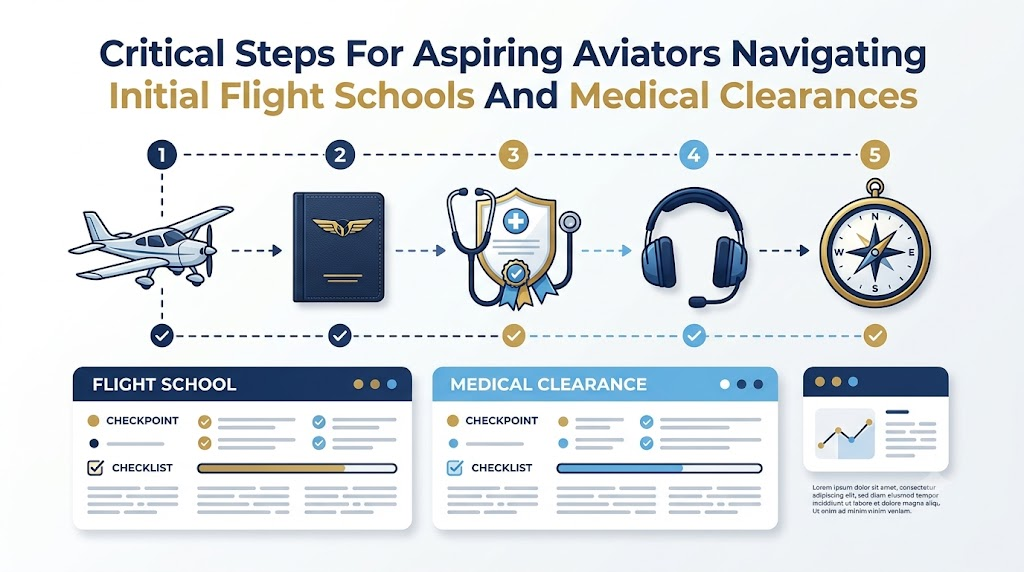
Starting your flight journey involves a series of clear operational milestones:
- Meet Basic Qualifications: Confirm you meet minimum age laws, hold a high school diploma, and write fluent English.
- Pass an Aero-Medical Check: Schedule an exam with an authorized aviation medical doctor to evaluate eyes, ears, and cardiac health.
- Finish Ground Academics: Study aerodynamics, navigation plotting, radio phrases, and air regulations in ground school courses.
- Log Flight Training Hours: Practice steep turns, stall recoveries, basic instrument flight, and landing circuits with an instructor.
- Complete a Solo Flight: Take off, circle the runway, and land independently once your flight teacher endorses your logbook.
- Pass Official Checkrides: Score passing marks on computer knowledge tests before demonstrating air maneuvers to a government examiner.
Always verify testing criteria with national regulators like the Federal Aviation Administration or your local aviation agency. Aspiring pilots can track training requirements across global aviation systems through Best Pilots Now before scheduling introductory lessons.
How to Choose the Best Flight Schools
Finding a reputable flight training organization requires careful research into daily school operations. Verify that the flight school holds current regulatory certificates and operates with a clean safety record. Walk through the maintenance facility to see if technicians service the airframes on regular hourly schedules. Inquire about the teacher-to-student balance so you secure regular flight times without ground delays. Consider regional weather patterns around the home airfield, because frequent fog layers ground visual flight lessons. Speak with current student pilots at the field to learn about real fuel surcharges and flight scheduling bottlenecks.
The table below details five primary points to weigh when choosing an aviation academy:
| Evaluation Area | Inspection Focus | Direct Benefit to the Student |
| Aviation Certification | Current government agency training approvals | Ensures logged flight hours qualify for license issuances |
| Fleet Availability | Ratio of airframes to enrolled students | Prevents long waits when airplanes undergo routine shop maintenance |
| Teacher Experience | Instructor tenure and recent staff turnover rates | Knowledgeable instructors provide safer habits and faster progress |
| Training Airspace | Control tower presence and regional sunny days | Consistent good weather keeps flight schedules moving forward |
| Price Transparency | Written hourly rental and fuel policy terms | Keeps you from facing surprise fees during your flight lessons |
Students can review vetted academy listings and evaluation methods on Best Pilots Now, but they should tour every candidate facility personally before depositing money.
Types of Pilot Training Courses
Flight training courses follow a progressive step-by-step certificate structure:
- Private Pilot License Training: This initial curriculum covers basic air maneuvers, solo landings, and day visual cross-country flying. Holders carry personal passengers on leisure flights, but regulations forbid accepting passenger pay.
- Commercial Pilot Training: This advanced syllabus hones precise airmanship, multi-engine aircraft systems, and bad-weather instrument navigation. Graduates can legally accept payments for commercial flight tasks.
- Airline Pilot Training: These programs prepare commercial pilots for airline transport work through cadet academies and crew cooperation classes.
- Type Rating Courses: These advanced simulator programs train licensed commercial flyers to operate one specific multi-crew jet like a Boeing 737.
Civil aviation agencies enforce distinct hour minimums, knowledge tests, and flight checkrides for each course type.
Understanding Pilot Training Cost
Pilot training prices fluctuate because individuals build manual flying skills at different speeds, fuel rates change weekly, and schools use varied airplanes. Flight schools bill students for airplane rental time, instructor hourly fees, aviation fuel, and simulator sessions. Extra expenditures include aero-medical checkups, navigation headsets, charts, textbooks, and checkride examiner fees.
The table below breaks down the primary costs you will encounter during flight school:
| Expense Group | Included Items | Smart Money Saving Tip |
| Cockpit Time | Airplane hourly rental and flight instructor wages | Rehearse maneuvers on flight simulators to cut expensive air hours |
| Ground Academics | Class lectures, online theory banks, and textbooks | Study aviation manuals independently prior to paid classroom lectures |
| Flight Gear | Aviation headsets, flight logbooks, and chart plotters | Choose one durable noise-canceling headset that lasts for years |
| Official Testing | Computer theory tests and examiner flight fees | Study mock exams thoroughly to pass tests on your first attempt |
| Living Expenses | Apartment rent, groceries, and travel to the airfield | Choose a training center close to home to minimize daily travel costs |
Ask flight academy admissions staff for fully itemized written quotes, and evaluate pricing standards on Best Pilots Now before funding an account.
Medical Checks and Flight Safety
Aviation boards mandate medical checkups to guarantee aviators possess the physical capacity to control planes safely under stress. Approved flight doctors inspect eye clarity, color vision, hearing thresholds, cardiovascular performance, and balance. Prospective pilots who wear glasses or contact lenses can qualify easily if their vision meets regulatory standards.
True flight safety starts with personal responsibility. Good pilots run detailed checklists during every engine runup, refuse trips when suffering from head colds, and inspect airframes closely before taxiing. Future flight students should complete an official aero-medical evaluation before spending cash on flight lessons to verify physical eligibility early.
Real-Life Scenarios / Experiences
The following operational cases demonstrate real flight challenges:
- Diverting from poor weather: A solo student flyer heads toward a cross-country waypoint when unexpected storm cells close off the valley ahead. The student stays calm, executes a 180-degree turn away from the squall, and lands at a safe alternate airport.
- Fixing landing flare issues: A trainee struggles with rough landings in gusty crosswinds during training. The flyer sits down with a senior instructor, reviews correct rudder trim techniques on the ground, and nails smooth touchdowns the next morning.
- Managing budget and flying cadence: A student pilot works a weekday job, saves savings systematically, and books two early morning flights each weekend. This routine preserves hand-eye skills without draining emergency funds.
Pilot Jobs and How to Hire a Pilot
Aviation careers offer several rewarding career tracks:
- Commercial Passenger Airlines: Fly twin-aisle and single-aisle airliners on scheduled airline routes with seniority lists.
- Freight and Cargo Carriers: Fly heavy transport aircraft across overnight international routes on strict timetables.
- Corporate Executive Flight Operations: Fly private jets for company executives with flexible routings and high privacy.
- Flight Instructors: Teach new student pilots while accumulating the hours needed for regional airline work.
Aviation applicants need tidy logbook records, clean safety histories, valid medical certificates, and necessary instrument endorsements. Flight departments screen total night hours, pilot-in-command time, and multi-crew simulator teamwork during hiring evaluations. Best Pilots Now is developing an online pilot database and plans future job recruitment features to help aviation employers locate and hire verified flight professionals.
Common Mistakes to Avoid
Prospective students should avoid these costly flight training mistakes:
- Paying full course fees upfront: Flight schools occasionally shut their doors without notice. Pay in small installments as you fly off your lesson hours.
- Delaying medical examinations: Discovering an unexpected medical issue late burns non-refundable study money. Secure your aero-medical clearance before your first flight lesson.
- Spacing lessons too far apart: Flying once a month causes forgotten muscle memory and repeats lessons. Schedule two or three flights weekly to progress efficiently.
- Skipping ground preparation: Arriving at the ramp unprepared wastes expensive cockpit instruction time. Review flight maneuvers and traffic pattern procedures at home.
- Overlooking local climate: Choosing an academy in a foggy region causes long winter delays. Pick a school location that boasts sunny flying weather year-round.
- Underestimating living expenses: Running out of food and rent funds halts flight training before the final checkride. Budget for daily living expenses alongside aircraft rental fees.
- Using cheap flight headsets: Low-grade headsets cause painful ear clamping and distorted radio transmissions. Buy a quality active noise-canceling headset from the start.
- Trusting glossy sales pitches: Many recruiters promise rapid entry into airline cockpits without facts. Verify actual student completion statistics and airline hire partnerships independently.
How Best Pilots Now Can Help You Start
Best Pilots Now serves as a global aviation discovery resource built for future pilots, flight students, and experienced aviation professionals. The site delivers clear guides that help visitors discover flight schools, compare training paths, and understand flight certifications. Readers access straightforward articles covering private certificates, commercial licenses, and heavy aircraft type ratings.
The platform continues to build a pilot credentials directory while designing future job-matching tools for the aviation sector. The editorial team adds practical aviation resources regularly, providing an accessible launchpad for your initial flight training research.
Frequently Asked Questions
1. How long does it take to become a private pilot?
Full-time students finish private pilot training in three to six months by booking two to three flights each week. Part-time students who fly only once every two weeks take over twelve months because they repeat maneuvers to rebuild muscle memory. Consistent flight frequency saves money and speeds up certification.
2. Can I start flight training if I wear glasses?
Aviation candidates can fly light trainers and heavy airliners while wearing prescription eyeglasses or contact lenses. Your vision must correct to standard clarity during the initial aero-medical exam with a flight physician. Thousands of active airline captains wear prescription corrective glasses during everyday flight duties without restrictions.
3. What is the minimum age to fly an airplane solo?
Civil aviation regulations in most countries allow student pilots to fly solo at 16 years of age. Enthusiasts can start flight lessons with a certified flight instructor at younger ages. However, instructors cannot authorize solo flights until the student turns 16 and holds an active student medical clearance certificate.
4. How much math and physics do student pilots need?
Basic flight operations require standard arithmetic, elementary algebra, and simple geometry rather than advanced engineering calculus. Student aviators calculate fuel consumption, ground speeds, wind correction angles, and aircraft weight distribution. Ground courses teach these practical aviation calculations through simple, step-by-step examples that any beginner can follow.
5. Why do pilot training costs differ between flight schools?
Flight training costs differ because flight academies pay varying prices for aviation fuel, runway landing fees, aircraft insurance, and instructor salaries. Modern composite training planes with digital flight displays cost more per hour than classic aluminum trainers. Flight schools also use different ground instruction pricing models, so compare fee sheets carefully.
6. What is the difference between a PPL and a CPL?
Private certificates let you pilot airplanes for personal transport and family leisure trips without earning pay. Commercial pilot certificates require superior flying accuracy, complex multi-engine experience, and rigorous written testing. Crucially, holding a commercial pilot certificate allows you to earn wages for flying passengers, freight, or survey missions.
7. Do I need a college degree to fly for commercial airlines?
Regional airlines and air cargo companies rarely require four-year university degrees for first-officer positions. Major passenger carriers often prefer candidates with bachelor degrees, but real flight qualifications carry far greater weight. Recruiters prioritize total flight hours, multi-engine command time, clean safety backgrounds, and strong simulator evaluations above college diplomas.
8. What is an aircraft type rating course?
A standard commercial license covers single-engine and light multi-engine airplanes up to specified weight ceilings. Large passenger jets weighing over 12,500 pounds require a separate type rating certification. These intense simulator courses teach flight crews the exact hydraulic, electrical, and autopilot systems for a specific jetliner model.
9. What should I inspect during a flight school tour?
Inspect the school maintenance shop to confirm that mechanics service the airplanes on orderly schedules. Speak with current student flyers about aircraft scheduling delays and instructor turnover rates. Also check local runway congestion, dispatch facilities, and regional seasonal weather patterns that might slow your flight progression during training.
10. Can I borrow student loans to pay for flight school?
Accredited flight academies and university aviation departments frequently work with private student loan agencies to finance pilot training. Some airlines also offer cadet funding programs or tuition reimbursement agreements linked to employment contracts. Review interest rates, loan fees, and repayment schedules carefully before taking on significant flight training debt.
11. What is the purpose of ground school?
Ground school teaches the vital operational theory that students cannot study inside a noisy airplane cockpit. Trainees study cloud formations, atmospheric pressure, airspace classes, aircraft engines, navigation plotters, and air regulations. Understanding these core concepts on the ground makes in-air flight lessons much easier, safer, and cheaper.
12. How does Best Pilots Now help future pilots?
Best Pilots Now gives aspiring flyers a central platform to discover aviation schools, review pilot licensing pathways, and read training articles. The platform presents straightforward cost breakdowns and school comparison frameworks. It is also building an aviator database and plans future job tools to help flight crews find career opportunities.
Conclusion
Stepping into an aircraft cockpit demands unwavering commitment, steady air practice, wise flight school selection, and a sound financial strategy. Future aviators must conquer each certificate tier, secure official medical clearances, and maintain uncompromising safety habits aloft. Take time to tour flight academies, inspect maintenance logs, and confirm all training criteria with your civil aviation authority. To begin your research into pilot academies and aviation courses, visit Best Pilots Now and chart your future flight path today.
