Introduction
Most travelers chasing rainy-season getaways flee toward packed hill stations, getting stuck in predictable bumper-to-bumper mountain traffic. Hyderabad offers something far more soulful: an ancient Deccan landscape where overcast skies, petrichor, and granite boulders create an evocative, moody splendor.
Monsoon here is not an inconvenience—it is a poetic revival. The scorching heat breaks, historic fort ramparts turn emerald green, and the city’s timeless minarets gleam against dramatic storm clouds. Stepping into Hyderabad during the rains means connecting with centuries of living culture without tourist throngs.
Charminar beneath dramatic monsoon skies.
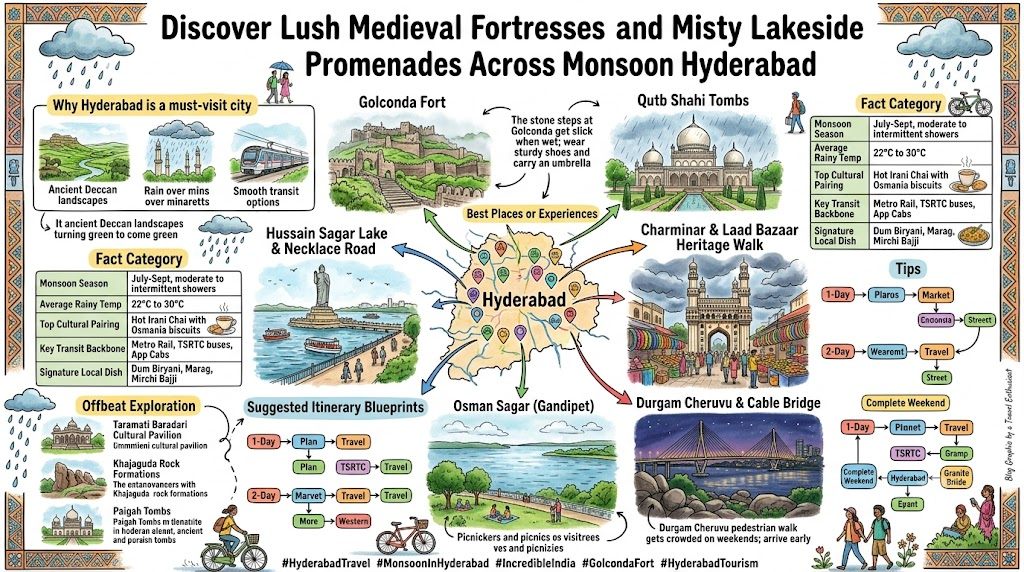
Why Hyderabad is a must-visit city
Hyderabad stands as a monumental crossroads where medieval Islamic majesty blends seamlessly with vibrant Telugu heritage. Perched on the Deccan Plateau, the city’s granite terrain turns into a dramatic tapestry of rolling green knolls, brimming historic reservoirs, and moss-blanketed ramparts as soon as southwest winds sweep in.
Getting here is effortless across every travel style. Rajiv Gandhi International Airport connects directly with major international and domestic hubs, while key rail terminals—Secunderabad, Hyderabad Deccan (Nampally), and Kacheguda—provide smooth nationwide train access. Modern multi-lane expressways, the Outer Ring Road (ORR), and extensive metro lines ensure seamless cross-town movement.
The city naturally organizes into three rich experiential circuits: the Old City’s heritage pulse, the upscale culinary avenues of Banjara and Jubilee Hills, and the scenic western lake-and-fort corridor.
| Fact Category | Detail |
|---|---|
| Monsoon Season | July to late September (moderate to intermittent heavy showers) |
| Average Rainy Temp | 22°C to 30°C (pleasant, cool breezes) |
| Top Cultural Pairing | Hot Irani Chai with buttery Osmania biscuits |
| Key Transit Backbone | Hyderabad Metro Rail, TSRTC buses, App Cabs (Uber/Ola/Rapido) |
| Signature Local Dish | Dum Biryani, Marag, and Mirchi Bajji |
Best Places or Experiences
Golconda Fort
Perched atop a 400-foot granite hill, Golconda Fort was once the seat of the Qutb Shahi dynasty and the guardian of legendary gems like the Koh-i-Noor. During the monsoon, the jagged gray fortifications take on rich, slate hues, surrounded by wild Deccan vegetation and low-hanging rain mist that evokes an atmospheric medieval bastion.
Wandering through its vaulted halls, acoustic whisper arches, and royal armories feels deeply cinematic in damp weather. The climb up to the Bala Hissar pavilion rewards you with sweeping, panoramic views of Hyderabad’s skyline framed against dramatic monsoon clouds.
Lush monsoon greenery at Golconda Fort.
- Location: Ibrahim Bagh, Western Hyderabad; approximately 11 km from Nampally Railway Station.
- Why it is worth visiting: Unmatched medieval acoustics, royal hilltop panoramas, and lush green monsoon landscapes.
- Best things to do: Test the acoustic clap at the Fateh Darwaza entrance, trek up to the Bala Hissar pavilion, and explore the ancient royal gardens.
- Best time to visit: 8:30 AM to 11:00 AM or 3:30 PM to 5:30 PM on cloudy weekdays.
- Ideal for whom: History enthusiasts, architectural photographers, and active walkers.
- Travel tip: The stone steps become slick when wet; wear sturdy shoes with good grip and carry an umbrella.
Qutb Shahi Tombs
Resting gracefully just outside Golconda’s outer wall, this complex contains the regal mausoleums of the seven Qutb Shahi rulers. The grand domes, set within Persian-style landscaped gardens, showcase an elegant fusion of Pathan and Hindu architectural elements made of carved black basalt and granite.
When rain washes over the domes, the stone surfaces glisten under the sky. The sprawling manicured lawns, refurbished with gentle water channels and native trees, provide one of the quietest, most contemplative walks anywhere in the twin cities.
- Location: Ibrahim Bagh, close to Golconda Fort; around 12 km from Central Hyderabad.
- Why it is worth visiting: Breathtaking Deccan-Persian dome architecture set within peaceful, rain-dusted heritage orchards.
- Best things to do: Walk through the tomb of Muhammad Quli Qutb Shah, inspect the on-site restoration interpretation museum, and capture symmetrical garden vistas.
- Best time to visit: Late afternoons (3:00 PM to 5:30 PM) when the monsoon overcast softens the light.
- Ideal for whom: Solitary travelers, couples, photographers, and heritage purists.
- Travel tip: Book entry tickets online at the entrance gate to skip ticket booth lines on rainy weekends.
Hussain Sagar Lake & Necklace Road
Built in 1563 by Ibrahim Quli Qutb Shah, this heart-shaped water body connects the twin cities of Hyderabad and Secunderabad. At its center stands an iconic monolithic granite statue of Gautama Buddha, accessible via scenic public ferry boats.
During rainy evenings, the promenade along Necklace Road (PVNR Marg) fills with cool lake breezes and drifting mist. The surrounding Sanjeevaiah Park and Lumbini Park come alive with seasonal greenery, making it the city’s favorite spot for a relaxed monsoon stroll.
Buddha Statue in Hussain Sagar Lake.
- Location: Tank Bund / PVNR Marg; roughly 3 km from Secunderabad Railway Station.
- Why it is worth visiting: Waterfront evening breezes, boat rides to the Buddha monolith, and lively lakeside street snacking.
- Best things to do: Take the motorized ferry to the Buddha statue, enjoy an open-air drive along Necklace Road, and watch illuminated fountains at Lumbini Park.
- Best time to visit: 5:00 PM to 8:30 PM when the city lights reflect off the dark lake waters.
- Ideal for whom: Families, casual evening strollers, and budget travelers.
- Travel tip: Check the wind conditions before boarding the ferry boat; services pause briefly during sharp monsoon downpours.
Charminar & Laad Bazaar Heritage Walk
Built in 1591 to commemorate the eradication of a historic plague, Charminar is the architectural heartbeat of Old Hyderabad. Its four towering minarets overlook a maze of historic alleyways packed with shops, bangle markets, and street-food vendors.
A rain shower transforms the surrounding stone courtyards into reflective pools mirroring the grand stucco arches. Ducking into historic bakeries for hot chai while watching rain splash across the monument’s centuries-old lime-mortar facade is an unforgettable sensory experience.
- Location: Charminar Area, Old City; around 4 km from Nampally Station.
- Why it is worth visiting: The iconic epicentre of Hyderabadi identity, surrounded by traditional craft bazaars and culinary institutions.
- Best things to do: Climb to the upper gallery for street-level views, shop for handmade lac bangles in Laad Bazaar, and sip freshly brewed Sulemani chai.
- Best time to visit: Morning between 9:00 AM and 11:00 AM to explore before the market corridors crowd up.
- Ideal for whom: Cultural explorers, foodies, and street photography fans.
- Travel tip: Keep your belongings in a waterproof pouch; the crowded alleys can be difficult to navigate with wide umbrellas.
Osman Sagar (Gandipet)
Constructed in 1920 under the reign of the last Nizam, Mir Osman Ali Khan, this vast reservoir was built to protect Hyderabad from floods. Flanked by sprawling landscaped gardens, it provides an expansive, open-water vista on the city’s western periphery.
During the peak monsoon months, the lake brimms with fresh runoff, and its sluice gates open against rolling Deccan skies. The cool microclimate, shaded tree canopies, and gentle lake wind make it the ultimate rainy-day road trip for locals.
- Location: Gandipet, Ranga Reddy District; roughly 25 km west of central Hyderabad.
- Why it is worth visiting: Vast reservoir views, quiet open skies, and refreshing greenery away from urban bustle.
- Best things to do: Walk along the historic reservoir bund, set up a lakeside afternoon picnic, and sample hot corn cobs from local carts.
- Best time to visit: 6:30 AM to 9:30 AM or 4:00 PM to 6:30 PM for the freshest breezes.
- Ideal for whom: Road-trippers, couples, nature admirers, and weekenders.
- Travel tip: Combine your visit with a driving loop along the Outer Ring Road for smooth, scenic monsoon driving.
Durgam Cheruvu & The Cable-Stayed Bridge
Tucked between the granite formations of Jubilee Hills and the high-tech skyline of Madhapur, Durgam Cheruvu is often dubbed the “Secret Lake.” The modern cable-stayed suspension bridge spanning its waters has become one of Hyderabad’s premier contemporary landmarks.
In the rainy season, the water fills out to the base of ancient Deccan boulders, and lush foliage springs up along the boardwalks. Evening rain adds a futuristic sheen to the bridge’s illuminated cables, framing the glistening lake against modern corporate towers.
- Location: Near Inorbit Mall, Madhapur; approximately 15 km from Hyderabad Deccan Station.
- Why it is worth visiting: Striking contrast of primeval Deccan rock formations, calm water, and futuristic bridge architecture.
- Best things to do: Stroll along the pedestrian walking promenade on the bridge, take a quick pedal-boat ride, and relax at lake-facing cafes.
- Best time to visit: 5:30 PM to 8:30 PM when the multi-colored bridge illuminations turn on.
- Ideal for whom: Young travelers, photography lovers, and sunset watchers.
- Travel tip: The pedestrian bridge walk gets crowded on weekends; arrive by 5:00 PM to secure parking in nearby designated lots.
Offbeat Exploration: Hidden Gems Tourists Miss
Taramati Baradari Cultural Pavilion
Built by Ibrahim Quli Qutb Shah, this hilltop Persian-style music pavilion features twelve open arches designed for natural acoustic resonance. Legend holds that Taramati’s voice could carry all the way to the royal citadel at Golconda. During the monsoon, the elevated semi-open arches offer a breezy viewpoint over the rain-swept southern plains, far from noisy tour buses.
Khajaguda Rock Formations
These naturally balanced prehistoric granite formations date back over 2.5 billion years. Rain creates seasonal freshwater pools in the hollows of the rocks, while wild grasses blanket the crevices. It is a favored haven for local boulderers and outdoor fans looking for a brisk early morning monsoon scramble overlooking the IT corridor.
Paigah Tombs
Hidden within the quiet residential pockets of Pisalbanda, these mausoleums belong to the noble Paigah family. Famous for their intricate lime-and-mortar filigree work and inlaid geometric screens, the open courtyards take on a serene, melancholic beauty under cloudy skies.
Detailed Practical Guidance for Travelers
| Destination | Standard Entry Fee | General Timings | Best Local Food Options Nearby | Recommended Nearby Attractions |
|---|---|---|---|---|
| Golconda Fort | ₹25 (Indians), ₹300 (Foreigners) | 9:00 AM – 5:30 PM | Al-Rabea Mandi, Shah Ghouse (Tolichowki) | Qutb Shahi Tombs, Taramati Baradari |
| Qutb Shahi Tombs | ₹20 (Adults), ₹10 (Kids) | 9:30 AM – 4:30 PM | Pista House (Tolichowki), Rumaan Restaurant | Golconda Fort, Khajaguda Hills |
| Hussain Sagar & Tank Bund | Free (Boating ₹50–₹100) | 8:00 AM – 10:00 PM | Waterfront Restaurant, Minerva Coffee Shop | Birla Mandir, Lumbini Park |
| Charminar & Laad Bazaar | ₹25 (Indians), ₹300 (Foreigners) | 9:30 AM – 5:30 PM | Nimrah Cafe, Shadab, Hotel Nayab | Mecca Masjid, Chowmahalla Palace |
| Osman Sagar (Gandipet) | Free (Park entry ₹20) | 9:00 AM – 6:00 PM | The Fisherman’s Wharf, local tea shacks | Chilkur Balaji Temple, Himayat Sagar |
| Durgam Cheruvu | Free (Boating extra) | 6:00 AM – 9:00 PM | Roast CCX, Olive Bistro, Broadway | Shilparamam, Jubilee Hills Cafes |
Logistics & On-Ground Navigation
Local Transport Options
- Hyderabad Metro Rail: Clean, air-conditioned, and reliable during torrential rains. Red, Blue, and Green corridors cover central hubs, Hitec City, and key rail connections.
- Auto-Rickshaws: Plentiful across all neighborhoods. Demand the meter or book directly via Ola, Uber, or Rapido to avoid elevated roadside quotes.
- App-Based Cabs & Bike Taxis: Reliable across rain hours, though peak-hour price surges occur during heavy showers. Keep both Ola and Uber active on your phone.
- TSRTC City Buses: Ultra-affordable network connecting distant spots like Gandipet and Ibrahim Bagh, but prone to rain delays during peak evening traffic.
Budget Planning
- Backpacker / Budget Explorer (₹1,200 – ₹1,800 per day): Stays in comfortable hostels in Banjara Hills or Gachibowli, traveling via Metro and city buses, eating street dosas, Irani chai, and local biryani plates.
- Mid-Range / Comfort Traveler (₹3,500 – ₹6,500 per day): Stays in three-star boutique hotels, using private app cabs for monsoon transfers, dining at sit-down heritage restaurants, and taking guided walks.
Safety and Inclusivity Tips
- For Families: Keep to paved paths at heritage sites like Golconda during the rains, as rock steps can be slick for elders and children.
- For Couples: Lakefronts and gardens are welcoming; stick to busy, well-lit promenades along Necklace Road and Durgam Cheruvu after sunset.
- General Safety: Watch out for sudden waterlogging in low-lying older streets after flash downpours. Always keep waterproof shoe covers and rain gear in your daypack.
Strategic Travel Planning Guardrails
Travel Planning Tips for Hyderabad
- Track the Weather Window: Plan outdoor hill climbs like Golconda for early mornings before afternoon downpours begin.
- Keep Digital Wallets Ready: UPI payments (PhonePe, Google Pay, Paytm) work seamlessly everywhere, from fine-dining rooms to small roadside tea stalls.
- Dress for Humidity: Pack lightweight, quick-dry cottons or linen blends, along with a windproof umbrella and water-resistant shoes.
- Pre-Book Monument Tickets: Use the official ASI portal to bypass weekend ticket lines at Charminar and Golconda.
- Respect Sacred Dress Codes: Modest clothing covering shoulders and knees is expected when visiting sites like Mecca Masjid or Birla Mandir.
Common Mistakes to Avoid
- Underestimating City Distances: Don’t attempt to visit Charminar and Hitec City back-to-back in peak evening traffic; cross-town transit can take over 90 minutes in the rain.
- Assuming Rain Halts the City: Monsoon showers in Hyderabad often arrive in short, intense bursts rather than continuous all-day downpours.
- Skipping Classic Chai Stops: Skipping an Irani chai with hot onion samosas on a rainy afternoon means missing out on the city’s favorite seasonal ritual.
- Relying Exclusively on Cash: Many small vendors now prefer UPI scan codes over loose paper change.
- Ignoring Slippery Stone Surfaces: Walking on unpaved monument paths in smooth-soled shoes can be hazardous when wet.
Suggested Itinerary Blueprints
1. Day Quick Dash (The Monsoon Heritage Transit)
Ideal for business travelers or short-layover visitors wanting the core essence of the city in a single day.
- Morning (8:30 AM – 12:00 PM): Arrive early at Golconda Fort to climb the granite ramparts under cool morning clouds. Head immediately down to the serene Qutb Shahi Tombs.
- Afternoon (12:30 PM – 3:30 PM): Cross the Musi River into the Old City. Relish an authentic mutton dum biryani lunch at Hotel Shadab, followed by a heritage stroll around Charminar.
- Evening (4:30 PM – 7:30 PM): Head to Tank Bund, take a brisk ferry ride across Hussain Sagar Lake, and wind down with Irani chai and Osmania biscuits along the breezy promenade.
2. Day Deep-Dive (Twin City Monsoon Immersion)
Designed for travelers wanting a balanced blend of medieval royalty and contemporary Deccan culture over two full days.
- Day 1 (Regal Deccan History): Begin with the monumental climb up Golconda Fort, followed by an unhurried visit to the Qutb Shahi Tombs. Enjoy lunch along Tolichowki’s famous food strip. Spend the late afternoon wandering through the courtyards of Chowmahalla Palace, ending with chai at Nimrah Cafe facing an illuminated Charminar.
- Day 2 (Lakes, Art, and High-Tech Skyline): Start with an early morning walk across Khajaguda Rock Formations. Browse the crafts and cultural pavilions at Shilparamam. In the afternoon, explore the lake-facing cafes around Jubilee Hills, before spending the evening walking across the glowing Durgam Cheruvu Cable Bridge.
3. Complete Weekend Travel Plan (The Ultimate Monsoon Loop)
A 3-day loop covering ancient forts, quiet lakes, street food, and vibrant cultural hubs.
- Friday (Old City Roots): Land by noon and check into your hotel. Spend your late afternoon visiting Charminar, Mecca Masjid, and shopping for lac bangles in Laad Bazaar. Enjoy a classic dinner at Grand Hotel in Abids.
- Saturday (Fortresses and Royal Pavilions): Dedicate the morning to Golconda Fort and the Qutb Shahi Tombs. In the afternoon, head toward the quiet hilltop arches of Taramati Baradari. Catch sunset vistas across Necklace Road and dine at a lakeside restaurant.
- Sunday (Open Reservoirs and Modern Flavors): Take a morning road trip out to the expansive waters of Osman Sagar (Gandipet). Loop back via the Outer Ring Road toward Madhapur. Spend your late afternoon strolling the Durgam Cheruvu boardwalk and wrap up your trip at a craft brewery in Jubilee Hills.
Common Tourist Mistakes to Avoid
Geographic Blunders
A frequent misstep is trying to combine geographically opposite points—such as the eastern Old City (Charminar) and the far-western fringes (Gandipet or Hitec City)—within a single afternoon. Heavy monsoon traffic can turn cross-city drives into slow commutes. Group your itinerary into distinct geographic zones instead.
Commercial Traps
Spending precious rainy afternoons inside enclosed shopping malls in Somajiguda or Madhapur misses the real charm of Hyderabad. The city’s rainy-day magic belongs outdoors: in atmospheric bazaars, around ancient granite fortresses, and across open lake promenades.
Neglecting Modern/Alternative Zones
Many visitors focus only on historical monuments, missing out on the vibrant artistic and culinary life in Jubilee Hills, Film Nagar, and Madhapur. These neighborhoods boast open-air garden cafes, independent art galleries, and microbreweries that are especially lively on rainy evenings.
Transport Overpayment
Hailing unmetered auto-rickshaws outside major transit hubs like Secunderabad Station or Charminar often leads to steep tourist quotes. Always cross-reference prices with ride-hailing apps like Rapido, Uber, or Ola before agreeing to an auto fare.
Luxury Dining Bias
Eating exclusively at high-end hotel buffets means missing the genuine flavors of Hyderabadi cuisine. The true soul of the city’s food culture lives in humble heritage establishments: piping-hot Marag soup at Nayab, fresh dosas at Govind Ki Bandi, and hot bun-maska dipped in Irani chai at local tea cafes.
Frequently Asked Questions
1. Is July or August a good time to visit Hyderabad for sightseeing?
Yes, July and August are fantastic months to explore Hyderabad. Southwest monsoon showers lower the harsh summer heat, bringing average temperatures down to a comfortable 25°C to 30°C. The surrounding Deccan landscapes, hillocks, and historic fort ramparts turn lush green, making daytime sightseeing pleasant and refreshing.
2. Does heavy rain disrupt public transport and metro lines across Hyderabad?
No, Hyderabad’s public transport continues running reliably throughout the monsoon season. The elevated Hyderabad Metro Rail network remains unaffected by rain and connects all major commercial and tourist hubs. While road traffic can slow down during heavy cloudbursts, app cabs and autos operate consistently across all neighborhoods.
3. Are heritage stone steps at Golconda Fort safe to climb when it rains?
Yes, though visitors should exercise caution on the ascent. The ancient granite steps can become slick after sudden showers. It is best to wear walking shoes with reliable rubber tread, avoid smooth-soled footwear, hold onto safety railings, and take your time when climbing up to the Bala Hissar pavilion.
4. What unique Hyderabadi food items should travelers try during the rainy season?
Monsoon is the best time to indulge in steaming bowls of spicy Marag (a rich mutton-almond broth), fresh keema samosas, and Mirchi Bajji (spicy battered chili fritters). Pair these savory treats with freshly brewed, sweet Irani Chai and crisp Osmania biscuits at an authentic Old City cafe.
5. How should visitors handle payments when exploring local markets in Hyderabad?
Digital UPI payments via Google Pay, PhonePe, and Paytm are widely accepted throughout Hyderabad, from modern boutiques to small fruit carts and street stalls. However, carrying around ₹500 to ₹1,000 in small cash denominations remains useful for quick entry tickets, auto rides, and small tips.
6. Can tourists take boat rides on Hussain Sagar Lake during the monsoon?
Yes, mechanized ferry and speedboat services to the central Buddha statue operate regularly through the monsoon season. Departures only pause briefly during heavy squalls or high winds. Standard boat rides resume as soon as downpours clear, making evening cruises on the lake a great seasonal activity.
7. What clothes and footwear are most practical for a rainy trip to Hyderabad?
Pack lightweight, breathable cotton or linen clothing that dries quickly if caught in a shower. Carry a compact, wind-resistant umbrella and a light waterproof jacket. Waterproof sandals or trail sneakers with good grip are ideal for walking across wet heritage stone pathways and historic streets.
8. Is Durgam Cheruvu bridge accessible for pedestrian walking on rainy evenings?
Yes, the Durgam Cheruvu Cable-Stayed Bridge features dedicated, elevated pedestrian pathways on both sides of the roadway. It is a popular spot for evening walks, offering elevated views of the lake waters, rocky hillsides, and glittering corporate skylines under misty, overcast monsoon skies.
9. Are the Qutb Shahi Tombs open every day during the rainy season?
The Qutb Shahi Tombs complex remains open to visitors daily from 9:30 AM to 4:30 PM, including throughout the monsoon. The extensive restoration work carried out by the Aga Khan Trust for Culture has added well-paved pathways, making the surrounding gardens easy to explore even right after rain.
10. How far is Osman Sagar lake from the main Hyderabad city center?
Osman Sagar (Gandipet) lies roughly 20 to 25 kilometers west of central Hyderabad. The drive takes around 45 to 60 minutes via the Financial District and Outer Ring Road. Its smooth road access makes it one of the easiest, most scenic half-day monsoon road trips from the city.
11. Is Hyderabad safe for solo female travelers during the monsoon season?
Hyderabad is widely considered one of India’s safest metropolitan cities for solo travelers. Well-lit neighborhoods, active evening markets, visible police patrols, and reliable app-based transport make navigating straightforward. For maximum peace of mind, plan your visits to historic monuments during daylight hours and use metro lines or tracked cabs at night.
12. Do travelers need to book monument entry tickets in advance during monsoon months?
Advance booking is not strictly required, but purchasing digital tickets via the official Archaeological Survey of India (ASI) website saves time. It allows you to scan QR codes and bypass physical ticket lines at popular attractions like Golconda Fort and Charminar, which is especially helpful during sudden rain showers.
Conclusion
Traveling through Hyderabad during the monsoon offers a grounding, poetic reminder of why we set out to explore the world in the first place. Beyond the generic itineraries of crowded seasonal retreats, this ancient city invites you to slow down, watch rain drift across medieval bastions, breathe in the petrichor of weathered granite hills, and share a warm cup of spiced chai in the heart of the Deccan.
