Introduction
Far away from cookie-cutter tourist resorts and overcrowded commercial vacation hotspots lies an extraordinary royal sanctuary that echoes with the splendor of a bygone era. Falaknuma Palace invites discerning travelers into a world of genuine heritage, unmatched architectural opulence, and profound cultural connection. Rather than rushing through superficial sightseeing tracks, stepping onto these hallowed palace grounds offers an immersive journey into the opulent lifestyle of the Nizams, where every marble pillar and Venetian chandelier whispers centuries-old secrets.
Why Hyderabad is a Must-Visit City
Hyderabad stands as a magnificent intersection where ancient Deccan history seamlessly converges with modern technological advancement, creating an unmissable chapter for any serious traveler. Geographically anchored in the heart of the Indian peninsula, the city boasts exceptional connectivity via international airports, high-speed rail networks, and multi-lane expressways. Whether you are a solo backpacker, a history-obsessed scholar, or a luxury-seeking couple, the city’s legendary hospitality and world-class lodging cater effortlessly to every travel archetype.
The local travel circuit is neatly divided into the historical Old City—dominated by labyrinthine bazaars and medieval monuments—and the sleek, cosmopolitan tech corridors of Jubilee Hills and Banjara Hills. This dual personality allows visitors to transition from the aromatic lanes of Irani cafes to futuristic architectural marvels within minutes.
| Landmark / Region | Core Cultural Significance | Accessibility & Best Transit |
| Old City & Charminar | 16th-century Qutb Shahi and Asaf Jahi urban heart | Auto-rickshaws, heritage walks, local cabs |
| Falaknuma & Falaknuma Hill | European-Italian architecture mixed with Nizam grandeur | Private taxis, heritage shuttle services |
| Banjara & Jubilee Hills | Contemporary upscale dining, art galleries, and cafes | Metro rail, ride-sharing apps, car rentals |
| Golconda & Qutb Shahi Tombs | Medieval fortress architecture and royal necropolises | Cab aggregators, tourist buses, auto-rickshaws |
Best Places or Experiences
Falaknuma Palace
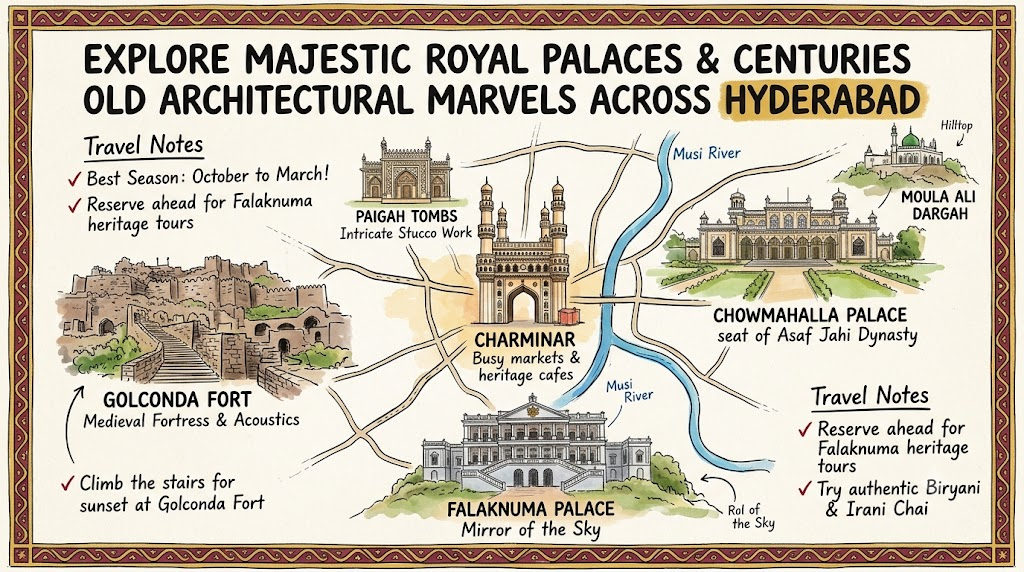
Falaknuma Palace, meaning “Mirror of the Sky,” sits perched majestically on a 2,000-foot-high hill, offering sweeping panoramic views of the entire city below. Conceived by Sir Vicar-ul-Umra and later acquired by the Nizam of Hyderabad, this architectural masterpiece blends Italian and Tudor styles with immaculate craftsmanship. Visitors walk through magnificent courtyards featuring rare jade collections, grand marble staircases flanked by carved stone balustrades, and a world-famous dining hall housing a 108-seater carved oak table.
The palace interior serves as an open-air museum filled with priceless manuscripts, Victorian furniture, and hand-painted frescoes. Every corner reflects an era when art and architecture were patronized on a breathtaking scale, offering guests an intimate glimpse into the lavish lifestyle of the premier princely state of British India.
- Location: Engine Bowli, Falaknuma, about 5 kilometers southeast of Charminar and 18 kilometers from the city center.
- Why it is worth visiting: It houses the world’s longest dining table and features the finest collection of European art, Venetian chandeliers, and Asaf Jahi royal artifacts in an authentic palace setting.
- Best things to do: Experience the traditional horse-drawn carriage arrival, take a guided heritage walk through the Jade Room, and enjoy high tea on the lawn.
- Best time to visit: Late afternoon through sunset to witness the stunning illumination of the palace facade.
- Ideal for whom: History enthusiasts, luxury travelers, architecture aficionados, and couples seeking a romantic getaway.
- Travel tip: Advance reservations for dining or heritage tours are mandatory, and strict dress codes apply for all visitors.
Charminar
Built in 1591 by Muhammad Quli Qutb Shah, the Charminar is the undisputed architectural icon of the city, standing proudly at the center of the bustling Old City. Its four grand minarets soar into the sky, symbolizing the foundation of the city and anchoring a thriving network of traditional markets.
Surrounding the monument, the historic Laad Bazaar comes alive with the shimmer of traditional lac bangles, authentic attar perfumes, and age-old textile shops. Navigating these narrow alleyways exposes travelers to the pulsating heartbeat of authentic local culture, where centuries-old trades continue to thrive amidst the modern hum of commerce.
- Location: Charminar Road, Ghansi Bazaar, located right in the heart of the historic Old City.
- Why it is worth visiting: It represents the foundational soul of the city and offers direct access to authentic traditional markets and centuries-old culinary heritage.
- Best things to do: Climb the narrow spiral staircase to the first floor for city views, shop for authentic lac bangles, and sample traditional Irani chai nearby.
- Best time to visit: Early morning between 7:00 AM and 9:00 AM to avoid heavy pedestrian crowds.
- Ideal for whom: Street photographers, culture seekers, shoppers, and food explorers.
- Travel tip: Exercise caution with personal belongings in crowded market areas and wear comfortable walking shoes.
Chowmahalla Palace
Chowmahalla Palace was the opulent seat of the Asaf Jahi Dynasty, where the Nizams entertained royal guests and foreign dignitaries. The complex features a stunning array of palaces, grand courtyards, sprawling lawns, and water fountains that reflect exquisite Persian and European design influences.
The Khilwat Mubarak, the grand durbar hall, dazzles with nineteen massive Belgian crystal chandeliers suspended from a high vaulted ceiling. Visitors can inspect vintage royal cars, traditional weaponry, ceremonial clothing, and fascinating photographic archives detailing court life.
- Location: Khilwat, Motigalli, situated just 1 kilometer southwest of Charminar.
- Why it is worth visiting: It is the best-preserved royal residence showcasing authentic Nizam durbar culture, vintage automobiles, and magnificent chandelier collections.
- Best things to do: Explore the vintage car museum, admire the crystal chandeliers in Khilwat Mubarak, and stroll through the restored palace gardens.
- Best time to visit: Morning hours right at opening time (10:00 AM) for quiet exploration.
- Ideal for whom: History buffs, royal heritage researchers, and families.
- Travel tip: Photography inside the main museum halls may have restrictions; check guidelines at the ticket counter.
Golconda Fort
Golconda Fort is an indestructible medieval fortress renowned for its brilliant acoustic engineering, massive granite ramparts, and legendary diamond trade history. Originally a mud fort, it was expanded by the Qutb Shahi kings into an imposing defensive stronghold spanning four distinct concentric fortifications.
Climbing to the citadel at the summit offers breathtaking panoramic views of the surrounding plains and nearby royal tombs. The famous acoustic feature at the grand portico—where a handclap at the entrance echoes clearly at the hilltop pavilion—demonstrates ancient engineering brilliance.
- Location: Ibrahim Bagh, located 11 kilometers west of the city center.
- Why it is worth visiting: It offers incredible medieval military architecture, fascinating acoustic phenomena, and the legendary heritage of the Koh-i-Noor diamond.
- Best things to do: Climb to the Bala Hisar pavilion, test the acoustic gate design, and attend the evening sound and light show.
- Best time to visit: Late afternoon (3:30 PM onwards) to catch the sunset from the fort ramparts.
- Ideal for whom: Adventure seekers, architecture lovers, and photography enthusiasts.
- Travel tip: Wear sturdy footwear with good grip, as climbing uneven stone staircases requires physical stamina.
Offbeat Exploration: Hidden Gems Tourists Miss
Moula Ali Dargah
Perched high atop a massive rock formation in the northeastern sector of the city, Moula Ali Dargah is a revered 16th-century shrine offering tranquil spiritual energy and sweeping valley views. Climbing the hundreds of painted stone steps rewards travelers with a peaceful sanctuary far removed from urban chaos, especially during serene twilight hours.
Paigah Tombs
Tucked away in a quiet residential neighborhood, the Paigah Tombs are the final resting place of nobility belonging to the Paigah aristocracy. Built with intricate lime-stucco work, delicate lattice screens (jalis), and floral motifs, this hidden necropolis displays a mesmerizing blend of Rajput, Persian, and Deccani architectural styles without the crowds of mainstream monuments.
Detailed Practical Guidance for Travelers
| Destination | Standard Entry Fee | General Timings | Best Local Food Options Nearby | Recommended Nearby Attractions |
| Falaknuma Palace | Premium / High (Tour/Dining) | 4:00 PM – 6:00 PM (Tea) | Fine dining on-site, Hyderabad House | Chowmahalla Palace, Charminar |
| Charminar | Nominal (INR 25 for Indians, INR 300 for foreigners) | 9:00 AM – 5:30 PM | Nimrah Cafe, Shadab Hotel | Laad Bazaar, Mecca Masjid |
| Chowmahalla Palace | Moderate (INR 100 for Indians, INR 400 for foreigners) | 10:00 AM – 5:00 PM (Closed Fridays) | Shah Ghouse Cafe, Pista House | Charminar, Chowk Bazaar |
| Golconda Fort | Nominal (INR 25 for locals, INR 200 for foreigners) | 9:00 AM – 5:30 PM | Fortress street stalls, Toli Masjid | Qutb Shahi Tombs, Durgam Cheruvu |
Logistics & On-Ground Navigation
Local Transport Options
- Metro Rail: The modern Hyderabad Metro system connects major commercial hubs and transit stations cleanly and efficiently.
- Auto-Rickshaws: Widely available across all neighborhoods; insist on running by the digital meter or use ride-hailing apps.
- Ride-Sharing Apps: Platforms like Ola and Uber operate seamlessly for both car rentals and bike taxis, offering transparent pricing.
- Heritage Cabs: Pre-arranged private rentals are ideal for comfortable day-long excursions to palaces and distant forts.
Budget Planning
- Budget / Backpacking Tier: Expect to spend around INR 1,500 to 2,500 per day, covering hostel stays, local public transit, and authentic street-level meals.
- Mid-Range / Comfort Tier: Budget INR 5,000 to 9,000 per day for comfortable boutique hotel accommodations, private app-based cabs, and visits to heritage fine-dining restaurants.
Safety and Inclusivity Tips
- For Families: Stick to well-lit commercial zones during late evenings and keep children hydrated against the regional heat.
- For Couples: The city is generally safe and conservative; public displays of affection are best kept modest out of respect for local customs.
- General Safety: Keep emergency contact numbers saved, safeguard valuables in crowded bazaars, and stay hydrated with bottled water.
Strategic Travel Planning Guardrails
Travel Planning Tips for Hyderabad
- Booking Seasons: Plan your journey between October and March when pleasant winter weather makes outdoor exploration comfortable.
- Payment Preferences: While digital UPI payments and credit cards are widely accepted, always keep some cash handy for small street vendors and rickshaws.
- Local Etiquette: Dress modestly when visiting religious shrines, mosques, and traditional heritage precincts.
- Physical Preparation: Expect significant walking on uneven stone surfaces at historical forts and palaces; wear comfortable footwear.
- Cuisine Exploration: Do not limit yourself to hotel dining; sample authentic local biryani at historic neighborhood eateries.
Common Mistakes to Avoid
- Over-Packing Itineraries: Trying to cover both the historic Old City and distant tech hubs on the same day leads to severe traffic fatigue.
- Ignoring Regional Sub-Districts: Treating the entire metropolis as a single zone ignores the unique cultural character of distinct neighborhoods.
- Transport Assumptions: Relying on unmetered street transport instead of app-based aggregators can lead to unnecessary price negotiations.
- Skipping Regional Cuisine: Missing out on authentic street-level culinary traditions deprives you of the destination’s true soul.
- Poor Timing: Visiting exposed outdoor monuments during peak afternoon summer heat will drain your energy quickly.
Suggested Itinerary Blueprints
- 1-Day Quick Dash (Heritage Express): Designed for hurried business travelers or transit visitors; morning visit to Charminar and Laad Bazaar, afternoon tour of Chowmahalla Palace, and an evening dinner featuring authentic Hyderabadi biryani in the Old City.
- 2-Day Deep-Dive (Royal Deccan Trail): Day 1 covers the historic Old City landmarks including Charminar, Mecca Masjid, and Chowmahalla Palace; Day 2 focuses entirely on the grand architecture of Falaknuma Palace and the sprawling stone majesty of Golconda Fort.
- Complete Weekend Travel Plan (Deccan Crown Loop): Friday arrival and evening walk around Hussain Sagar Lake; Saturday dedicated to Golconda Fort and the nearby Qutb Shahi Tombs; Sunday spent exploring Falaknuma Palace, the Paigah Tombs, and shopping in traditional bazaars.
Common Tourist Mistakes to Avoid
- Geographic Blunders: Trying to combine geographically opposed zones or circuits on the exact same day.
- Commercial Traps: Spending excessive vacation time in modernized shopping hubs rather than authentic, atmospheric local spaces.
- Neglecting Modern/Alternative Zones: Forgetting to explore the quieter, residential, artistic, or cafe-centric modern expansions of the region.
- Transport Overpayment: Actionable advice on using official meters or cross-referencing ride-sharing apps to avoid price gouging.
- Luxury Dining Bias: Explaining why missing street-level culinary vendors deprives the traveler of the destination’s true soul.
Frequently Asked Questions
1. What makes Falaknuma Palace unique compared to other Indian royal residences?
Falaknuma Palace is celebrated for its rare blend of Italian and Tudor architecture, perched high on a hill overlooking the city. It houses the legendary 108-seater carved oak dining table and an extraordinary collection of European art, Venetian chandeliers, and rare jade artifacts collected by the Nizams.
2. How far is Falaknuma Palace from the central city railway station?
Falaknuma Palace is located approximately 5 kilometers southeast of Charminar and about 16 kilometers from the Hyderabad Railway Station. Reaching the palace typically takes around 35 to 45 minutes by taxi or private car, depending on traffic conditions across the urban corridors.
3. Are walk-in visitors allowed at Falaknuma Palace without prior booking?
Walk-in entry without prior reservation is generally not permitted due to security protocols and the exclusive nature of the heritage property. Visitors must book official high-tea experiences, dining reservations, or guided palace heritage tours well in advance through authorized channels.
4. What is the appropriate dress code when visiting Falaknuma Palace?
The palace maintains a strict formal and smart-casual dress code to honor its heritage legacy and upscale dining standards. Athletic wear, shorts, flip-flops, and overly casual clothing are strictly prohibited for all guests entering the palace grounds and dining areas.
5. Can visitors explore all areas of Falaknuma Palace independently?
General independent wandering is restricted to maintain the pristine condition of the palace interiors and artifact collections. Visitors explore the grand halls, courtyards, and gardens primarily through structured guided heritage tours or coordinated royal experiences led by palace staff.
6. When was Falaknuma Palace constructed and who built it?
Construction of Falaknuma Palace began in 1884 under the direction of Sir Vicar-ul-Umra, the Prime Minister of Hyderabad and brother-in-law of the Nizam. The palace was later purchased by the sixth Nizam, Mir Mahbub Ali Khan, who used it as his royal guest house.
7. What are the best months of the year to visit Hyderabad for comfortable weather?
The ideal time to explore Hyderabad is between October and March when winter temperatures remain pleasant and mild. During these months, daytime weather is comfortable for walking tours, outdoor monument visits, and exploring historic gardens without excessive heat.
8. Is photography permitted inside the halls of Falaknuma Palace?
Professional photography and video recording inside the main palace residential quarters and heritage rooms are strictly regulated to protect historical artifacts. Guests are permitted to capture designated exterior architectural angles and gardens during their guided tours.
9. What local culinary specialties must every traveler try near the Old City?
Travelers should not miss authentic Hyderabadi Dum Biryani, double ka meetha, Haleem during festive seasons, and traditional Irani chai paired with Osmania biscuits. These culinary staples reflect the rich fusion of Persian, Mughlai, and local Telugu flavor profiles.
10. How can budget travelers navigate historical sites efficiently?
Budget travelers can utilize the clean and affordable Hyderabad Metro network for cross-town transit and rely on local auto-rickshaws for neighborhood commutes. Purchasing standard entry tickets for public monuments keeps historical exploration very economical.
11. Are there any hidden heritage spots near Falaknuma that most tourists miss?
Many tourists overlook the Paigah Tombs, an architectural marvel featuring intricate stucco work and lattice screens located in a quiet neighborhood. The Moula Ali Dargah on its rocky hill also offers stunning panoramic views and a peaceful spiritual escape.
12. What safety precautions should travelers keep in mind while exploring crowded bazaars?
Visitors exploring bustling markets like Laad Bazaar should keep personal belongings secure, stay aware of surrounding pedestrian traffic, and maintain hydration. Utilizing verified ride-sharing apps ensures safe and transparent transit back to your accommodation after dark.
Conclusion
Choosing to journey through the storied lanes and majestic palaces of Hyderabad offers a profound intellectual and emotional reward that ordinary vacation resorts simply cannot match. By immersing yourself in the living history of the Deccan, savoring authentic culinary traditions, and marveling at architectural wonders like Falaknuma Palace, you forge a genuine connection with a timeless culture that stays with you long after your journey ends.
