Introduction
While mass tourism herds travelers toward predictable, overcrowded beach resorts and commercialized metropolitan strips, true cultural seekers yearn for places that whisper ancient stories. Skip the sterile vacation checklists and step into a living museum where centuries-old stone domes pierce the golden horizon. Here, every alleyway hums with a vibrant fusion of Persian elegance and Deccani soul, inviting you to connect with a genuine heritage that refuses to fade into obscurity.
Why Hyderabad is a majestic cultural destination
Hyderabad stands as a magnificent chapter in global travel, bridging medieval Islamic architecture with bustling modern enterprise. Geographically positioned at the crossroads of the Deccan Plateau, it serves as an accessible metropolis connected seamlessly by international airports, major railway terminals, and pristine multi-lane national highways. Whether you are a solo backpacker, a couple seeking romantic historic walks, or a multi-generational family, the city welcomes every traveler with open arms and legendary hospitality.
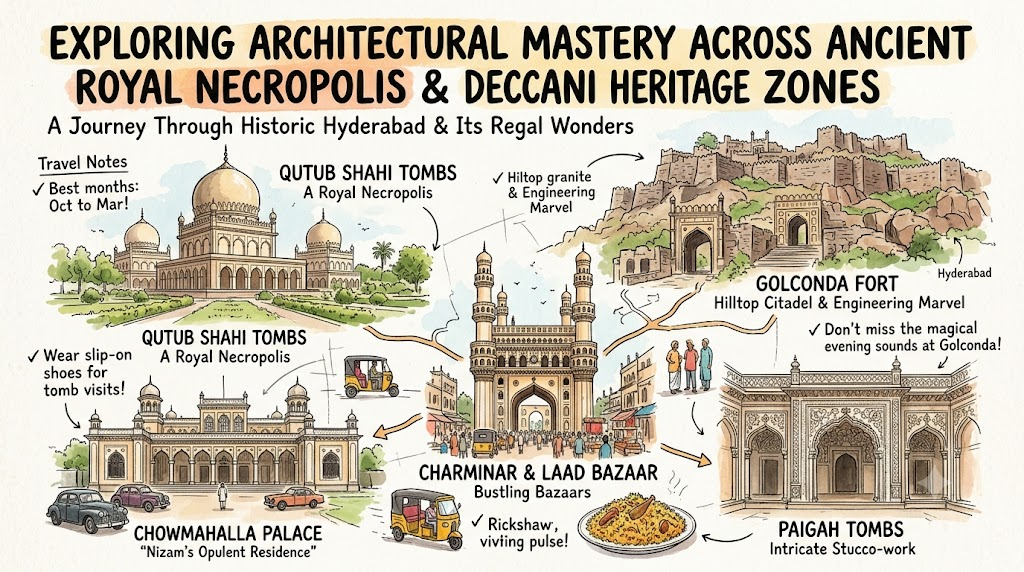
The regional travel circuit revolves around an iconic triad: the majestic royal tombs, the imposing hilltop fortresses, and the bustling labyrinth of old city bazaars.
| Region Metric | Key Detail |
|---|---|
| Primary Vibe | Royal medieval heritage meets modern tech hub |
| Accessibility | RGIA International Airport, 3 major railway stations |
| Best Travel Months | October through March |
| Cultural Staple | Authentic Dum Biryani and Hyderabadi Haleem |
Top Places and Experiences in Hyderabad
The timeless grandeur of Qutub Shahi Tombs.
Qutub Shahi Tombs
Sprawling across manicured gardens just a short distance from the formidable Golconda Fort, the Qutub Shahi Tombs represent the crowning glory of Deccani funerary architecture. These majestic structures merge Persian, Pathan, and Hindu styles, featuring soaring domes, intricate stuccowork, and basalt foundations that have withstood the test of time for over four centuries.
The complex houses the mortal remains of the seven Qutub Shahi rulers who founded Hyderabad. Each mausoleum is a distinct architectural marvel, surrounded by lotus motifs, basalt carvings, and subterranean chambers that once held opulent Persian carpets and golden chandeliers.
- Location: Ibrahim Bagh, approximately 8 kilometers west of the city center.
- Why it is worth visiting: It is the only place in the world where an entire dynasty’s royal necropolis survives intact in a single landscaped enclosure.
- Best things to do: Explore the rooftop views of the grand Golconda Fort, inspect the intricate Persian tile work, and wander through the grand mosque.
- Best time to visit: Late afternoon between 4:00 PM and 5:30 PM for golden hour photography.
- Ideal for whom: History buffs, architecture enthusiasts, and contemplative solo travelers.
- Travel tip: Wear slip-on shoes as footwear must be removed before entering the sacred inner sanctums.
Golconda Fort
Perched dramatically on a 120-meter-high granite hill, Golconda Fort is an engineering and acoustic masterpiece. Built originally by the Kakatiyas and later expanded by the Qutub Shahis, the fortress was renowned worldwide for yielding legendary diamonds like the Koh-i-Noor.
Walking through its massive gates reveals an ingenious acoustic design where a handclap at the portico echoes clearly at the hilltop citadel. The sprawling ruins comprise royal palaces, secret escape tunnels, armories, and breathtaking cascading water systems that sustained an entire royal city under siege.
- Location: Golconda, 11 kilometers west of Hussain Sagar Lake.
- Why it is worth visiting: Unmatched military architecture and the birthplace of legendary global diamonds.
- Best things to do: Test the famous acoustics at the grand entrance dome, climb to the Bala Hisar pavilion, and attend the evening sound and light show.
- Best time to visit: Early morning opening hours (9:00 AM) to beat the afternoon heat.
- Ideal for whom: Adventure seekers, photographers, and families with older children.
- Travel tip: Hire an authorized local guide at the entrance to fully appreciate the complex security architecture and secret tunnels.
Charminar and Laad Bazaar
Standing proudly at the historic heart of the old city, the Charminar is a magnificent 16th-century monument featuring four grand minarets. Built to commemorate the eradication of a deadly plague, it anchors a vibrant network of bustling bazaars that have traded pearls, spices, and textiles for centuries.
Radiating outward from the monument, Laad Bazaar is famous for its shimmering lacquer bangles encrusted with artificial diamonds. The sensory overload of aromatic street food, calls to prayer, and glittering storefronts encapsulates the timeless pulse of Old Hyderabad.
- Location: Old City, Charminar pedestrian zone.
- Why it is worth visiting: The cultural heartbeat and commercial soul of historic Hyderabad.
- Best things to do: Climb up the first floor of Charminar for panoramic old city views, shop for traditional glass bangles, and sample authentic Irani chai.
- Best time to visit: Early morning for photography or late evening for the bustling night bazaar vibe.
- Ideal for whom: Culture enthusiasts, street photographers, and avid shoppers.
- Travel tip: Leave large backpacks behind as the staircases inside the minarets are extremely narrow and steep.
Chowmahalla Palace
Once the opulent seat of the Asaf Jahi dynasty, Chowmahalla Palace is a dazzling complex of courtyards, grand fountains, and majestic Durbar halls. The palace reflects a synthesis of Persian, European, and Rajasthani architectural influences, highlighted by glistening chandeliers and sprawling lawns.
The Khilwat Mubarak hall, featuring 19 massive Italian chandeliers, showcases the unmatched grandeur of the Nizams. Visitors can wander through vintage car collections, royal wardrobe exhibitions, and serene courtyards that transport you straight into a bygone era of unmatched royal splendor.
- Location: Motigalli, close to Charminar in the Old City.
- Why it is worth visiting: To witness the authentic lifestyle, artifacts, and regal grandeur of the legendary Nizams of Hyderabad.
- Best things to do: Admire the vintage Rolls-Royce cars, study the royal weaponry exhibition, and stroll through the restored clock tower courtyard.
- Best time to visit: Mid-morning right after opening when the courtyards are peaceful.
- Ideal for whom: History lovers, design enthusiasts, and couples.
- Travel tip: Photography inside the main museum halls is restricted, so keep cameras tucked away in designated areas.
Salar Jung Museum
Housing one of the world’s largest one-man antique collections, the Salar Jung Museum is a treasure trove of global art, manuscripts, and historical artifacts gathered by Mir Yousuf Ali Khan (Salar Jung III).
From exquisite jade daggers and Emperor Jahangir’s personal wardrobe to the mesmerizing Veiled Rebecca marble sculpture, the museum spans dozens of galleries across three massive blocks, offering an astonishing journey through international history and artistry.
- Location: Darulshifa, near the Musi River bridge.
- Why it is worth visiting: To marvel at priceless international antiquities and the famous mechanical musical clock that strikes every hour.
- Best things to do: Wait for the hourly strike of the British musical clock, explore the Indian miniature painting gallery, and view the ivory carvings.
- Best time to visit: Right at opening (10:00 AM) to dedicate at least 4 hours without rushing.
- Ideal for whom: Art connoists, history students, and curious explorers.
- Travel tip: Do not miss the famous wooden double statue of Mephistopheles and Margaretta located in the European art gallery.
Offbeat Exploration: Hidden Gems Tourists Make Mistake Missing
Paigah Tombs
Stunning stucco and marble inlay at Paigah Tombs.
Tucked away in a quiet residential neighborhood, the Paigah Tombs are the final resting place of the noble Paigah family. These lesser-known structures feature breathtaking geometric stucco work, pierced marble screens (jaalis), and floral motifs that rival Agra’s finest Mughal monuments.
- Location: Pisal Banda, Chandrayangutta, southern Hyderabad.
- Why it is worth visiting: Exceptional, uncrowded masterworks of stucco artistry away from mainstream tourist crowds.
- Best things to do: Study the delicate floral lattice screens and enjoy the absolute tranquility of the courtyard.
Taramati Baradari
Perched on a scenic hilltop overlooking the Musi River, Taramati Baradari is a historic 12-pillared music hall built by the Qutub Shahi rulers. Legend says the legendary courtesan Taramati used to sing here with her voice carrying all the way to Golconda Fort.
- Location: Near Ibrahimbagh, adjacent to Golconda.
- Why it is worth visiting: Panoramic hilltop vistas and tranquil acoustic architecture without the heavy tourist congestion.
- Best things to do: Watch the sunset over the distant Golconda Fort ramparts while sipping traditional spiced tea.
Detailed Practical Guidance for Travelers
| Destination | Standard Entry Fee | General Timings | Best Local Food Options Nearby | Recommended Nearby Attractions |
|---|---|---|---|---|
| Qutub Shahi Tombs | INR 25 (Indians) / INR 250 (Foreigners) | 9:30 AM – 5:30 PM (Closed Mondays) | Meridian Cafe, Haleem outlets in Tolichowki | Golconda Fort, Taramati Baradari |
| Golconda Fort | INR 25 (Indians) / INR 200 (Foreigners) | 9:00 AM – 5:30 PM daily | Café Bahar, local Biryani houses | Qutub Shahi Tombs, Botanical Garden |
| Charminar | INR 25 (Indians) / INR 200 (Foreigners) | 9:00 AM – 5:30 PM daily | Nimrah Cafe, Shadab Hotel, Pista House | Chowmahalla Palace, Laad Bazaar |
| Chowmahalla Palace | INR 100 (Indians) / INR 400 (Foreigners) | 10:00 AM – 5:00 PM (Closed Fridays) | Hotel Shah Ghouse, Grand Hotel | Salar Jung Museum, Mecca Masjid |
| Salar Jung Museum | INR 50 (Indians) / INR 500 (Foreigners) | 10:00 AM – 5:00 PM (Closed Fridays) | Nayab Hotel, local Irani chai spots | Charminar, Purani Haveli |
Logistics & On-Ground Navigation
Local Transport Options
- Metro Rail: The Hyderabad Metro spans two major corridors (Red and Green lines), offering air-conditioned, rapid transit away from street congestion.
- Auto-Rickshaws: Widely available across all neighborhoods; insist on using the digital meter or booking via ride-hailing apps to ensure fair pricing.
- App-Based Cabs: Services like Uber and Ola operate seamlessly throughout the city for comfortable door-to-door transit.
- City Buses: Operated by TSRTC, these connect remote corners economically, though traffic makes them less ideal for first-time visitors.
Budget Planning
- Budget / Backpacking Tier: INR 1,500 to 2,500 ($18–$30 USD) per day, covering hostel dormitories, local bus and metro transit, and iconic street food meals or modest local eateries.
- Mid-Range / Comfort Tier: INR 4,500 to 8,000 ($55–$95 USD) per day, covering comfortable private hotel rooms, app-based cab rides, heritage site entry tickets, and dining at renowned local restaurants.
Safety and Inclusivity Tips
- For Families: Stick to well-lit main tourist zones, keep children hydrated against the Deccani heat, and use metro trains to avoid peak-hour traffic jams.
- For Couples: Hyderabad is generally safe and conservative; public displays of affection should be kept modest to respect local cultural norms.
- General Safety: Keep valuables secure in crowded bazaars like Laad Bazaar and avoid walking alone in poorly lit old city alleys late at night.
Strategic Travel Planning Guardrails
Travel Planning Tips for Hyderabad
- Book Winter Travel Early: Plan your trip between October and February when the weather is cool and pleasant for outdoor exploration.
- Embrace Digital Payments: Most upscale restaurants and metro stations accept UPI and credit cards, but keep small cash handy for street vendors.
- Respect Local Etiquette: Dress modestly when visiting religious sites like Mecca Masjid, covering shoulders and knees.
- Pace Your Itinerary: Do not combine distant zones like HITEC City and the Old City on the same afternoon due to heavy cross-town traffic.
- Stay Hydrated: Carry a refillable water bottle and protect yourself from intense sun exposure during midday excursions.
Common Mistakes to Avoid
- Over-Packing Daily Routes: Trying to visit more than two major historic monuments in a single morning leads to exhaustion.
- Ignoring Traffic Realities: Underestimating rush-hour gridlock between the tech corridors and the historic core.
- Skipping Regional Cuisine: Eating exclusively at hotel buffets instead of tasting authentic street biryani and Irani chai.
- Relying Solely on Hailing Cabs: Failing to use digital ride apps which protect you from inflated tourist fares.
- Neglecting Rest Periods: Forgetting to take midday breaks during warmer months when afternoon temperatures peak.
Suggested Itinerary Blueprints
- Day Quick Dash (Heritage Express Loop): Designed for business travelers or tight schedules. Begin your morning at Charminar and Laad Bazaar, transition to Chowmahalla Palace for lunch, and spend your afternoon exploring the majestic ruins of Golconda Fort before catching sunset at the Qutub Shahi Tombs.
- Day Deep-Dive (Deccani Dynasty Circuit): Day 1 focuses entirely on the Old City core, covering Charminar, Mecca Masjid, Chowmahalla Palace, and a culinary walk through historic bazaars. Day 2 dedicates the morning to the Salar Jung Museum followed by an afternoon immersed in the sprawling Qutub Shahi Tombs and Golconda Fort.
- Complete Weekend Travel Plan (The Grand Hyderabad Explorer): Friday evening arrival with dinner at a legendary biryani house. Saturday dedicated to the royal heritage triad of Golconda, Qutub Shahi Tombs, and an evening boat ride on Hussain Sagar Lake. Sunday dedicated to Old City’s architectural marvels, museums, and local souvenir shopping before departure.
Common Tourist Mistakes to Avoid
- Geographic Blunders: Trying to combine geographically opposed zones or circuits on the exact same day.
- Commercial Traps: Spending excessive vacation time in modernized shopping hubs rather than authentic, atmospheric local spaces.
- Neglecting Modern/Alternative Zones: Forgetting to explore the quieter, residential, artistic, or cafe-centric modern expansions of the region.
- Transport Overpayment: Actionable advice on using official meters or cross-referencing ride-sharing apps to avoid price gouging.
- Luxury Dining Bias: Explaining why missing street-level culinary vendors deprives the traveler of the destination’s true soul.
Frequently Asked Questions
1. What is the best time of the year to visit Hyderabad?
The ideal period spans from October to March when winter weather brings pleasant daytime temperatures and cool evenings, making outdoor exploration across historical monuments and open-air fortresses comfortable and enjoyable.
2. How many days are sufficient to explore Hyderabad properly?
A minimum of three full days allows travelers to experience the core historic monuments, royal palaces, museums, and world-famous culinary spots without rushing through the dense traffic of the old city.
3. Are English and Hindi widely spoken across tourist areas?
Yes, English, Hindi, and Deccan Urdu are spoken fluently by hospitality staff, auto drivers, and shopkeepers across all major tourist attractions and commercial hubs.
4. Is photography permitted inside the Qutub Shahi Tombs?
Standard handheld photography is permitted throughout the outdoor gardens and exterior mausoleums, though professional tripod setups or commercial shoots may require prior written permission.
5. What should visitors wear when exploring historic sites?
Modest clothing covering shoulders and knees is recommended out of respect for local cultural norms, particularly when visiting active religious structures and royal mausoleums.
6. Can I use digital payment methods everywhere in the city?
While digital UPI apps and major credit cards are widely accepted in hotels, malls, and restaurants, keeping cash is essential for small street vendors, auto-rickshaws, and local markets.
7. How far is the airport from the historic city center?
Rajiv Gandhi International Airport is situated in Shamshabad, approximately 22 kilometers south of the city center, taking around 45 to 60 minutes to reach by cab.
8. What are the must-try local dishes in Hyderabad?
Authentic Hyderabadi Dum Biryani, Haleem during festive seasons, Mirchi ka Salan, Double ka Meetha, and classic Irani chai paired with Osmania biscuits are absolute culinary essentials.
9. Is Hyderabad safe for solo and family travelers?
The city is widely recognized as one of the safest metropolitan areas in the country, with polite locals, reliable public transit, and a welcoming community atmosphere.
10. Are guided tours necessary for Golconda Fort?
While self-exploration is possible, hiring a licensed local guide at the entrance enriches the visit by revealing fascinating historical anecdotes, acoustic secrets, and architectural details.
11. Which metro line connects to the major tourist destinations?
The Hyderabad Metro Red and Green lines intersect near major transit hubs, though reaching the Old City core still requires a short auto-rickshaw or cab ride from the nearest station.
12. Are there cloakroom facilities available at major museums?
Secure cloakroom and luggage storage facilities are available at major state institutions like the Salar Jung Museum and Golconda Fort ticket counters.
Conclusion
Choosing to journey through the ancient stone corridors and majestic royal necropolises of Hyderabad offers a profound intellectual and emotional reward that ordinary vacations simply cannot match. It connects you directly with centuries of refined culture, architectural mastery, and timeless culinary traditions. Pack your bags, keep your senses open, and let the enduring spirit of the Deccan transform your perspective on travel forever.
