Introduction
Step away from cookie-cutter luxury malls and predictable commercial strips where every storefront looks identical. True cultural connection lives in the historic alleys and bustling bazaars where centuries of artisan heritage still dictate the rhythm of daily life. Hyderabad is a city that breathes royal legacy through its fabrics, weaving stories of Nizams, master craftsmen, and timeless elegance into every single yard of silk and zari.
Why Hyderabad is a must-visit city
Hyderabad commands a unique chapter in travel, seamlessly balancing ancient Deccan heritage with a bustling modern pulse. Historically shaped by the Qutb Shahis and the Asaf Jahi Nizams, the region is a living museum of Indo-Islamic architecture, culinary mastery, and world-renowned textile traditions. Geographically positioned at the crossroads of peninsular India, it offers incredible accessibility via an international airport, an extensive rail network, and modern expressways, catering to every archetype from solo cultural backpackers to luxury family vacationers.
The city’s traditional shopping circuit revolves around historic old-city cores where centuries-old trade lanes still thrive.
| Market / Zone | Primary Specialty | Best For |
| Laad Bazaar | Bridal wear, lac bangles, Khara Dupattas | Traditional wedding trousseaux |
| Pathergatti | Pearls, handloom sarees, rich fabrics | Exquisite silks & heritage jewels |
| Begum Bazaar | Wholesale textiles, dress materials | Budget bulk shopping & festive prints |
| Sultan Bazaar (Koti) | Cotton sarees, daily ethnic wear | Affordable ready-to-wear kurtis |
Top Places and Shopping Experiences
Laad Bazaar (Choodi Bazaar)
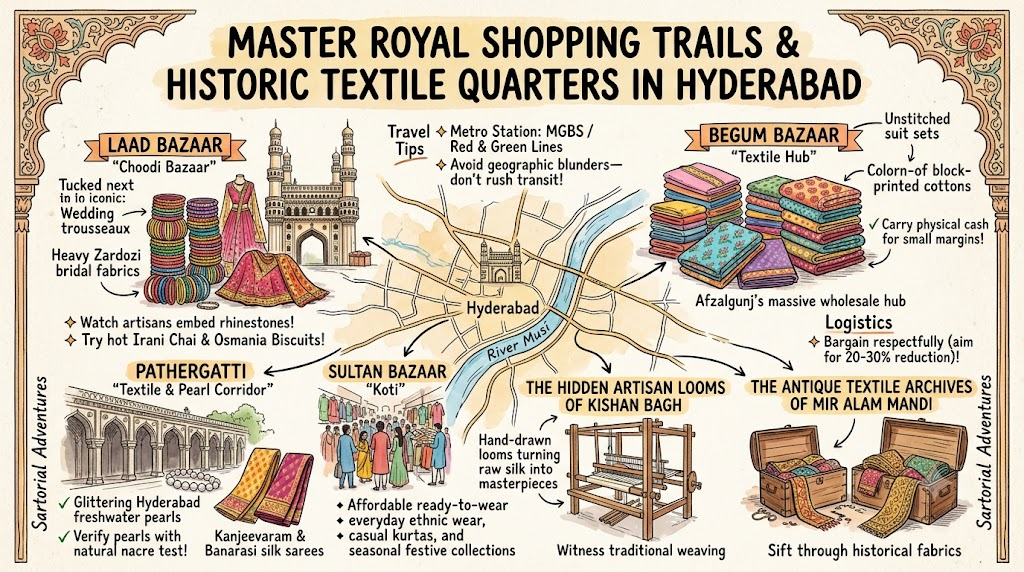
Tucked away right in the shadow of the iconic Charminar, Laad Bazaar is a sensory explosion of color, sound, and history. Stretching down a historic quarter-century-old road, this market has catered to Nizami royalty and modern brides alike for generations. The air is thick with the scent of traditional attar perfumes and the rhythmic clinking of thousands of lac bangles being crafted live by local artisans.
The architectural backdrop features heritage wooden balconies and arched stone gateways that transport visitors straight back to the 16th century. Beyond its famous bangles, the marketplace is legendary for heavy bridal wear, intricately embroidered Zardozi fabrics, and authentic Khara Dupattas—the quintessential multi-layered traditional attire of Hyderabadi Muslim brides.
- Location: Old City, adjacent to Charminar; roughly 4 kilometers south of the city center hub (Abids).
- Why it is worth visiting: It offers an un-sanitized, deeply immersive dive into authentic Nizami shopping culture where heritage craftsmanship remains alive.
- Best things to do: Watch artisans hand-embed rhinestones onto lac bangles, bargain for custom-dyed dupattas, and sample hot Irani chai nearby.
- Best time to visit: Late afternoons (around 4:00 PM to 7:00 PM) when the historic street lights up against the fading dusk.
- Ideal for whom: Cultural enthusiasts, textile lovers, and brides-to-be hunting for authentic heritage pieces.
- Travel tip: Wear comfortable walking shoes as vehicular traffic is restricted; keep your belongings secure due to dense crowds.
Pathergatti Textile and Pearl Corridor
Just a short walk northward from Charminar leads to Pathergatti, distinguished by its striking historic stone arcade market built during the late Nizam era. This grand boulevard serves as Hyderabad’s premier destination for high-end traditional handlooms, rich Kanjeevaram and Banarasi silks, and world-famous Hyderabad pearls.
The storefronts here transition from vibrant street displays to regal, wood-paneled showrooms where generations of merchants assist patrons in selecting heirloom-quality garments. The focus here is uncompromised quality, featuring pure gold-thread Zari work, hand-woven brocades, and meticulously matched blouse pieces that reflect supreme artisan skill.
- Location: Pathergatti Road, stretching between Madina X Roads and Charminar; roughly 3.5 kilometers from the commercial core.
- Why it is worth visiting: It is the city’s undisputed epicenter for authentic, investment-grade silk sarees and certified heritage pearls.
- Best things to do: Examine the authenticity of freshwater pearls using traditional touch tests, browse bespoke handloom drapes, and consult master tailors for custom fittings.
- Best time to visit: Mornings between 10:30 AM and 1:00 PM when shops are uncrowded and vendors can dedicate time to showing intricate weaves.
- Ideal for whom: Serious saree collectors, wedding shoppers, and lovers of fine craftsmanship.
- Travel tip: Always ask for authentic certification cards when purchasing high-value pearl sets.
Begum Bazaar Textile Hub
As Hyderabad’s largest commercial marketplace, Begum Bazaar operates on a massive scale that overwhelms the senses in the best possible way. Originally established during the Qutb Shahi era, this sprawling labyrinth of wholesale and retail lanes caters to every conceivable fabric requirement imaginable.
The structural layout shifts from bustling open-air courtyards to multi-story textile houses stacked ceiling-high with dress materials, unstitched suit sets, cotton prints, and festive heavy wear. It is a high-energy environment where local designers, retail boutique owners, and festive shoppers source material by the bulk at unbeatable direct-market rates.
- Location: Afzalgunj area, roughly 2.5 kilometers west of Charminar and easily accessible via the MGBS Metro station.
- Why it is worth visiting: It provides access to thousands of varieties of fabrics at direct wholesale prices unavailable anywhere else in the state.
- Best things to do: Hunt for rare block-printed cottons, purchase unstitched salwar kameez sets in bulk, and explore the hidden lanes selling traditional brassware.
- Best time to visit: Weekday mornings right at opening (10:00 AM) to avoid the intense afternoon rush.
- Ideal for whom: Bargain hunters, DIY fashion designers, and budget travelers seeking high volume value.
- Travel tip: Keep cash handy, as many wholesale vendors prefer physical currency over digital wallets for smaller margins.
Sultan Bazaar (Koti)
Dating back to the British Residency era when it was known as Residency Market, Sultan Bazaar has evolved into a premier mid-range retail heaven. Lined with bustling permanent storefronts and dynamic street-side stalls, this vibrant avenue is famous for everyday ethnic wear, casual kurtis, and ready-made traditional apparel.
The atmosphere here is exceptionally lively, frequented by college students, working professionals, and families looking for stylish yet pocket-friendly wardrobe updates. The selection emphasizes contemporary ethnic fusion, modern stitched cuts, embroidered leggings, and seasonal festive collections.
- Location: Koti main road, roughly 2 kilometers from Abids center.
- Why it is worth visiting: It bridges the gap between traditional heritage textiles and trendy, modern-day ready-to-wear ethnic fashion at accessible price points.
- Best things to do: Browse the extensive collections of ready-made kurtas, explore regional handloom exhibitions when hosted, and taste local street snacks.
- Best time to visit: Late afternoons (3:00 PM to 6:00 PM) when the street energy peaks and roadside food vendors open.
- Ideal for whom: Budget-conscious shoppers, college students, and casual fashion explorers.
- Travel tip: Sundays see many shops shuttered or operating on restricted hours, so plan your visit between Monday and Saturday.
Offbeat Exploration: Hidden Gems Tourists Miss
The Hidden Artisan Looms of Kishan Bagh
Far away from the glittering commercial displays, Kishan Bagh harbors a quiet community of traditional handloom weavers who keep ancestral dyeing and weaving techniques alive. Visitors here can witness the hypnotic clatter of wooden pit looms turning raw silk threads into breathtaking masterpieces without factory automation.
The Antique Textile Archives of Mir Alam Mandi
Tucked inside the historic vegetable and spice market complex of Mir Alam Mandi, several vintage textile dealers trade in pre-loved, antique Zari borders, ancestral brocades, and discarded royal court garments. Sifting through these trunks feels like unearthing museum-grade pieces of Telangana’s sartorial history.
Detailed Practical Guidance for Travelers
| Destination | Standard Entry Fee | General Timings | Best Local Food Options Nearby | Recommended Nearby Attractions |
| Laad Bazaar | Free | 10:00 AM – 9:30 PM | Nimrah Cafe (Irani Chai & Osmania Biscuit), Shah Ghouse Cafe | Charminar, Chowmahalla Palace |
| Pathergatti | Free | 10:30 AM – 9:00 PM | Hotel Shadab, Madina Hotel (Haleem/Biryani) | Mecca Masjid, Laad Bazaar |
| Begum Bazaar | Free | 10:00 AM – 9:00 PM | Subhan Bakery, local street chaat stalls | Moazzam Jahi Market, River Musi bridges |
| Sultan Bazaar | Free | 10:30 AM – 9:00 PM | Gokul Chat, local juice bars | Koti Women’s College (British Residency), Abids |
Logistics & On-Ground Navigation
Local Transport Options
- Hyderabad Metro: The Red and Green lines offer rapid, air-conditioned transit across the city, bringing you within walking distance of major old-city markets (such as MGBS station near Begum Bazaar).
- Auto-Rickshaws: Ubiquitous across every neighborhood; always insist on running by the digital meter or agree on a fixed fare via ride-sharing aggregator apps beforehand.
- Cabs and Ride-Sharing: App-based car and bike taxis provide safe, reliable door-to-door transit, though navigating old-city traffic congestion requires patience.
- Walking: Essential for exploring the dense, narrow market lanes of Laad Bazaar and Pathergatti where motorized vehicles cannot enter.
Budget Planning
- Budget / Backpacking Tier: $\text{INR } 1,500 \text{ to } 2,500$ per day, covering public transit, local street food meals, budget stays, and bargain street shopping.
- Mid-Range / Comfort Tier: $\text{INR } 4,500 \text{ to } 8,000$ per day, covering app-based cab rentals, comfortable mid-tier hotel stays, sit-down traditional dining, and quality mid-tier textile purchases.
Safety and Inclusivity Tips
- For Families: Keep children close in bustling market streets like Begum Bazaar; stay hydrated and carry wet wipes for dusty alleys.
- For Couples: Public spaces are generally safe and welcoming, though traditional modesty in dress is appreciated when exploring old-city religious or historical precincts.
- General Safety: Keep wallets, phones, and cash securely zipped in cross-body bags to navigate dense crowd environments effortlessly.
Strategic Travel Planning Guardrails
Travel Planning Tips for Hyderabad
- Book Shoulder Seasons: Plan your shopping trip between October and March when pleasant winter weather makes navigating open-air bazaars comfortable.
- Embrace Digital Payments: While small street vendors appreciate cash, 90% of shops in Pathergatti and established stores accept UPI and major digital wallets seamlessly.
- Respect Local Etiquette: Always remove your shoes when entering traditional family-run textile counters or carpeted displays.
- Physical Preparation: Expect high step counts and uneven paving stones; sturdy walking shoes are mandatory for a successful market expedition.
- Haggle Respectfully: Bargaining is an accepted art form in Laad Bazaar and Begum Bazaar; aim for a polite 20% to 30% reduction off initial quoted prices without devaluing artisan labor.
Common Mistakes to Avoid
- Over-Packing Itineraries: Trying to combine modern IT corridor tech parks and old-city heritage markets on the exact same afternoon.
- Ignoring Wholesale Lanes: Overpaying for mass-produced synthetic garments in air-conditioned malls instead of exploring authentic local looms.
- Transport Assumptions: Assuming auto-rickshaws will always use the mechanical meter without prior negotiation.
- Skipping Regional Cuisine: Relying solely on hotel room service instead of sampling authentic Hyderabadi biryani and Osmania biscuits.
- Rushing the Process: Treating textile shopping like a quick errand rather than an immersive cultural dialogue with master weavers.
Suggested Itinerary Blueprints
- Day Quick Dash (Old City Heritage & Bazaar Express): Designed for time-crunched travelers; spend the morning exploring Charminar and Laad Bazaar’s bangles, enjoy lunch near Mecca Masjid, and dedicate the afternoon to rapid pearl shopping along Pathergatti.
- Day Deep-Dive (The Two-Day Textile & Culture Odyssey): Day 1 focuses entirely on the historic Old City markets (Laad Bazaar, Pathergatti, and Mir Alam Mandi), while Day 2 shifts toward modern designer boutiques, artisan craft villages like Shilparamam, and wholesale exploration at Begum Bazaar.
- Complete Weekend Travel Plan (The Ultimate Hyderabad Tradition Loop): Friday evening arrival with a peaceful boat ride at Hussain Sagar; Saturday dedicated to an immersive all-day shopping marathon across Laad Bazaar, Begum Bazaar, and Sultan Bazaar; Sunday reserved for Chowmahalla Palace, traditional food walks, and final tailoring pickups.
Common Tourist Mistakes to Avoid
- Geographic Blunders: Trying to combine geographically opposed zones like Gachibowli and the Old City during peak evening rush hour traffic.
- Commercial Traps: Spending excessive vacation time in modernized corporate shopping malls rather than atmospheric, historic local bazaars.
- Neglecting Modern/Alternative Zones: Forgetting to explore the quieter, artistic, and cafe-centric neighborhoods like Jubilee Hills or Banjara Hills.
- Transport Overpayment: Failing to cross-reference fares on ride-sharing apps, leaving you vulnerable to price gouging by unmetered auto drivers.
- Luxury Dining Bias: Missing out on street-level culinary vendors and legendary local bakeries that hold the true soul of Hyderabadi gastronomy.
Frequently Asked Questions
1. What is the best time of year to shop for traditional clothes in Hyderabad?
The cooler winter months between October and March offer the most comfortable weather for exploring bustling open-air street markets. Additionally, shopping just before major festive seasons like Eid or Diwali provides access to fresh seasonal collections and vibrant cultural displays.
2. Can I bargain at Laad Bazaar and Begum Bazaar?
Yes, polite bargaining is a standard part of the shopping culture in these historic wholesale lanes. Vendors often start with quoted tourist rates, so aiming for a reasonable reduction while respecting the artisan’s craftsmanship ensures a fair transaction.
3. Are credit cards and digital payments widely accepted in traditional markets?
While small roadside stalls and pushcart vendors operate strictly on cash, established storefronts, textile houses, and pearl shops in Pathergatti and Begum Bazaar widely accept UPI and major credit cards. Carrying some physical currency is always recommended for smaller purchases.
4. How do I verify the authenticity of pearls purchased in Hyderabad?
Authentic pearls purchased from reputed heritage stores in Pathergatti come with official certification documents. A traditional physical test involves gently rubbing two pearls together; genuine pearls will feel slightly gritty due to natural nacre layers.
5. What should I wear when exploring the old city markets?
Opt for lightweight, breathable cotton clothing that respects local cultural sensitivities. Comfortable, closed-toe walking shoes are essential because you will navigate extensive pedestrian-only cobblestone alleys and bustling market corridors.
6. Are custom tailoring services readily available in these markets?
Yes, many textile shops collaborate with skilled in-house tailors or nearby master craftsmen who can stitch blouses, kurtis, or custom outfits within 24 to 48 hours, making it convenient for travelers on tight schedules.
7. Is it safe to explore the old city markets as a solo traveler?
The historical market zones are generally safe and populated with crowds throughout the day. Standard travel awareness applies—keep your valuables secure in zippered bags and avoid navigating unlit peripheral lanes late at night.
8. What are the best traditional garments to buy in Hyderabad?
Hyderabad is globally renowned for its exquisite Kanjeevaram and Banarasi silk sarees, rich Zardozi embroidered fabrics, hand-block printed cottons, and the traditional multi-pieced Khara Dupatta ensemble.
9. How do I travel between the major traditional shopping districts?
The Hyderabad Metro offers fast connectivity across central transit points, while local auto-rickshaws and app-based cab aggregators handle short-distance navigation seamlessly through varying traffic conditions.
10. Do shops in markets like Begum Bazaar close on specific days?
Yes, many wholesale establishments and traditional markets observe a full weekly holiday on Sundays, with reduced operating hours or complete closures across most retail lanes.
11. Can I ship my heavy textile and shopping purchases internationally?
Many established heritage emporiums and reputed courier desks near Pathergatti and Charminar offer reliable international shipping services for heavy silks, fragile glass bangles, and delicate souvenirs.
12. What local snacks should I try while shopping in the Old City?
Do not miss pairing a cup of rich, creamy Irani chai with traditional crispy Osmania biscuits at iconic spots like Nimrah Cafe right next to the Charminar.
Conclusion
Choosing to wander through Hyderabad’s historic textile corridors is far more than a simple shopping excursion—it is an emotional and cultural immersion into a living royal legacy. When you touch hand-woven silk, listen to the clink of artisan bangles, and converse with generational craftsmen, you take home a tangible piece of Deccan history. This journey rewards the curious traveler with memories, textures, and stories that far outlast any ordinary vacation.
