Introduction
When modern travelers seek an authentic epicurean escape, they often target heavily commercialized food miles or over-touristed capital circuits. Yet, true food connoisseurs know that the ultimate intersection of heritage and gastronomy thrives away from sterile dining rooms.
It lives in the historic alleys of the city of Nizams. Hyderabad offers a street food tapestry that is profoundly deeply rooted, carrying centuries of Persian, Turkish, and native Telugu culinary lineages.
Here, every aromatic cloud of steam arising from a roadside cauldron tells a tale of cultural synthesis. This makes the city an essential pilgrimage for anyone craving true gastronomic authenticity.
Why Hyderabad is a must visit city
Hyderabad represents a monumental chapter in global food history, standing as a living archive where geographical migrations directly shaped modern plates. Geographically positioned between northern and southern trade routes, it allowed royal Deccani courts to blend rich Mughal flavors with intense South Indian spices.
The accessibility of Hyderabad’s core street food hubs is exceptional for all types of travelers. Efficient metro lanes connect the historical Old City to the futuristic high-tech hubs, while traditional auto-rickshaws provide seamless transfers right into the narrowest lanes.
Whether you are a solo backpacker tracking heritage bakeries or a family traveling via luxury transport, the city’s hospitality infrastructure accommodates every budget flawlessly.
| Core Feature | Practical Travel Detail |
|---|---|
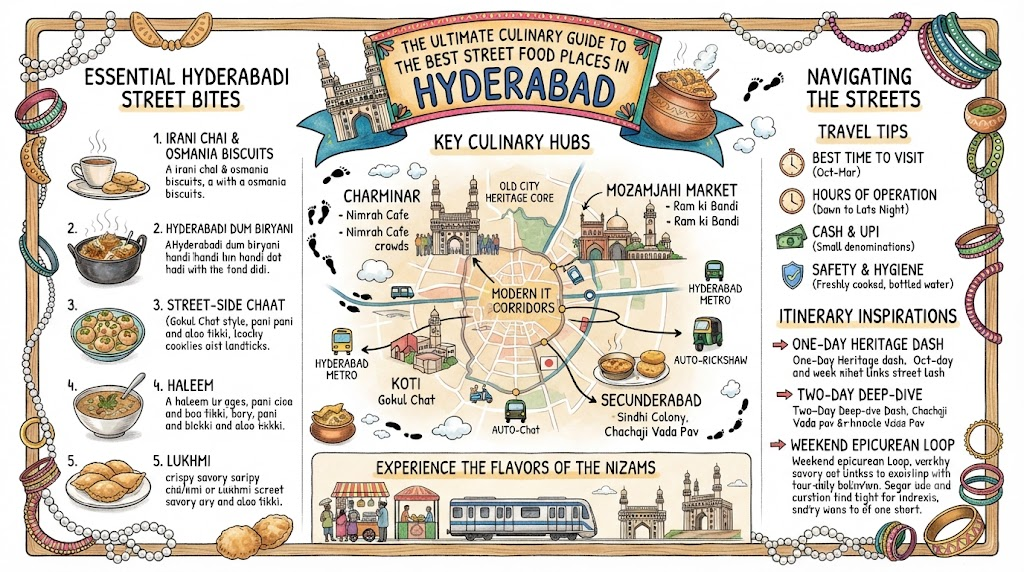
| Primary Culinary Hubs | Charminar Lanes, Mozamjahi Market, Koti, Sindhi Colony, Madhapur |
| Connectivity & Transport | Extensive Metro network, MMTS Trains, TSRTC Buses, Auto-rickshaws, Cab Apps |
| Best Visiting Window | October to March (Pleasant winter evenings) |
| Average Daily Food Spend | INR 300–600 per person for an extensive street-side feast |
Best Street Food Places in Hyderabad
Nimrah Café and Bakery
Located directly in the shadow of the monumental Charminar, Nimrah Café and Bakery is an atmospheric gem that anchors the daily life of the Old City. Founded decades ago, this legendary spot has evolved into an open-air theater of urban culture, where thousands gather from sunrise to midnight. The architecture of the space remains minimalist and raw, drawing all attention outward to the bustling bazaars and upward to the towering minarets nearby.
The air here remains perpetually filled with the rich aroma of fresh baking dough and boiling tea leaves. Standing at this counter gives you a sensory handshake with the city, serving as the perfect entry point into the historic culinary circuit.
Iconic culinary atmosphere near Charminar.
- Location: Directly opposite Mecca Masjid, Charminar Road, Old City, Hyderabad.
- Why it is worth visiting: It offers the most authentic cultural immersion in the city, providing an unmatched view of the Charminar alongside historic baking traditions.
- Best things to do: Pair a hot cup of creamy Irani Chai with crumbly Osmania biscuits, try the distinct square-shaped Char-Koni Naan, and photograph the morning light illuminating the monument from the cafe front.
- Best time to visit: 6:00 AM to 8:00 AM to catch the peaceful morning rays and freshly pulled bakes.
- Ideal for whom: History buffs, cultural photographers, budget backpackers, and families.
- Travel tip: The spot gets incredibly packed by mid-day, so grab a standing spot near the edge to avoid getting jostled by the fast-moving counter queues.
Ram ki Bandi
Ram ki Bandi famously revolutionized the late-night dining landscape of the metropolis by taking humble South Indian breakfast staples and infusing them with luxurious, buttery innovations. Starting as a modest street cart operating in the dead of night, it achieved legendary status among IT professionals, night-shift workers, and nocturnal food hunters alike. The preparation style here is performance art, with the cook rapidly spreading thin batter over massive, white-hot iron griddles.
The signature technique involves throwing immense blocks of butter and secret spice mixes directly onto the cooking crepes, creating a rich, caramelized texture. It remains a striking symbol of how traditional street culture seamlessly adapted to serve the modern, late-night corporate workforce.
Legendary late-night dosa hub.
- Location: Mozamjahi Market area, Nampally, Hyderabad (approx. 4 km from central rail station).
- Why it is worth visiting: It is the pioneer of nighttime bandi culture, famous for creating the trend of elevated, cheese-laden street dosas across the state.
- Best things to do: Order the signature Double Cheese Tawa Idli, devour the ultra-crispy Paneer Pizza Dosa, and watch the high-speed assembly line of street chefs handling dozens of orders simultaneously.
- Best time to visit: 3:00 AM to 6:00 AM for the classic, authentic nocturnal atmosphere.
- Ideal for whom: Late-night explorers, groups of friends, and adventurous foodies.
- Travel tip: There are no seating arrangements available, so prepare to stand around the street cart or consume your food directly on your vehicle bonnet. SocialMaharaj
Gokul Chat
Situated in the historically chaotic commercial district of Koti, Gokul Chat stands as a permanent monument to the city’s love affair with tangy, spicy North Indian chaat. For generations, this tiny, high-velocity shop has successfully managed to draw massive crowds from every single socio-economic background in the city. The speed at which the servers crush crisp puris, ladle hot chickpea stews, and drizzle contrasting sweet-and-sour chutneys is absolutely dizzying.
The flavors are uniquely calibrated here, leaning heavier on local chilies than traditional northern variants, resulting in a distinct, punchy Deccani accent. It provides an excellent testament to how external culinary migrations find a permanent home and evolve within the Deccani landscape.
Tangy street-side flavors at Koti.
- Location: Koti Main Road, opposite Women’s College, Hyderabad. DineCard
- Why it is worth visiting: It is widely considered the absolute benchmark for street-side chaat excellence in the region, operating with unmatched consistency for decades. DineCard
- Best things to do: Taste the deeply flavorful Hot Ragda Samosa, crunch into a plate of refreshing Dahi Puri, and wash it down with a cool glass of special badam milk.
- Best time to visit: 4:00 PM to 7:00 PM when the evening street food rush kicks into high gear.
- Ideal for whom: Spice enthusiasts, college students, shoppers, and couples.
- Travel tip: The interior standing space is minimal and highly crowded; order your items quickly and step outside to the pavement to enjoy your food comfortably.
Shah Ghouse Café
While Shah Ghouse operates out of permanent structures, its sprawling sidewalk extensions, massive outdoor clay pits, and late-night takeaway lines cement it firmly into street culture. This landmark is deeply revered across the region for preserving old-world cooking methods, particularly during festive periods when huge wooden fires burn continuously for hours. The culinary style focuses on slow, low-heat wood cooking, which coaxes out deep, complex flavors from local meats and whole spices.
The ambiance is wonderfully chaotic, filled with shouting servers, thick fragrant smoke, and lines of parked cars waiting for curb-side delivery. It remains the spiritual home for meat lovers looking to capture the true, uncompromised essence of historic Deccani cooking.
Rich, slow-cooked festive street delicacies.
- Location: Shalibanda Road, Charminar area, Old City, Hyderabad.
- Why it is worth visiting: It is an undisputed institution for slow-cooked meat delicacies, offering an intense dive into traditional Deccani spice profiles.
- Best things to do: Feast on a rich bowl of mutton Haleem (especially during festive months), savor the delicate, melt-in-the-mouth Shikampuri Kebabs, and try the classic rice-and-milk dessert called Phirni served in traditional clay pots. Incredible India
- Best time to visit: 9:00 PM to 1:00 AM for an immersive late-night culinary experience.
- Ideal for whom: Meat lovers, midnight travelers, and culinary researchers.
- Travel tip: During busy hours, bypass the crowded upper dining floors and order directly from the rapid counter downstairs to eat like a true local on the move.
Offbeat Exploration: Hidden Gems Tourists Miss
Chachaji Vada Pav at Sindhi Colony
Tucked away inside the bustling lanes of Secunderabad’s Sindhi Colony, this unassuming stall serves the most authentic adaptation of western Indian street food in the city. While mainstream tourists focus purely on local biryanis, food purists head here to watch the golden, spiced potato dumplings get fried fresh every few minutes. The true secret lies in their fiery dry garlic chutney and perfectly roasted green chilies, which replicate the raw flavors of Mumbai highways perfectly.
Hotel Nayaab for Bheja Fry and Lukhmi
Located near the historic High Court, this old-world eatery is frequently bypassed by travelers heading straight toward the Charminar. However, early morning food hunters gather here to relish authentic Nizami breakfasts, highlighted by crispy, square-shaped puff pastries called Lukhmi stuffed with spiced minced meat. Pairing a plate of spicy Bheja Fry (scrambled brain masala) with their signature saffron-infused Kesar Chai offers an unforgettable dive into heritage morning rituals.
Milan Juice Center
Positioned away from the main historic trail, this late-night dessert oasis specializes in decadent fruit creams and rich concoctions that provide the perfect counter to the city’s heavy spices. Their legendary Mulberry Cream—a massive bowl packed with fresh, tart berries drowning in thick, sweetened fresh dairy cream—is a seasonal masterpiece. It serves as the ultimate sweet conclusion for local families and night owls closing out an intensive street food walk.
Detailed Practical Guidance for Travelers
The following logistical matrix provides an easy roadmap for navigating the essential entry costs, timing windows, and nearby combinations for these primary street food landmarks:
| Destination | Standard Entry Fee | General Timings | Best Local Food Options Nearby | Recommended Nearby Attractions |
|---|---|---|---|---|
| Nimrah Café | No Entry Fee | 4:00 AM – 11:00 PM | Irani Chai, Osmania Biscuits, Malai Bun | Charminar, Mecca Masjid, Laad Bazar |
| Ram ki Bandi | No Entry Fee | 3:00 AM – 8:00 AM | Cheese Butter Dosa, Tawa Idli | Mozamjahi Market clock tower |
| Gokul Chat | No Entry Fee | 1:00 PM – 10:00 PM | Ragda Samosa, Papdi Chaat, Dahi Puri | Koti Residency, Sultan Bazar |
| Shah Ghouse | No Entry Fee | 11:00 AM – 2:00 AM | Mutton Biryani, Haleem, Phirni | Chowmahalla Palace, Taj Falaknuma |
Logistics & On-Ground Navigation
Local Transport Options
- Hyderabad Metro: The cleanest and fastest way to bypass massive traffic congestion. The Green Line takes you straight to MGBS or Sultan Bazar, placing you a brief walk or short auto-ride away from historic Old City hubs.
- Auto-Rickshaws: Universally available across all neighborhoods. They are highly efficient for navigating the deeply congested, historic lanes where larger vehicles cannot physically pass. Always negotiate a fixed price before stepping inside.
- Ride-Sharing Apps: Services like Uber, Ola, and Rapido operate extensively throughout the metropolitan limits. Booking an auto or a bike taxi via these digital networks ensures transparent, upfront pricing, eliminating any communication barriers.
Budget Planning
- Backpacking / Budget Tier: Budget approximately INR 300 to INR 500 per day. This covers multiple street stops, traditional Irani cafe breakfasts, public metro transits, and late-night street food carts comfortably.
- Mid-Range / Comfort Tier: Budget approximately INR 1,200 to INR 2,500 per day. This easily covers private air-conditioned app cab rentals, combined visits to premium heritage restaurants alongside street stands, and souvenir shopping in local craft markets.
Safety and Inclusivity Tips
- For Families: Stick to organized street food clusters like the GHMC Food Street complexes or established spots like Gokul Chat during the earlier afternoon hours to avoid overwhelming late-night crowds.
- For Couples: The evening walks through the beautifully illuminated Mozamjahi Market or around the glittering Charminar lanes offer a safe, vibrant, and highly romantic local environment.
- General Safety: Street food across these historic quarters is freshly prepared on high heat, making it generally safe. Always choose vendors with high local turnover, drink sealed bottled water, and keep personal items close in packed market zones.
Strategic Travel Planning Guardrails
Travel Planning Tips for Hyderabad
- Carry Digital & Cash Balances: While almost every single street vendor proudly accepts UPI mobile payments, keep small cash notes handy for deep alley locations with occasional network drops.
- Dress for Historic Quarters: When exploring the conservative street corridors around historic religious sites like Mecca Masjid, dress modestly with shoulders and knees covered.
- Time Your Walks Correctly: Plan your heavy, meat-centric food walks for late evenings when Deccani street culture truly wakes up, keeping mornings free for light bakes and photography.
- Stay Constantly Hydrated: Deccani heat can get intensely dry; consume local street refreshers like fresh sugarcane juice or cooling buttermilk frequently between spicy food stops. KandraFoods
- Master the Art of Sharing: Street food portions—especially the butter-laden dosas and rich desserts—are surprisingly heavy. Share plates to taste maximum variety without getting full early.
Common Mistakes to Avoid
- Over-packing Daily Itineraries: Do not try to combine distant culinary zones like Secunderabad’s Sindhi Colony and the Old City on the exact same afternoon; the cross-city traffic will exhaust you.
- Assuming Constant Restaurant Hours: Many iconic street vendors operate strictly on unique time frames—some only at dawn, others only post-sunset. Check their schedules before commuting.
- Sticking Exclusively to Continental Food: Bypassing traditional roadside setups out of minor hesitation deprives you of tasting the real cultural soul of the region.
- Overpaying for Street Transit: Avoid accepting random high prices from unmetered street autos standing right outside major tourist monument exits; walk a few yards away or check app prices first.
- Skipping the Local Bakery Culture: Focusing solely on savory biryanis while missing the traditional butter biscuits and sweet buns ignores a massive half of Deccani food heritage. Agoda.com
Suggested Itinerary Blueprints
1. One-Day Quick Dash (The Heritage Core Route)
- Target Audience: Time-pressed travelers and transit stopovers looking for immediate, high-impact cultural immersion.
- Routing Layout: Start early at 6:30 AM at Nimrah Café for fresh Irani Chai and Osmania biscuits next to Charminar. Spend the afternoon exploring the nearby Chowmahalla Palace, then head directly to Gokul Chat at 4:30 PM for a high-energy evening chaat session. End the night by 9:00 PM with a legendary plate of mutton delicacies at Shah Ghouse Shalibanda. Incredible India
2. Two-Day Deep-Dive (The Dual Era Route)
- Day 1 Split: Focus entirely on old-world heritage. Explore the massive stone ramparts of Golconda Fort in the morning, followed by a hearty lunch of Lukhmi at Hotel Nayaab. Spend your evening navigating the glittering bangle markets of Laad Bazar, finishing with a midnight food run to Shah Ghouse. Hyderabad Food Guy (HydFoodGuy)+ 1
- Day 2 Split: Explore modern culinary evolutions. Spend your morning relaxing around the artistic cafes of Jubilee Hills. By afternoon, head to the historic Secunderabad corridor to explore the intense vegetarian street food trail along Sindhi Colony. Wrap up your entire journey at 3:30 AM with a world-famous late-night butter dosa at Ram ki Bandi. SocialMaharaj
3. Complete Weekend Travel Plan (The Ultimate Deccani Loop)
- Friday Loop: Arrive and head straight to the beautifully restored Mozamjahi Market complex for an evening heritage walk, sampling local hand-churned ice creams and street snacks under the illuminated domes.
- Saturday Loop: Dedicate the day to the historic heart. Wake up early for morning photography at Charminar, followed by a traditional Deccani breakfast at Hotel Nayaab. Spend the afternoon cooling off inside the vast Salar Jung Museum, and spend your night exploring the vibrant street kebab stalls near the historic paths of Mecca Masjid.
- Sunday Loop: Spend a relaxing morning walking along the scenic views of Hussain Sagar Lake and the updated NTR Gardens circuit. As evening falls, dive directly into the high-velocity chaat lanes of Koti, closing your weekend travel experience with a premium late-night food walk through Madhapur’s modern food truck rows.
Common Tourist Mistakes to Avoid
- Geographic Blunders: Trying to navigate from high-tech western zones like Hitech City to the deep southern Old City during peak corporate rush hours will waste hours of your evening in traffic gridlocks.
- Commercial Traps: Spending your limited travel evenings inside generic, air-conditioned shopping mall food courts instead of exploring the historic, smoke-filled street alleys where recipes have been perfected across generations.
- Neglecting Modern/Alternative Zones: Forgetting to explore the fascinating, high-energy food truck corridors expanding rapidly across suburban residential sectors like Gachibowli and Madhapur, which showcase modern, fusion twists on local classics.
- Transport Overpayment: Boarding unmetered transport options parked directly adjacent to major tourist gates without cross-referencing modern ride-sharing apps, which often results in paying triple the standard local rate.
- Luxury Dining Bias: Believing that authentic Deccani flavors can only be safely consumed inside five-star luxury hotels, missing the reality that the true culinary soul, spice precision, and heritage history of the city thrive entirely on the lively street pavements.
Frequently Asked Questions
1. What makes Hyderabadi Irani Chai different from standard milk tea found elsewhere?
The distinct signature of Irani Chai lies in its unique, dual-pot preparation technique. The tea leaves are slow-simmered in a tightly sealed container for hours to create a highly concentrated, aromatic reduction called decoction. Meanwhile, rich whole milk is boiled separately in a massive copper urn until it reduces significantly, turning incredibly thick and creamy. When served, the server pours the dark tea reduction first and tops it with the sweet, condensed milk cream, creating an intensely rich, velvety drink that standard brewing methods cannot match.
2. Is it safe for international tourists to consume street food in Hyderabad?
Yes, it is remarkably safe if you follow basic, smart local travel habits. Always choose street food stalls that display a rapid turnover of customers, as the high volume ensures that the ingredients are continuously replenished and cooked fresh on high-heat open flames right before your eyes. Stick to consuming piping-hot items like freshly fried samosas, hot kebabs, and bubbling stews, while avoiding raw salads or unpeeled fruits. Always use sealed bottled mineral water for drinking throughout your street food walks.
3. What exactly is a Lukhmi, and where can I find the most authentic version?
Lukhmi is the ultimate regal Deccani interpretation of the classic Indian savory pastry. Unlike standard triangular vegetable samosas, an authentic Lukhmi is crafted into a distinct square pocket using fine flour pastry sheet layers that become incredibly flaky when deep-fried. The classic interior filling consists entirely of semi-dry, spice-braised minced mutton or beef rather than potato. The absolute spiritual home for this heritage snack is Hotel Nayaab near the High Court, where it has been served fresh alongside morning tea for decades.
4. When does the famous nighttime street food culture actually begin operating?
While standard evening chaat centers throw open their counters by 4:00 PM, the legendary late-night street bandi culture functions on a completely different clock. Iconic carts like Ram ki Bandi and its surrounding competitors roll out onto the streets around Nampally and Mozamjahi Market between 2:30 AM and 3:00 AM. They cater extensively to late-night workers, travelers arriving on early trains, and groups of local friends closing out their weekend, running continuously until the sun rises.
5. Where can a vegetarian traveler find the best street food options in this meat-heavy city?
While the destination is internationally famous for its meat heritage, it features an incredible paradise for vegetarians along the PG Road and Sindhi Colony corridors in Secunderabad. This specific neighborhood is packed with street vendors serving spectacular vegetarian innovations, ranging from cheesy butter tawa idlis and grilled paneer pav bhajis to authentic western Indian vada pavs. Additionally, the historic Gokul Chat in Koti offers an entirely vegetarian menu featuring hundreds of fiery, tangy chaat combinations.
6. What are Osmania biscuits, and why do they have a unique sweet and salty flavor profile?
Osmania biscuits represent the definitive tea-time companion across the state, named originally in honor of the last Nizam of the region, Mir Osman Ali Khan. The bakers at historic institutions like Nimrah perfected a precise ratio of refined flour, pure sugar, and a deliberate touch of sea salt and cardamom. This creates a highly distinct cookie that balances sweet notes with a subtle, savory undertone. Their structural magic is their melt-in-the-mouth texture when dipped briefly into hot Irani tea.
7. Can I experience the famous Hyderabadi Haleem street stalls throughout the entire year?
True street-side Haleem—the legendary, slow-cooked porridge made of meat, broken wheat, lentils, and pure ghee pounded for hours in massive wood-fired earthen pits—is an exclusive seasonal delicacy prepared predominantly during the holy month of Ramadan. During this festive thirty-day window, thousands of temporary street cauldrons appear across every neighborhood. However, if you visit off-season, legendary establishments like Shah Ghouse and Pista House continue to serve excellent, authentic commercial variations at their central hubs year-round.
8. Which neighborhood is best for a solo traveler to explore street food safely at night?
The immediate perimeter surrounding the Charminar monument and the newly renovated, brightly illuminated plazas of Mozamjahi Market are exceptional for solo travelers. These heritage districts remain heavily policed, brilliantly lit, and constantly buzzing with local families, shoppers, and food vendors well past midnight. The dense crowds create a highly communal, welcoming atmosphere where solo food walking is standard and safe.
9. What is the best street dessert to try after consuming heavy, spicy kebabs?
The ultimate sweet antidote to the intense local spices is the iconic Qubani ka Meetha. This classic royal dessert is crafted by slow-stewing dried apricots imported from Central Asia into a rich, glossy, honey-like compote, often flavored with almond kernels hidden inside the fruit stones. On the street level, it is traditionally served warm in small bowls topped with a huge dollop of fresh, cold dairy cream or vanilla ice cream to balance the heat.
10. How do I travel efficiently between the modern IT corridors and the historic food markets?
The absolute best way to travel across these distinct eras is the brilliant Hyderabad Metro network. You can board a sleek, air-conditioned train at modern tech stations like Hitech City or Raidurg, transfer seamlessly at Ameerpet interchange, and arrive at historic hubs like MGBS or Sultan Bazar in under forty minutes, completely bypassing the legendary road traffic jams below.
11. What unique street food variations can I find in the modern parts of the city?
The modern suburban expansions like Madhapur, Gachibowli, and DLF Cyber City host a massive evening food truck culture that caters to the young IT workforce. Here, you will find fascinating contemporary culinary twists, including spicy Biryani Tacos, grilled Shawarma wraps infused with local spices, fusion Pizza Dosas, and modern charcoal-grilled barbecue sticks that update traditional Nizami flavors for the twenty-first century.
12. Do street food vendors accept international credit cards for small payments?
No, standard credit cards are rarely accepted by mobile roadside carts and traditional alleyway stands due to infrastructure limitations. However, almost every vendor uses digital UPI QR codes extensively. For international travelers who might not have a local digital bank link, carrying a pouch of small cash denominations (INR 10, INR 20, and INR 100 notes) is essential for smooth, hassle-free transactions across the historic markets.
Conclusion
Choosing to explore the historic street food pathways of Hyderabad over a generic, air-conditioned luxury resort vacation offers a profound transformation for the modern traveler. It steps completely away from sterile, mass-produced travel itineraries and plunges you directly into a living, breathing culinary carnival that has survived dynastic changes, modern expansion, and centuries of global migration.
As you stand on the lively pavements of the Old City, listening to the clink of tea saucers under the shadow of centuries-old minarets, you realize you are tasting the living soul of a magnificent culture. The ultimate reward of this journey is returning home with a permanently expanded culinary perspective, filled with the unforgettable, spice-laden memories that only this timeless city can provide.
