Introduction
Most travelers equate weekend escapes around the Deccan plateau with the crowded historic arcades of Charminar or congested lakeside resorts. Yet, tucked beyond the suburban sprawl lies an ancient landscape of weathered granite gorges, prehistoric basalt ridges, and sacred forest streams that surge violently to life with the monsoon rains.
Trading sterile resort corridors for the raw, untamed wilderness reveals a deeper cultural and natural identity rooted in Gond tribal heritage and centuries-old forest shrines. Standing before these roaring natural cascades offers an intimate brush with the untamed wilderness of the Deccan plateau.
Why Hyderabad is a must-visit city
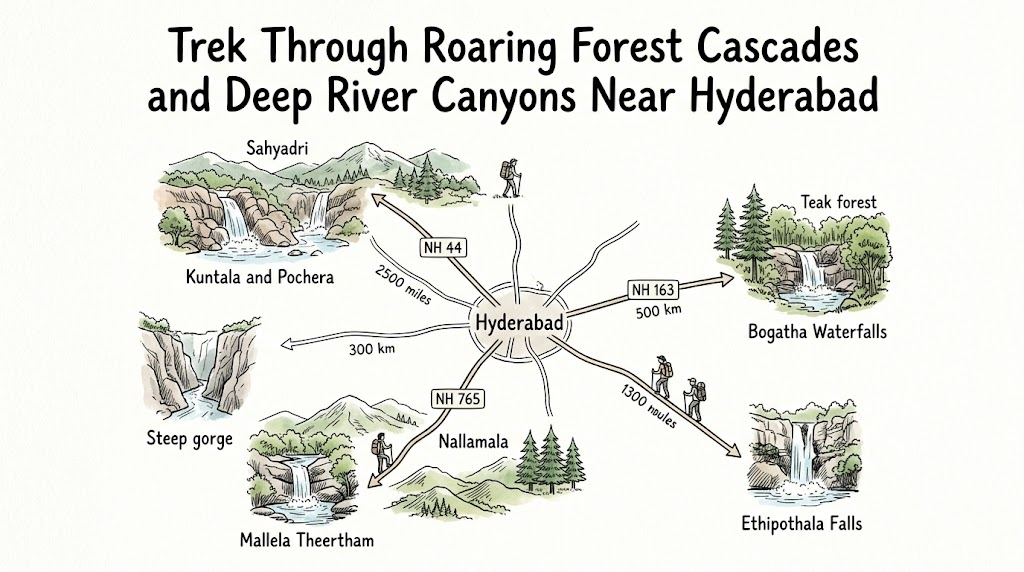
Hyderabad serves not only as an epicenter of royal Nizami architecture and contemporary tech hubs, but also as an unparalleled tactical launchpad for exploring the dramatic geography of Telangana and northern Andhra Pradesh. Framed by expansive multi-lane national highways—primarily NH 44 toward the north and NH 765 toward the south—the city grants smooth road access to dense deciduous forests, deep river canyons, and hidden geological fault lines. Whether arriving via Rajiv Gandhi International Airport or major rail hubs like Secunderabad Junction, travelers of all styles can pivot seamlessly from urban comfort into raw wilderness circuits.
The broader nature circuit radiates across distinct ecological belts: the Sahyadri mountain spurs of Adilabad in the north, the thick teak corridors of Jayashankar Bhupalpally in the east, and the tiger-tracked Nallamala hills in the south. These scenic routes stitch together ancient temples, tribal heartlands, and untouched forest reserves into exceptional driving itineraries.
| Metric / Parameter | Circuit Detail |
|---|---|
| Primary Launch Hub | Hyderabad (Secunderabad / Shamshabad) |
| Circuit Terrains | Deciduous Teak Forests, Basalt Formations, Sandstone Canyons |
| Peak Waterfall Season | July to November |
| Major Transit Corridors | NH 44 (North to Adilabad), NH 163 (East to Warangal/Mulugu), NH 765 (South to Srisailam) |
| Permit Requirements | General entry tickets on-site; select forest routes require Eco-Tourism Checkpost logs |
Best Places or Experiences
Kuntala Waterfall Adilabad.
Kuntala Waterfalls
Plunging nearly 150 feet into a rugged rock amphitheater, Kuntala is the tallest waterfall in Telangana, formed by the Kadam River carving its way through the Sahyadri range. Local folklore names the cascades after Shakuntala, who supposedly bathed in these secluded pools while mesmerized by the untouched beauty of the ancient river valley. The descent down hundreds of stone steps carries you into a dramatic gorge framed by hanging jungle vines and vertical cliff walls.
The sight of the river thundering down multiple rocky terraces makes the strenuous return climb worth every drop of sweat. The surrounding forest canopy teems with migratory birds during early autumn, filling the misty basin with crisp morning calls that echo against the granite.
- Location: Neradigonda Mandal, Adilabad District; approximately 260 km north of Hyderabad via NH 44.
- Why it is worth visiting: It stands as the highest single-drop cascade in the state, offering breathtaking scale and raw power during peak monsoon flow.
- Best things to do: Descend the 400+ stone steps to the mist-covered basin, observe riverbed rock layering, and photograph the upper tiers from designated safe observation decks.
- Best time to visit: August to October; plan to arrive by 8:30 AM to explore before afternoon humidity and crowds set in.
- Ideal for whom: Adventure trekkers, landscape photographers, and fit day-trippers.
- Travel tip: Wear sturdy trekking shoes with reliable rubber grip; the moss-covered steps near the splash zone get treacherous when wet.
Pochera Waterfalls multi-step cascades.
Pochera Waterfalls
Pochera presents a remarkable contrast to vertical plunge falls with its wide, layered basalt plateau where the Godavari-fed stream slides across broad stone terraces. The water compresses suddenly into a deep, swirling granite bowl below, generating a continuous roar that reverberates through the surrounding teak woodland. Because the bedrock consists of rare, dense basaltic formations, the geological contours here are uniquely sculpted into undulating stone lips.
The picnic grounds and wooden pedestrian bridges above the canyon allow visitors to absorb panoramic views of the swirling emerald pools without entering dangerous plunge zones. Its tranquil ambiance makes Pochera an effortless pairing with nearby Kuntala on an extended northern highway journey.
- Location: Boath Mandal, Adilabad District; around 255 km from Hyderabad off NH 44.
- Why it is worth visiting: Its unique multi-tiered, wide amphitheater profile showcases rare Deccan volcanic geology and picturesque forest clearings.
- Best things to do: Walk the shaded boardwalk overlooking the main canyon, spot forest kingfishers along the shallows, and pack a self-contained picnic to enjoy in the grove.
- Best time to visit: September to December, particularly late mornings when the sun cuts directly through the mist.
- Ideal for whom: Families with children, bird watchers, and relaxed road-trippers.
- Travel tip: Steer clear of unbarricaded rock edges; the basalt shelves slope deceivingly toward extremely deep undercurrent pools.
Bogatha Waterfall broad forest plunge.
Bogatha Waterfalls
Celebrated as the “Niagara of Telangana,” Bogatha spreads broadly across a massive sandstone barrier before crashing into an expansive pool. Situated deep in the deciduous forests of the Mulugu and Jayashankar Bhupalpally border, the cascade feeds rich aquatic life and irrigates surrounding tribal farmlands. The sight of broad white curtains roaring against rust-red rock creates one of the most striking visual spectacles in the Deccan landscape.
Eco-tourism infrastructure managed by the forest department has created well-marked watchtowers and ropeway crossings across the clearing. The drive through the Mulugu teak corridors offers clean air, village markets selling fresh seasonal forest honey, and wild tamarind along the asphalt.
- Location: Koyaveerapuram G, Mulugu / Jayashankar Bhupalpally District; around 330 km east of Hyderabad via NH 163.
- Why it is worth visiting: It features the widest sheet cascade in the region, complete with elevated timber view decks and rich forest greenery.
- Best things to do: Take panoramic shots from the high watchtower, stroll through the riverside canopy walkway, and sample wild forest honey from local tribal stalls.
- Best time to visit: July to November, when the Chikupally stream runs at maximum width.
- Ideal for whom: Nature lovers, road-trip enthusiasts, and photography clubs.
- Travel tip: Forest department checkpoints strictly enforce plastic-free zones here, so transfer drinking water into reusable metal bottles.
Mallela Theertham in Nallamala.
Mallela Theertham
Hidden within the ancient, sacred expanse of the Nallamala Forest along the Krishna River basin, Mallela Theertham flows down stepped volcanic rocks like a braided silver garland. The falls are steeped in spiritual lore; sadhus and forest sages have historically performed penance in the surrounding cave shelters overlooking the pool. The descent through damp limestone shelves takes travelers deep under a closed canopy of bamboo and wild fig trees.
The water trickles smoothly down natural stone shelves rather than crashing violently, creating a peaceful, contemplative jungle retreat. The high cliffs frame out daylight, keeping temperatures noticeably cooler than the arid plains outside the tiger reserve.
- Location: Nallamala Forest Range, Nagarkurnool District; approximately 175 km south of Hyderabad on the Srisailam Highway (NH 765).
- Why it is worth visiting: It provides a peaceful, shaded sanctuary deep within the Amrabad Tiger Reserve buffer zone.
- Best things to do: Descend the shaded steps to the stone prayer platform, discover the small natural Shiva shrine carved into the rock, and enjoy serene forest solitude.
- Best time to visit: October to February, when post-monsoon greenery remains lush and winter air stays refreshingly crisp.
- Ideal for whom: Solo travelers, spiritual seekers, and weekend road bikers.
- Travel tip: Monkeys in this ravine are exceptionally bold; pack snacks securely inside zipped bags rather than carrying loose plastic bags.
Ethipothala Falls
Ethipothala is a spectacular 70-foot multi-stream cataract formed by the union of three mountain rivulets: Chandravanka Vagu, Nakkala Vagu, and Tummala Vagu. Located just past Nagarjuna Sagar, the river spills over ancient layered shales before collecting into a calm lagoon that serves as a protected breeding center for marsh crocodiles. The site features an observation point directly opposite the cataract, backdropped by rolling hills and scrub forests.
At dusk, government tourism departments illuminate the entire rock shelf with colored floodlights, casting shimmering reflections across the water below. It pairs smoothly with visits to the historic Nagarjunakonda Buddhist island museum downstream.
- Location: Guntur District, Andhra Pradesh border (near Nagarjuna Sagar); roughly 160 km southeast of Hyderabad via Nagarjuna Sagar Road.
- Why it is worth visiting: Its unique blend of river confluence geology, historic cliffside shrines, and the crocodile rehabilitation center makes it a stand-out day trip.
- Best things to do: Observe the crocodile breeding pools near the base lagoon, take evening landscape photos during sunset illuminations, and visit the Dattatreya Temple atop the hill.
- Best time to visit: August to January; late afternoons are perfect to catch the golden hour light up the falling water.
- Ideal for whom: History enthusiasts, families, and casual weekend tourists.
- Travel tip: Avoid clambering down toward the lower lagoon banks; the waters house active mugger crocodiles under wildlife protection.
Offbeat Exploration: Hidden Gems Tourists Miss
Gayatri Waterfalls (Gadidha Gundam)
Hidden deep within the Kadam riverbed network near Ichoda, Gayatri Falls drops 100 feet into a boulder-strewn canyon accessible only via an untamed 5 km forest hike. Local Gond guides guide travelers across rocky seasonal streams and cattle paths to reach this wild amphitheater. Its isolated location keeps it completely free of tourist commercialization and plastic litter.
Kanakai Waterfalls (Kanakadurga Falls)
Situated near Girnur village along the Suvarnarekha River, Kanakai features three distinct cascades—including the tranquil Bandrev and Cheekati Gundam pools. A cliffside temple dedicated to Kanaka Durga overlooks the falls, where local tribes gather during seasonal festivals. The broad flat rock shelves around the upper pool provide ideal vantage points for scenic countryside views.
Bheemuni Paadam Waterfalls
Located in Mahabubabad district, this site takes its name from a rock formation resembling Bhima’s footprint through which the seasonal mountain stream surges. During early morning hours, sunlight strikes the falling spray to create vibrant rainbows across the moss-covered rocks. The surrounding woodland preserves an ancient boulder landscape steeped in folklore from the Kakatiya period.
Detailed Practical Guidance for Travelers
| Destination | Standard Entry Fee | General Timings | Best Local Food Options Nearby | Recommended Nearby Attractions |
|---|---|---|---|---|
| Kuntala Waterfalls | ₹20 per person; ₹50 parking | 6:00 AM – 5:30 PM | Dhabas along NH 44 near Neradigonda (Roti, Dal Tadka, Sev Tomato) | Nirmal Wooden Toy Workshops, Kadam Dam |
| Pochera Waterfalls | ₹15 per person; ₹30 parking | 8:00 AM – 6:00 PM | Highway eateries near Boath X Roads (Jowar Roti, Country Chicken Curry) | Kawal Tiger Reserve Core Zone |
| Bogatha Waterfalls | ₹30 per person; ₹40 parking | 9:00 AM – 5:00 PM | Local mess stalls in Eturnagaram (Telangana Pachi Pulusu, Bagara Rice) | Ramappa Temple (UNESCO Site), Laknavaram Lake |
| Mallela Theertham | ₹20 per person; ₹30 parking | 8:00 AM – 5:00 PM | Forest highway stalls near Mannanur (Pappu Charu, hot Mirchi Bajji) | Srisailam Dam, Amrabad Tiger Reserve Safari |
| Ethipothala Falls | ₹20 per person; ₹50 parking | 6:30 AM – 9:00 PM | Haritha Restaurant at Nagarjuna Sagar (Fresh River Fish Curry, Andhra Thali) | Nagarjuna Sagar Dam, Nagarjunakonda Island |
Logistics & On-Ground Navigation
Local Transport Options
- Self-Drive Cars / Private Cabs: The most reliable way to navigate forest access roads is renting a car or booking a cab from Hyderabad, as commercial app cabs will not operate return trips from remote forest checkpoints.
- State Road Transport (TSRTC / APSRTC): Express buses run regularly along major highway corridors like Hyderabad-Nirmal, Hyderabad-Warangal, and Hyderabad-Srisailam, though reaching the final 10–25 km forest trailheads requires hiring local auto-rickshaws.
- Auto-Rickshaws & Local Jeeps: Readily available at Mandal junctions (such as Neradigonda, Eturnagaram, and Mannanur); negotiate round-trip fares upfront including waiting periods.
Budget Planning
- Backpacker / Budget Tier: ₹1,200 – ₹1,800 per day. Covers shared public bus transit, basic dhabas, local auto shares, and entry permits.
- Mid-Range / Comfort Tier: ₹4,500 – ₹8,000 per day. Covers a self-drive SUV, toll fares, comfortable stays at Haritha Resorts, guide charges, and sit-down dining.
Safety and Inclusivity Tips
- For Families: Stick strictly to managed destinations like Pochera or Bogatha that have safety railings, and bring plenty of drinking water and snacks to keep kids energized on trail stairs.
- For Couples: Avoid staying in isolated canyon valleys after 4:30 PM; cell service is spotty and highway access roads lack lighting after sunset.
- General Wilderness Safety: Never dive into unmonitored plunge pools; concealed undercurrents, shifting silt, and sharp submerged rocks pose serious hazards even for experienced swimmers.
Strategic Travel Planning Guardrails
Travel Planning Tips for Hyderabad Nature Trips
- Time your trip with late monsoons: Plan nature road trips between August and November when the waterfalls are roaring and forest vegetation is lush.
- Carry physical currency: Keep at least ₹2,000 to ₹3,000 in cash; forest entry gates and village dhabas often lose digital payment network connectivity.
- Start before sunrise: Clear the city ring roads by 5:00 AM to bypass suburban industrial traffic and reach trailheads before the midday sun peaks.
- Pack a change of clothing: Always keep dry towels, clean clothes, and sealable waterproof bags in your vehicle for phones and cameras.
- Respect local tribal customs: Keep noise levels down around forest settlements, ask before photographing local shrines, and leave sacred trees untouched.
- Prep your vehicle: Check spare tires, coolant, and brake pads; steep ghat sections in forest reserves have few mechanic shops.
Common Mistakes to Avoid
- Attempting wild swims past warning signboards: Underestimating deceptively smooth surface water around rocky drops leads to avoidable accidents every monsoon season.
- Relying solely on digital connectivity: Failing to download offline maps before entering dense reserve zones like Nallamala or Kawal leads to navigation issues.
- Packing tight, cross-regional routes: Trying to cover both Adilabad (North) and Srisailam (South) within the same weekend will leave you exhausted behind the wheel.
- Littering plastics along forest trails: Forest rangers issue steep fines at exit checkpoints for dumping plastic bottles and snack wrappers.
- Leaving meals to remote trailheads: Skipping highway dining hubs means settling for limited, overpriced snacks at forest gates.
Suggested Itinerary Blueprints
1. Day Quick Dash (Nallamala Southern Express)
Designed for solo travelers and busy professionals looking for a fast, nature-filled escape without booking an overnight hotel stay.
- 5:30 AM – 8:30 AM: Drive south from Hyderabad along NH 765 straight to the Mannanur forest checkpoint.
- 8:30 AM – 9:15 AM: Stop for a traditional breakfast of hot Idli and Upma at highway canteen stands.
- 9:30 AM – 1:00 PM: Enter the forest trails to explore the serene ravines and cool falls of Mallela Theertham.
- 1:30 PM – 2:30 PM: Enjoy a country-style lunch along the highway before driving out to the Srisailam reservoir viewpoint.
- 4:00 PM – 8:30 PM: Head back along the highway to reach Hyderabad in time for dinner.
2. Day Deep-Dive (Northern Sahyadri Canyon Circuit)
Designed for families, small groups, and keen photographers eager to experience the state’s most dramatic waterfalls over an easy weekend trip.
- Day 1: Depart Hyderabad at 5:00 AM along NH 44 to Nirmal. Check into your hotel, tour the historic toy-crafting workshops, and head to Pochera Falls by early afternoon. Relax in the surrounding gardens before enjoying a hearty highway dhaba dinner.
- Day 2: Rise early and reach Kuntala Waterfalls by 8:00 AM to take on the 400-step gorge before the heat sets in. Break for lunch at Neradigonda, then make a detour to Kadam Dam on your smooth return drive back into Hyderabad by 8:00 PM.
3. Complete Weekend Travel Plan (Kakatiya Forest and Bogatha Loop)
A 3-day regional loop pairing historic UNESCO heritage sites with wild river landscapes.
- Friday: Drive eastward on NH 163 from Hyderabad to Warangal. Spend your afternoon admiring the Thousand Pillar Temple and Warangal Fort, then settle in for an evening in Hanamkonda.
- Saturday: Drive through the Mulugu teak corridors toward the historic Ramappa Temple. Continue to the wide, roaring cascades of Bogatha Waterfalls for an afternoon amidst nature before overnighting near the quiet shores of Laknavaram Lake.
- Sunday: Wake up to morning kayaking and walk across the suspension bridges over Laknavaram Lake. Eat a relaxed lunch of local Bagara Rice and country curry, then take a scenic drive back to Hyderabad, arriving by 9:00 PM.
Common Tourist Mistakes to Avoid
Geographic Blunders
A frequent mistake for first-timers is attempting to bundle northern Adilabad waterfalls with southern forest spots like Mallela Theertham into one two-day trip. These spots lie on opposite ends of the state, separated by over 450 km of cross-city driving. Pick one corridor per journey so you can actually unwind and explore.
Commercial Traps
Many visitors end up spending their weekend at overbuilt suburban theme parks or crowded highway resorts along the outer ring road. While convenient, these manicured spaces lack the fresh air, cultural character, and raw scenic beauty found just two hours further out in the state’s reserve forests.
Neglecting Modern and Alternative Zones
Rushing through local gateway towns like Nirmal or Warangal means missing out on thriving cultural enclaves. These towns feature master woodcrafters, brass smiths, and charming residential cafes serving authentic regional specialties far away from busy highway tourist strips.
Transport Overpayment
Hiring private auto-rickshaws directly outside popular rail stops often leads to steep markups. You can avoid overpaying by asking local station traffic booths for standard rates, checking distance metrics on your phone, or booking registered local cab services in advance.
Luxury Dining Bias
Skipping unassuming rural eateries in favor of hotel buffets cuts you off from the genuine culinary heart of rural Telangana. The best regional flavors—from piping hot Jowar Rotis and spicy Sarva Pindi to fresh peanut chutneys—are prepared fresh over roadside wood fires.
Frequently Asked Questions
1. Which waterfall is closest to Hyderabad for a one-day trip?
Mallela Theertham and Ethipothala Falls are the closest options, sitting roughly 160 to 175 km away. Both destinations take around three to four hours to reach by car via smooth highways, making them practical for a relaxed one-day nature drive without booking overnight hotel accommodations.
2. Is it safe to swim in the pools below Kuntala and Bogatha?
Swimming is strictly prohibited in the deep plunge pools at both locations due to severe undercurrents and submerged rocks. Visitors should follow forest department guidelines, stay within marked safety zones, and enjoy the refreshing spray without wading into dangerous deep waters.
3. What are the best months to plan a waterfall trip around Hyderabad?
The best months to visit are August through November. The monsoon rains transform the streams into powerful cascades, fill the rivers, and bring out vibrant forest greenery across the Sahyadri and Nallamala ranges before dry summer heat sets in.
4. Are these waterfall destinations suitable for senior citizens?
Pochera and Ethipothala offer easy paved viewpoints that require minimal walking, making them comfortable for seniors. In contrast, Kuntala and Mallela Theertham involve hundreds of steep stone stairs that can prove difficult for travelers with limited mobility or knee trouble.
5. Do I need special permits to visit waterfalls in reserve forest zones?
Standard entry fees are collected directly at forest checkposts, so advance paperwork is rarely needed. However, isolated trekking paths like Gayatri Falls require taking a registered local guide, and travelers must follow all forest department rules along wildlife corridors.
6. Are pet animals allowed inside these waterfall nature reserves?
Most wildlife reserves and managed ecotourism zones prohibit domestic pets to safeguard both visiting animals and indigenous wildlife. While outdoor roadside dhabas welcome pets, you will need to leave them safely at home when entering protected forest waterfalls.
7. Can we find reliable vegetarian food options along these routes?
Vegetarian food is widely available at roadside dhabas and hotel mess halls along NH 44 and NH 163. You can count on clean kitchens serving fresh Dal Tadka, Paneer dishes, hot Tandoori Rotis, and complete South Indian thalis throughout the day.
8. Is mobile network coverage available at all the waterfall sites?
Mobile reception is generally stable along the national highways, but drops off significantly once you enter river canyons like Kuntala or Mallela Theertham. Be sure to download offline navigation maps and complete urgent digital calls before leaving the main roads.
9. Are drone cameras permitted for aerial photography at these sites?
Flying consumer drones is strictly prohibited across national parks, wildlife sanctuaries, and river border zones without written approval from forest and local police authorities. Flying unauthorized equipment can lead to on-the-spot fines and confiscation by patrolling forest officers.
10. What kind of footwear is best suited for these waterfall treks?
Wear lightweight, breathable trekking shoes or hiking sandals with deep rubber treads. Smooth sneakers and flat sandals slip easily on moss-covered rocks and wet steps, making stable, non-skid footwear essential for navigating these trails safely.
11. Are there decent accommodation options near Adilabad’s waterfalls?
State-run Haritha Resorts in Nirmal and Jannaram provide comfortable, clean accommodations with air-conditioned rooms and on-site dining. Alternatively, travelers can find reliable business hotels with secure parking and dining in the main commercial hub of Adilabad town.
12. How should travelers dispose of waste while exploring forest reserves?
Carry personal trash bags in your vehicle and pack out all food wrappers, empty bottles, and tissues until you reach designated roadside bins. Protecting these fragile forest basins helps preserve clean water for surrounding wildlife and rural communities downstream.
Conclusion
Leaving the city’s concrete behind to seek out the hidden cascades of the Deccan rewards travelers with far more than quick photos. Standing beneath towering rock amphitheaters, breathing in mist-freshened forest air, and listening to the roar of ancient rivers creates an invigorating bond with the natural world. This trip through ancient forests and quiet tribal villages reveals an authentic, untamed wilderness that leaves a lasting impression well after the road brings you home.
